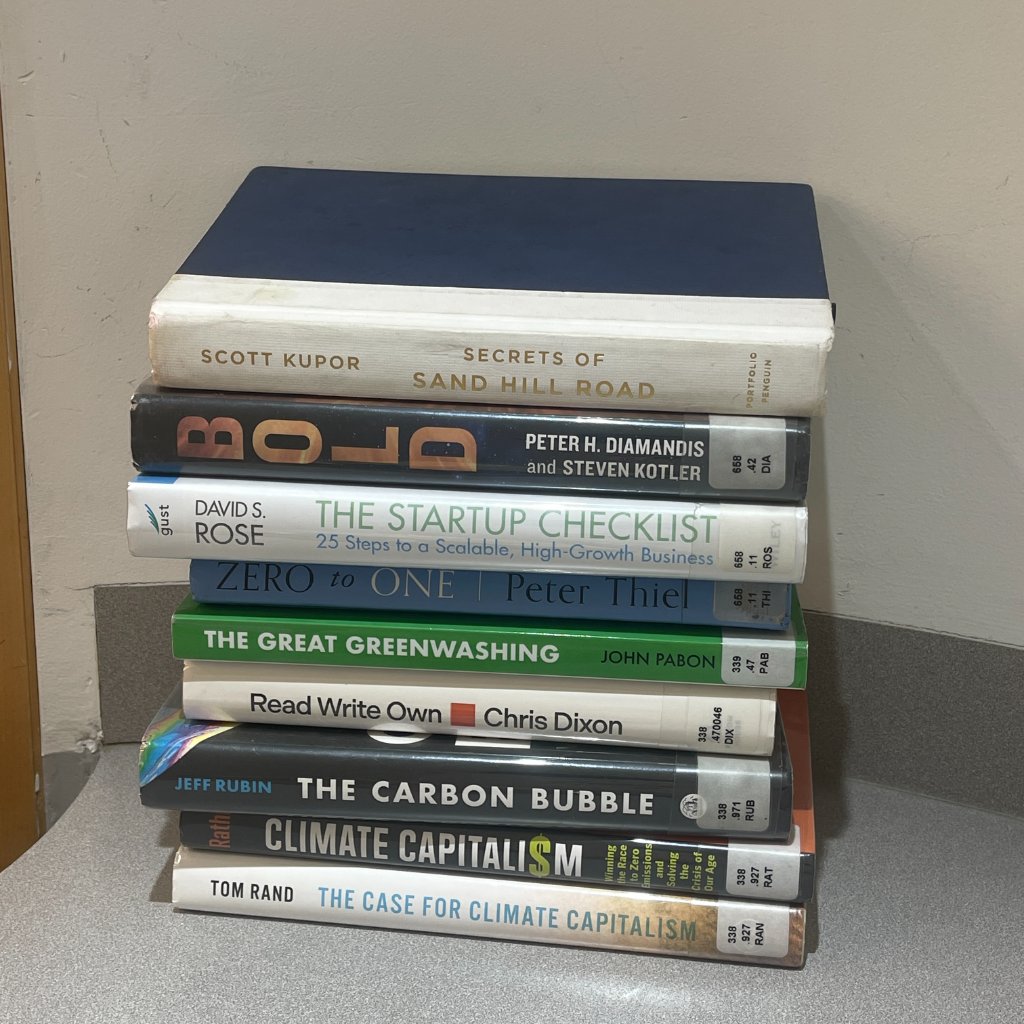
Book Recommendations
Curated reading list across various topics
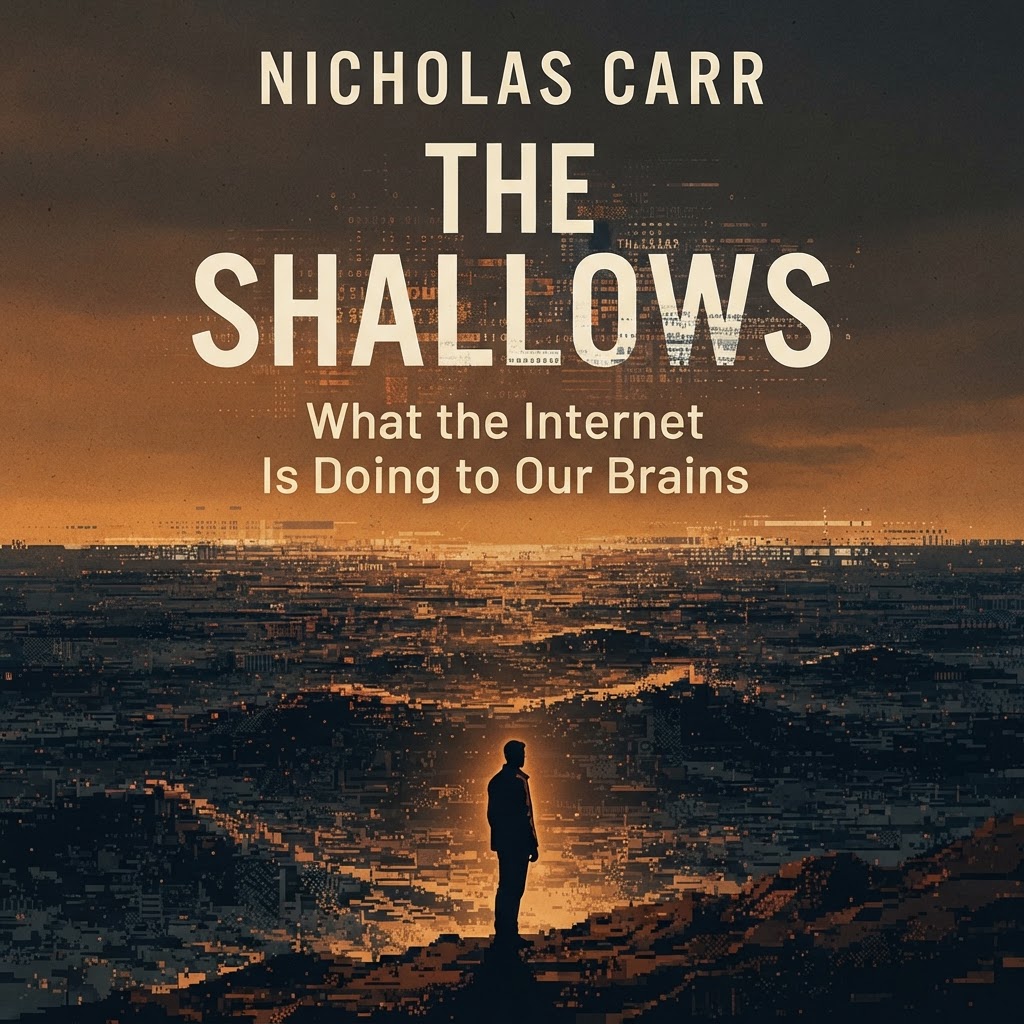
The Shallows: What the Internet Is Doing to Our Brains
by Nicholas Carr
In an era where we are constantly tethered to the digital ether, Nicholas Carr’s 'The Shallows' remains the most essential, haunting, and intellectually rigorous examination of our cognitive decline. Carr masterfully weaves together neuroscience, history, and personal anecdote to argue that our tools are not merely passive conduits for information; they are active agents that reshape the very architecture of our brains. He famously posits that the Internet is an 'interruption system,' one that encourages a state of constant, fragmented attention at the expense of the deep, contemplative thought that has historically defined human intellectual achievement. What makes this book so vital today is how prescient it feels in the age of generative AI and infinite scrolling. Carr’s exploration of 'neuroplasticity'—the idea that our brains physically adapt to the stimuli we provide them—is a sobering reminder that we are effectively training ourselves to be shallow. When he writes about the loss of our capacity for 'deep reading' and sustained focus, he isn't just lamenting a lost hobby; he is warning us about the erosion of the self. We are trading our ability to synthesize complex ideas for the dopamine hit of the next notification, and the cost is our own cognitive autonomy. I found his analysis of how we have outsourced our memory to the cloud particularly chilling. By offloading our internal knowledge to external databases, we are not becoming smarter; we are becoming dependent. This book is a necessary wake-up call for anyone who feels the 'fogginess' of modern digital life. It challenges us to reclaim our attention, not by abandoning technology, but by understanding the profound psychological price we pay for our current, uncritical embrace of it. It is a masterpiece of cultural criticism that demands we slow down and think about how we think.
Nicholas Carr
In an era where we are constantly tethered to the digital ether, Nicholas Carr’s 'The Shallows' remains the most essential, haunting, and intellectually rigorous examination of our cognitive decline. Carr masterfully weaves together neuroscience, history, and personal anecdote to argue that our tools are not merely passive conduits for information; they are active agents that reshape the very architecture of our brains. He famously posits that the Internet is an 'interruption system,' one that encourages a state of constant, fragmented attention at the expense of the deep, contemplative thought that has historically defined human intellectual achievement. What makes this book so vital today is how prescient it feels in the age of generative AI and infinite scrolling. Carr’s exploration of 'neuroplasticity'—the idea that our brains physically adapt to the stimuli we provide them—is a sobering reminder that we are effectively training ourselves to be shallow. When he writes about the loss of our capacity for 'deep reading' and sustained focus, he isn't just lamenting a lost hobby; he is warning us about the erosion of the self. We are trading our ability to synthesize complex ideas for the dopamine hit of the next notification, and the cost is our own cognitive autonomy. I found his analysis of how we have outsourced our memory to the cloud particularly chilling. By offloading our internal knowledge to external databases, we are not becoming smarter; we are becoming dependent. This book is a necessary wake-up call for anyone who feels the 'fogginess' of modern digital life. It challenges us to reclaim our attention, not by abandoning technology, but by understanding the profound psychological price we pay for our current, uncritical embrace of it. It is a masterpiece of cultural criticism that demands we slow down and think about how we think.
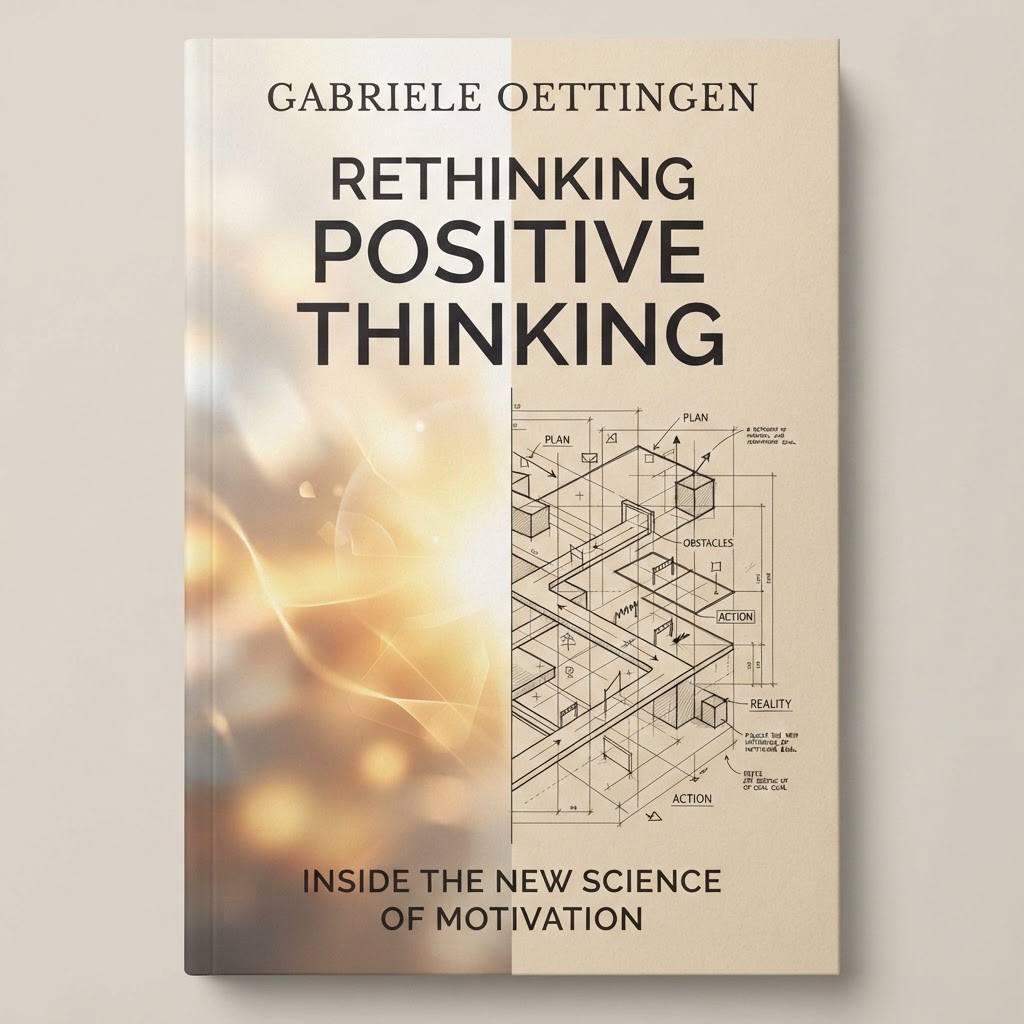
Gabriele Oettingen
In a culture saturated with the relentless, often hollow mantra of 'just think positive,' Gabriele Oettingen’s work arrives as a necessary, scientifically rigorous intervention. She dismantles the myth that mere visualization of success is enough to achieve it. In fact, she demonstrates through compelling data that indulging in positive fantasies can actually drain our energy and leave us less prepared for the friction of reality. Her core concept, 'mental contrasting,' is a masterclass in psychological pragmatism: it forces us to pair our desired future with the specific, tangible obstacles standing in our way. What makes this book essential reading right now is its actionable framework, the WOOP method (Wish, Outcome, Obstacle, Plan). It is not about suppressing optimism, but about grounding it. By identifying the 'if-then' scenarios—if this obstacle arises, then I will take this specific action—we move from passive dreamers to active architects of our own behavior. It is a profound shift from the 'law of attraction' nonsense that plagues the self-help genre toward a model of agency based on cognitive honesty. I found the chapters on the 'obstacle' phase particularly transformative. We are often taught to ignore the negative, but Oettingen proves that leaning into the reality of our limitations is the only way to bypass them. This book is a vital tool for anyone tired of the 'manifestation' trend and ready to engage with the actual mechanics of human motivation. It is a rare piece of literature that respects the reader's intelligence while providing a concrete path toward meaningful change.
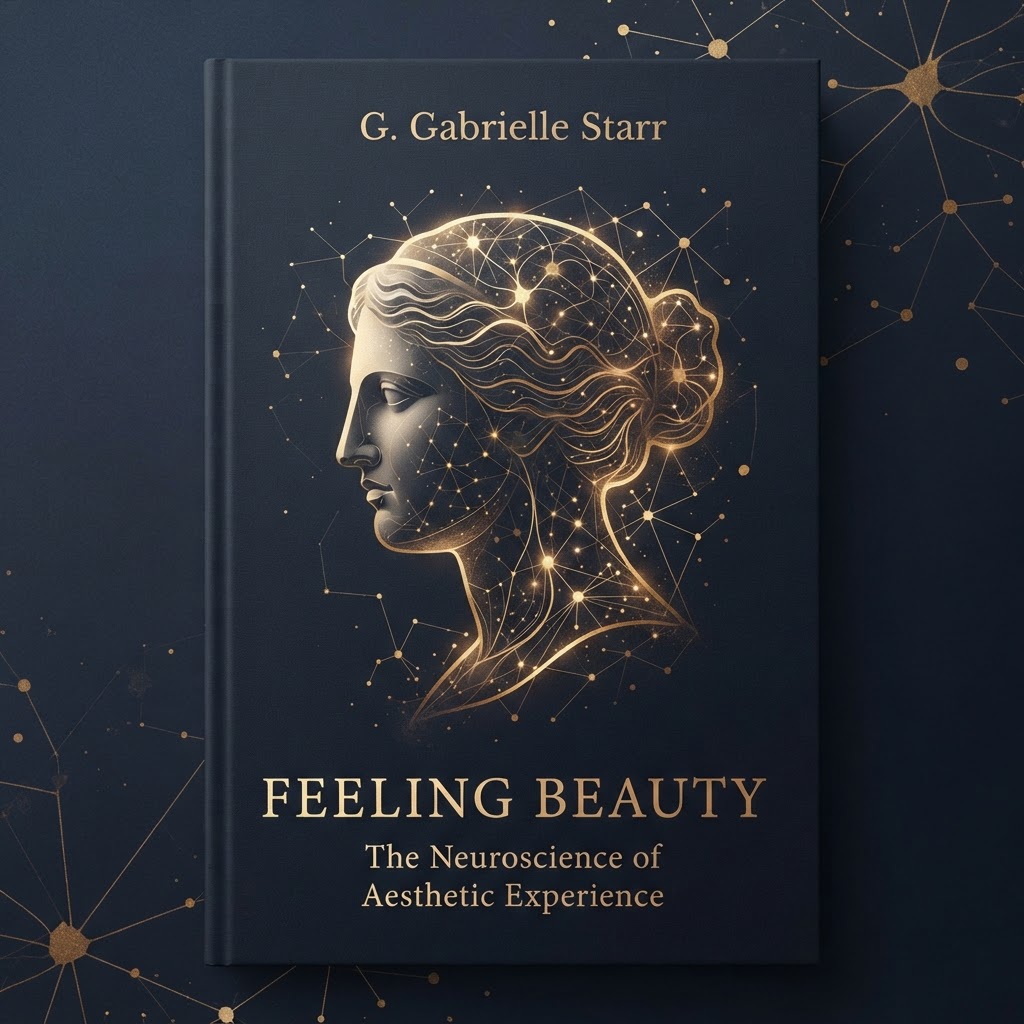
G. Gabrielle Starr
In a world where we often treat art as a purely subjective 'feeling' or a detached intellectual exercise, G. Gabrielle Starr’s 'Feeling Beauty' serves as a necessary bridge between the humanities and the hard sciences. Starr, a scholar who respects the nuance of literary and visual art, does not attempt to 'solve' art through neuroscience. Instead, she maps the distributed neural architecture that lights up when we engage with the aesthetic—showing that our appreciation of beauty is not localized to a single 'art center' in the brain, but is a complex, full-body cognitive event. She masterfully explains how our brains process rhythm, symmetry, and the sublime, grounding these abstract concepts in biological reality. What I found most compelling was her exploration of how individual differences in aesthetic judgment are not just quirks of personality, but reflections of our unique neural wiring. This book matters now more than ever because we are increasingly consuming art through digital interfaces that flatten our sensory experiences. Starr reminds us that aesthetic engagement is a dynamic, active process that shapes our very sense of self. It challenges the reader to move beyond the passive consumption of images and to recognize the profound, physiological work our brains perform when we encounter something that moves us. It is a rigorous, deeply humanistic look at why we are hardwired to seek out beauty, even in the most chaotic of times.
Reid Hoffman and Ben Casnocha
In a world where the traditional career ladder has been replaced by a volatile, unpredictable jungle gym, Reid Hoffman and Ben Casnocha offer a vital paradigm shift. The core thesis is deceptively simple yet profoundly transformative: you must treat your own career as if it were a startup. This isn't just about entrepreneurship in the business sense; it is about adopting the mindset of a founder—nimble, iterative, and perpetually in 'beta'—to navigate the modern professional landscape. The authors argue that we are all entrepreneurs by nature, and in an era of rapid technological disruption, the greatest risk is not taking any risk at all. I found their framework on 'intelligent risk-taking' particularly resonant; it challenges the reader to move beyond the safety of the status quo and embrace the uncertainty that defines our current economic reality. The book excels in its practical approach to networking, reframing it not as a transactional chore, but as the cultivation of a 'permanent alliance' ecosystem. By emphasizing that your network is your net worth, Hoffman and Casnocha provide a roadmap for building genuine, lasting relationships that serve as a buffer against professional obsolescence. It is a masterclass in self-determination that feels more relevant today than when it was first published. Whether you are a student, a mid-career professional, or a seasoned executive, this book forces you to confront the reality that you are the CEO of your own life. It is an essential read for anyone looking to reclaim agency in an age of constant change.
Bessel van der Kolk
In a world that often treats mental health as a purely cognitive exercise—something to be 'thought' through or talked out—Bessel van der Kolk’s masterpiece serves as a necessary, visceral correction. As a writer, I am constantly fascinated by the architecture of human experience, and this book fundamentally shifted my understanding of how our histories are physically encoded. Van der Kolk, a pioneer in trauma research, argues that trauma is not just a memory stored in the mind, but a physiological imprint that lives in the nervous system, the viscera, and the very posture of our bodies. He masterfully deconstructs the limitations of traditional talk therapy, showing us that when the brain is trapped in a state of survival, the body remains stuck in the past, unable to distinguish between a historical threat and the present moment. What makes this book essential reading right now is its profound empathy and its insistence on somatic healing. Whether through yoga, EMDR, or communal rhythm, van der Kolk provides a roadmap for reclaiming the self from the wreckage of past experiences. It is a challenging, sometimes harrowing read, but it is ultimately one of the most hopeful books I have encountered. It forces us to stop asking 'What is wrong with you?' and start asking 'What happened to you?'—a shift in perspective that is as vital for our personal well-being as it is for our collective humanity.
Annie Duke
In a world obsessed with outcomes, Annie Duke’s 'Thinking in Bets' serves as a necessary, bracing corrective. As a former professional poker player turned decision strategist, Duke dismantles the dangerous illusion that a good outcome is always the result of a good decision, or that a bad outcome implies a failure of judgment. She introduces the concept of 'resulting'—our tendency to judge the quality of a decision by its immediate consequence—and shows how this cognitive bias blinds us to the role of luck and hidden information. By reframing life as a game of poker rather than chess, she forces us to embrace uncertainty as a fundamental feature of reality rather than a bug to be fixed. The most profound takeaway for me was her insistence on 'thinking in bets.' When we acknowledge that we are betting on our beliefs, we naturally become more nuanced, less dogmatic, and more willing to update our views when new evidence emerges. It shifts the internal monologue from 'I am right' to 'I am 60% sure,' which is a radical act of intellectual humility. In our current climate of extreme polarization, where people are often punished for changing their minds, Duke’s framework provides a practical, psychological toolkit for navigating complexity. It is not just a book about strategy; it is a manual for cultivating a more rational, resilient, and honest relationship with the unknown. If you want to stop being a prisoner of your own biases and start making decisions that actually align with your long-term goals, this book is essential reading.
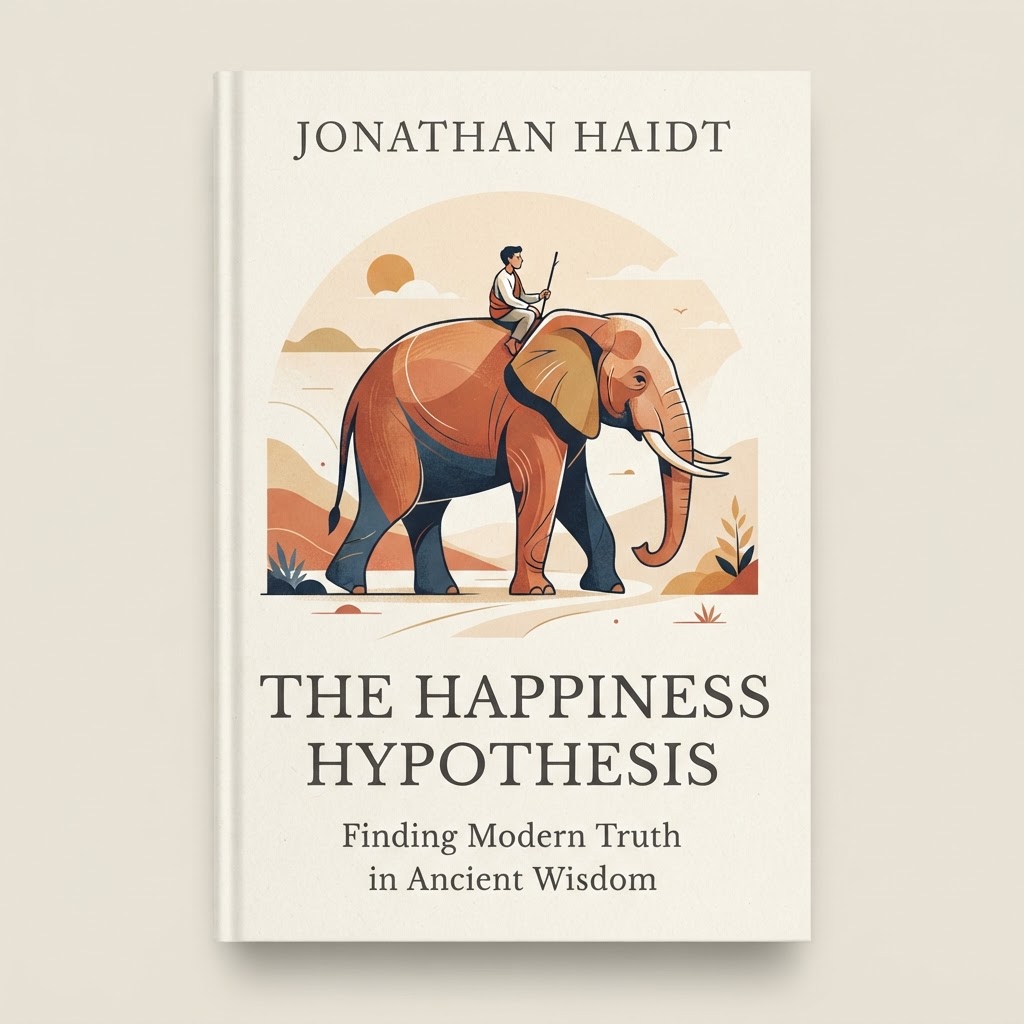
Jonathan Haidt
In a landscape saturated with self-help platitudes, Jonathan Haidt’s The Happiness Hypothesis stands as a rare, intellectually rigorous bridge between the wisdom of the ancients and the empirical findings of modern social psychology. Haidt masterfully employs the metaphor of the rider and the elephant—the conscious, rational mind attempting to steer the massive, emotional, and often stubborn subconscious—to explain the internal conflicts that define our daily existence. It is a profound exploration of why we struggle to align our actions with our intentions. What makes this book essential reading right now is its refusal to offer a 'quick fix.' Instead, Haidt invites us to examine the conditions of human flourishing through the lens of evolutionary biology and cultural history. He dissects the 'happiness formula' (H = S + C + V), arguing that our baseline temperament, life conditions, and voluntary activities interact in ways we rarely stop to consider. His analysis of how we find meaning—not just through pleasure, but through the cultivation of virtue and connection—feels particularly urgent in our current era of digital fragmentation and social isolation. I found his chapters on the 'divisiveness of righteousness' to be particularly haunting. Haidt explains how our moral intuitions are often post-hoc justifications for gut feelings, a realization that should humble anyone engaged in modern discourse. By the time you finish, you aren't just left with a better understanding of your own psyche; you are equipped with a framework to navigate the complexities of human relationships with greater empathy and clarity. It is a book that doesn't just inform; it recalibrates your moral compass.
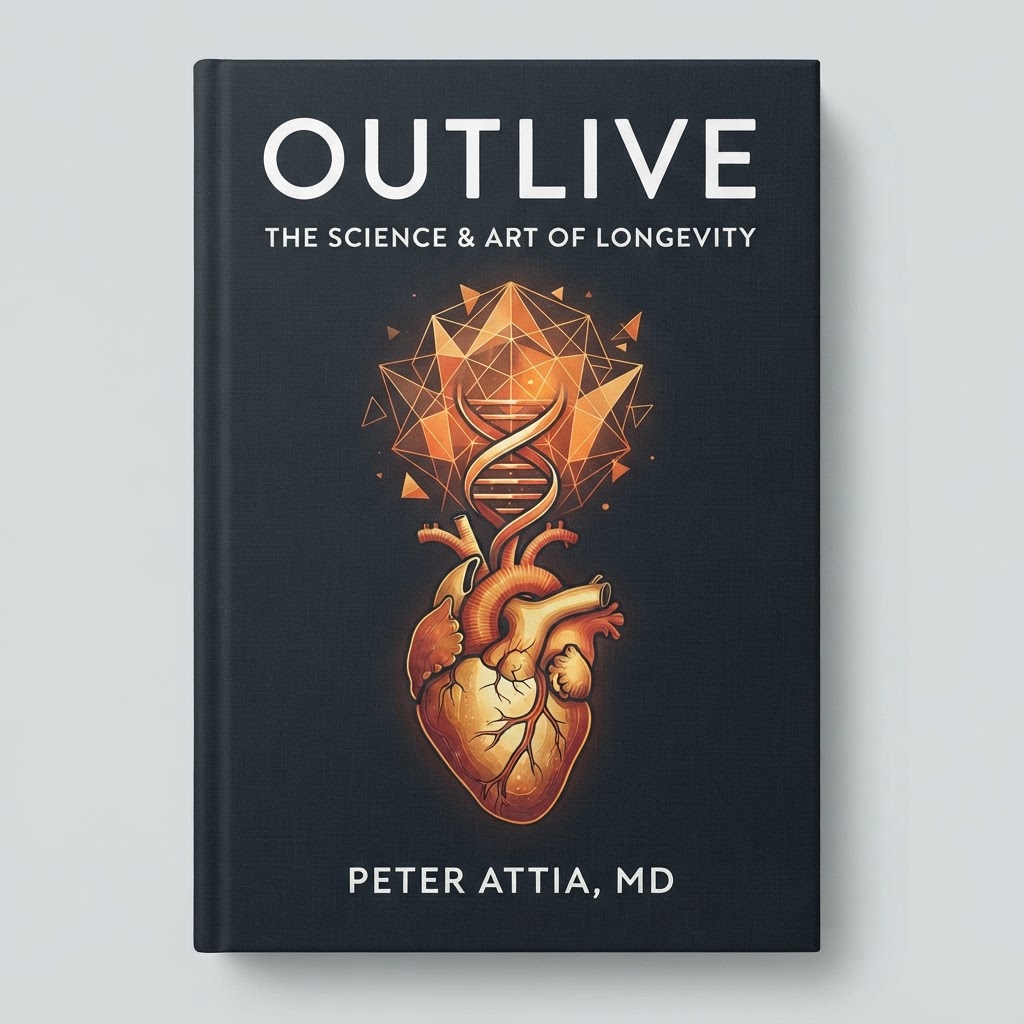
Peter Attia, MD
In a landscape saturated with wellness trends and quick-fix biohacking, Peter Attia’s 'Outlive' stands as a monumental, necessary corrective. Attia shifts the paradigm from 'Medicine 2.0'—which waits for disease to manifest before treating it—to 'Medicine 3.0,' a proactive, data-driven strategy focused on extending not just our lifespan, but our healthspan. He doesn't just offer advice; he provides a rigorous framework for understanding how our metabolic, cardiovascular, and neurological systems degrade over time, and more importantly, how we can intervene decades before a crisis occurs. What struck me most was his brutal honesty regarding the 'Four Horsemen' of chronic disease: heart disease, cancer, neurodegenerative disease, and type 2 diabetes. Attia’s deep dive into the nuances of ApoB and metabolic flexibility is not light reading, but it is essential for anyone who views their body as a long-term asset. He treats the reader as an intellectual peer, demanding that we engage with the complexity of our own biology rather than outsourcing our health to a system designed for acute care rather than long-term vitality. This book matters now more than ever because we are living in an era of unprecedented medical information and declining metabolic health. Attia’s emphasis on 'centenarian decathlon'—the idea of training today for the physical capabilities you want to possess at age 100—is a profound psychological shift. It turns health from a chore into a strategic, lifelong project. If you are tired of the noise and want a foundational, science-backed manual for navigating the second half of your life with agency and strength, this is the only book you need on your shelf.
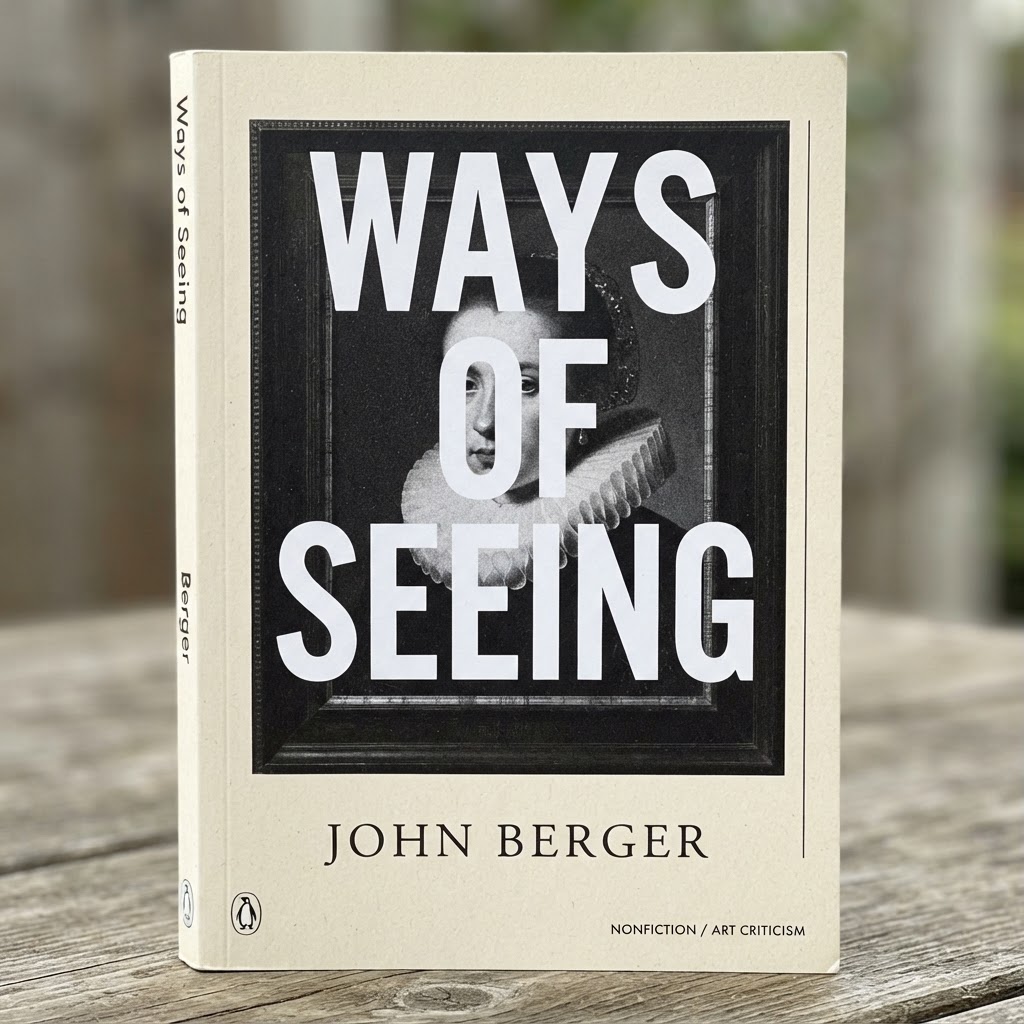
John Berger
John Berger’s 'Ways of Seeing' is not merely a book about art history; it is a radical act of intellectual liberation. When Berger writes, 'Seeing comes before words,' he is stripping away the academic pretension that often acts as a barrier between the viewer and the image. He forces us to confront the reality that our perception is never neutral; it is conditioned by our history, our social status, and the pervasive influence of advertising and mass media. By deconstructing the 'mystification' of traditional art criticism, Berger invites the reader to reclaim their own gaze. He argues that the way we look at a painting is inextricably linked to what we know, and that this relationship is constantly shifting. In an era where we are bombarded by thousands of curated, digital images daily, his insights feel more urgent than ever. He teaches us to look past the surface of an image to understand the power dynamics, the ownership, and the cultural baggage embedded within it. Reading this book is like being handed a pair of glasses that finally bring the world into sharp, uncomfortable focus. It is a slim volume, but it carries the weight of a revolution. It challenges the reader to stop being a passive consumer of visual culture and start being an active, critical participant in the world around them. If you want to understand why you feel the way you do when you look at a screen, a billboard, or a masterpiece, this is the essential starting point.
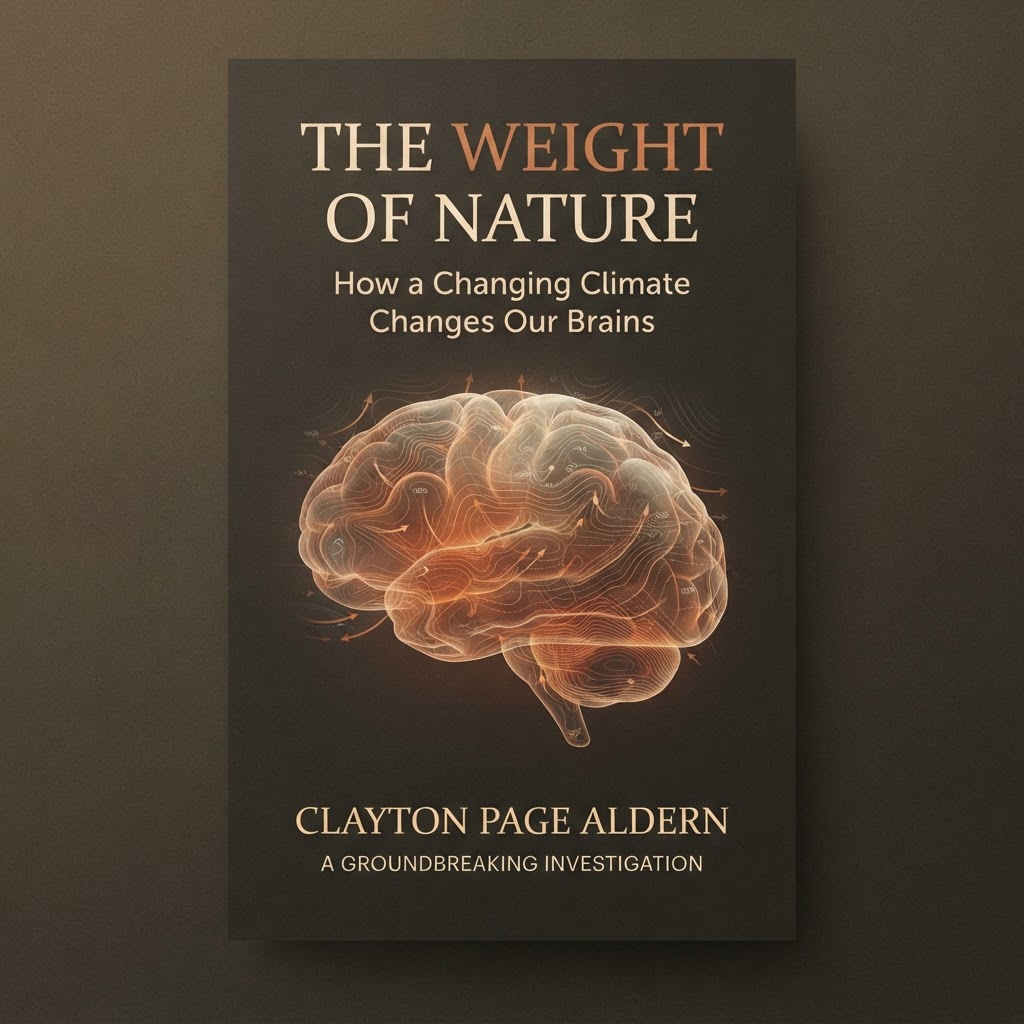
Clayton Page Aldern
In a world where we often treat climate change as a distant, abstract statistic, Clayton Page Aldern’s 'The Weight of Nature' arrives as a necessary, visceral wake-up call. Drawing on his background as a neuroscientist, Aldern masterfully bridges the gap between environmental science and cognitive biology. He argues that the environment is not merely a backdrop for our lives but a constant, active force molding our neural pathways and behavioral patterns. It is a profound shift in perspective: we are not just observers of a changing planet; we are biological entities being rewritten by it. What struck me most was his exploration of how heat, air quality, and environmental stressors directly impact our decision-making, aggression, and even our capacity for empathy. Aldern avoids the trap of climate fatalism, instead offering a rigorous, data-driven look at how our brains are 'anchored' to the world. He writes with a clarity that makes complex neurobiology accessible, yet he never sacrifices the gravity of the subject. It is a book that forces you to reconsider your own moods and impulses through the lens of the air you breathe and the temperature of the room you inhabit. This book matters now more than ever because it dismantles the illusion of human autonomy in the face of ecological collapse. By showing us that our very thoughts are subject to the 'weight of nature,' Aldern provides a new vocabulary for understanding our current crisis. It is an essential read for anyone who wants to understand why our collective response to the climate emergency has been so fractured, and how our biology might be both our greatest vulnerability and our most important tool for adaptation.
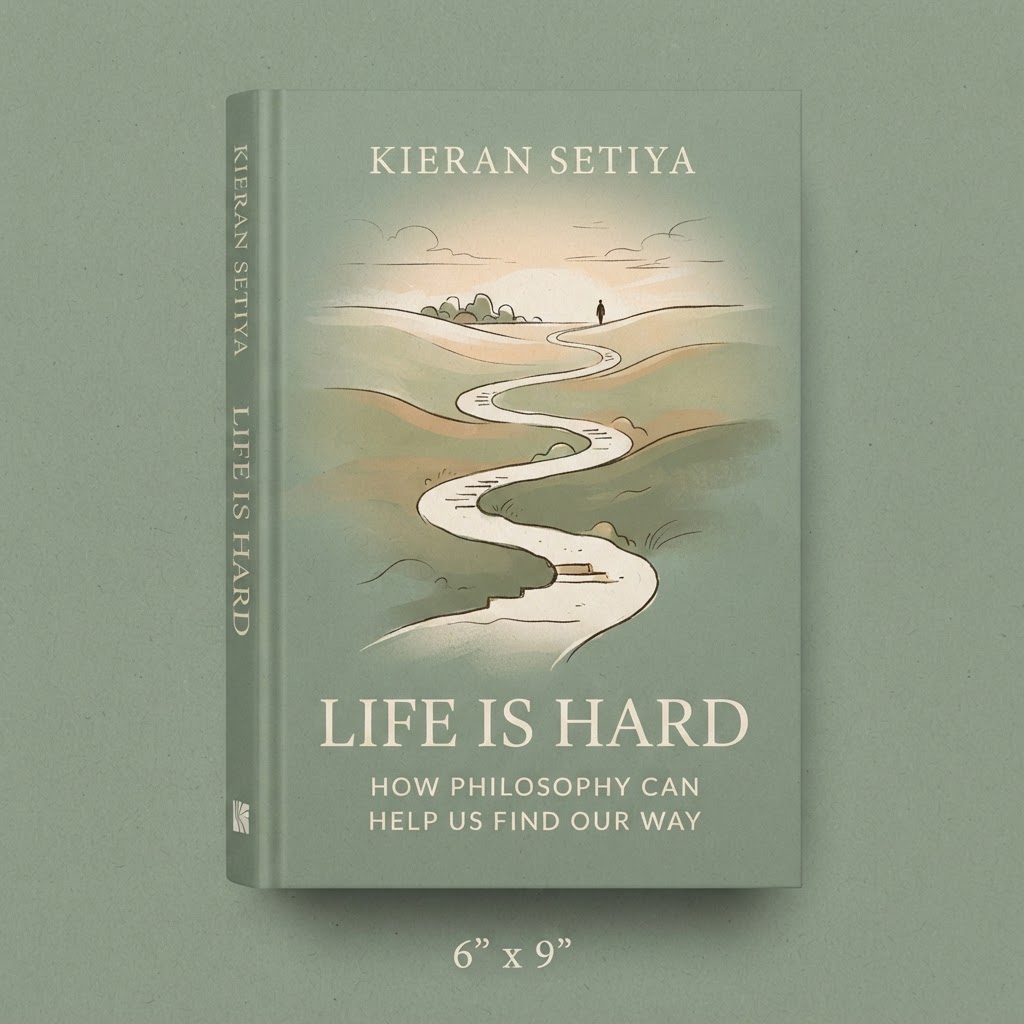
Kieran Setiya
In a genre saturated with toxic positivity and the relentless pursuit of 'optimization,' Kieran Setiya’s 'Life Is Hard' arrives as a profound, necessary corrective. Setiya, a philosopher at MIT, does not promise to fix your life or turn you into a high-performance machine. Instead, he offers something far more valuable: a framework for understanding the inherent difficulty of the human condition. By drawing on the wisdom of thinkers like Aristotle, Mill, and Simone de Beauvoir, he validates the reality of pain, loneliness, and failure rather than treating them as obstacles to be eradicated. What struck me most was his nuanced treatment of 'the problem of the present.' Setiya argues that we often treat our lives as projects to be completed, constantly looking toward a future state of satisfaction that never quite arrives. He masterfully deconstructs this 'telic' trap, reminding us that the value of life is found in the activity itself—in the 'atelic' pursuits that have no final end point, like spending time with friends or engaging in creative work. This shift in perspective is not just academic; it is a practical, daily antidote to the anxiety of modern achievement culture. This book matters now more than ever because it provides a vocabulary for our collective malaise. We are living in an era of unprecedented isolation and burnout, and Setiya’s gentle, rigorous prose acts as a companion through these shadows. He doesn't offer a 'hack' for happiness; he offers a way to live with integrity and meaning despite the fact that life is, by its very nature, hard. It is a rare work that manages to be both intellectually rigorous and deeply compassionate, leaving the reader not with a checklist of tasks, but with a more resilient way of seeing the world.
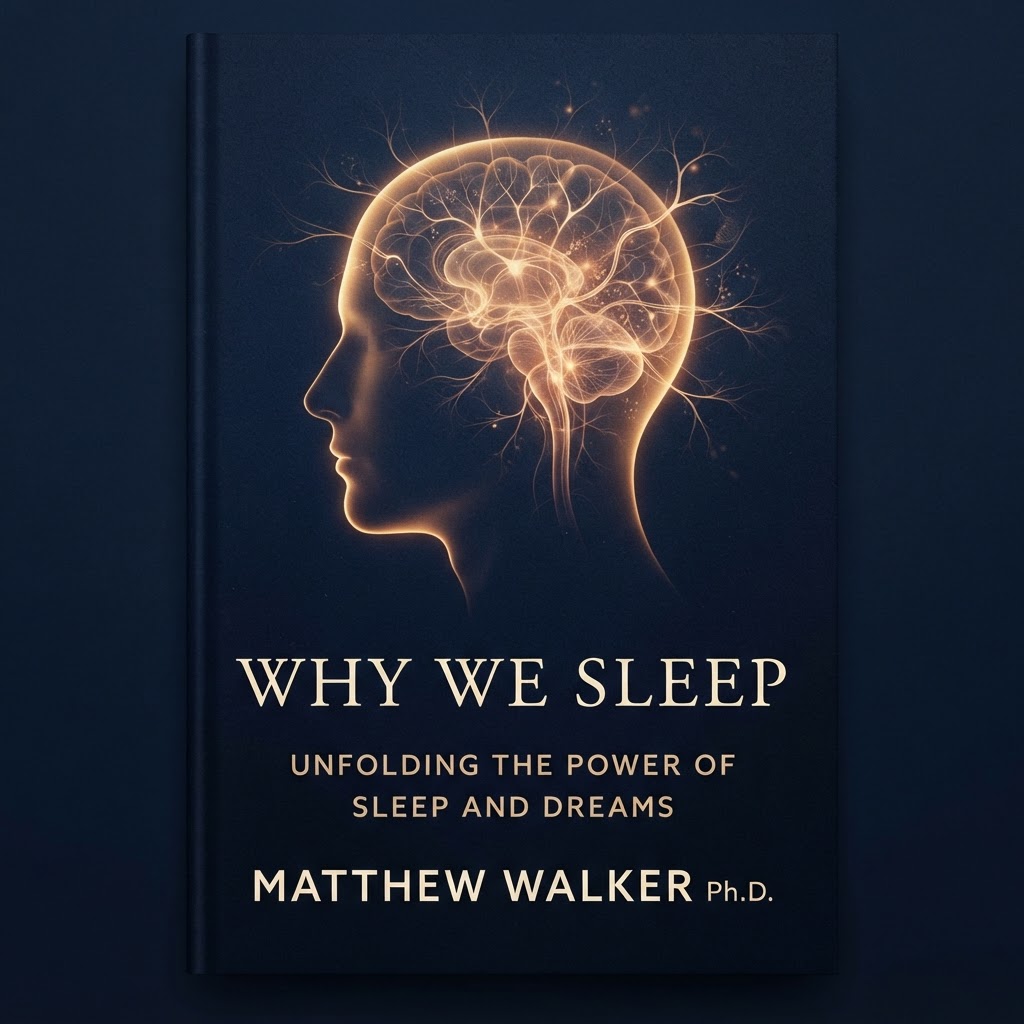
Matthew Walker
In a culture that often wears sleep deprivation as a badge of honor, Matthew Walker’s 'Why We Sleep' serves as a necessary, sobering, and ultimately life-changing intervention. As a neuroscientist, Walker doesn't just offer tips for better rest; he dismantles the dangerous myth that sleep is a luxury we can afford to sacrifice. He frames sleep as the single most effective tool we have to reset our brain and body health, providing a compelling argument that sleep is, quite literally, Mother Nature’s best effort at contra-death. Reading this, I was struck by the sheer biological necessity of the process—how it recalibrates our emotions, restocks our immune system, and fine-tunes our metabolism in ways that no supplement or lifestyle hack can replicate. What makes this book essential reading right now is the clarity with which Walker connects the dots between our modern, 'always-on' lifestyle and the rise of chronic diseases. He presents rigorous evidence linking deficient sleep to Alzheimer’s, cancer, obesity, and diabetes, transforming the way I view my own nightly habits. His exploration of REM sleep and the way it enriches our ability to learn and memorize is particularly fascinating, offering a scientific foundation for why we feel so cognitively diminished after a poor night's rest. It is a rare book that manages to be both deeply academic and profoundly practical. Ultimately, Walker’s work is a call to reclaim our biological heritage. He doesn't just diagnose the problem; he explains the mechanics of how caffeine and alcohol disrupt our architecture of rest and how our sleep patterns shift across a lifetime. By the time you finish, you won't just understand the 'why' of sleep—you will feel a moral imperative to prioritize it. It is a masterclass in human biology that challenges the reader to stop fighting their own physiology and start honoring the restorative power of the night.

Monica Ali
Monica Ali’s 'Love Marriage' is a masterclass in the anatomy of modern intimacy. While the title suggests a simple romantic narrative, the book is actually a sprawling, sophisticated examination of the 'multi-car pileup' that occurs when two families—each carrying their own cultural baggage, secrets, and unspoken expectations—collide through the engagement of their children. Yasmin, a trainee doctor, and Joe, her fiancé, represent the surface-level ideal of a modern, multicultural union, but Ali is far more interested in the tectonic shifts happening beneath that veneer. She brilliantly dissects how the concept of a 'love marriage' is often just as fraught with performance and pressure as the arranged unions it seeks to replace. The novel’s strength lies in its refusal to offer easy answers about what makes a partnership endure. Through the unraveling of Yasmin’s parents' marriage and the complex dynamics of Joe’s feminist-author mother, Ali forces us to confront the reality that marriage is not a static state of bliss, but a constant, often messy negotiation of identity. It is a deeply humanizing look at how we project our desires onto our partners and how those projections inevitably crack under the weight of reality. In an era where we are increasingly obsessed with the 'optimization' of relationships, this book serves as a necessary, grounding reminder that love is rarely tidy. It matters now because it captures the specific friction of our current moment: the intersection of class, race, and the shifting definitions of family. Ali’s prose is sharp, compassionate, and deeply observant, making this a vital read for anyone interested in the psychology of why we choose who we choose and how we manage to stay together once the initial spark fades.
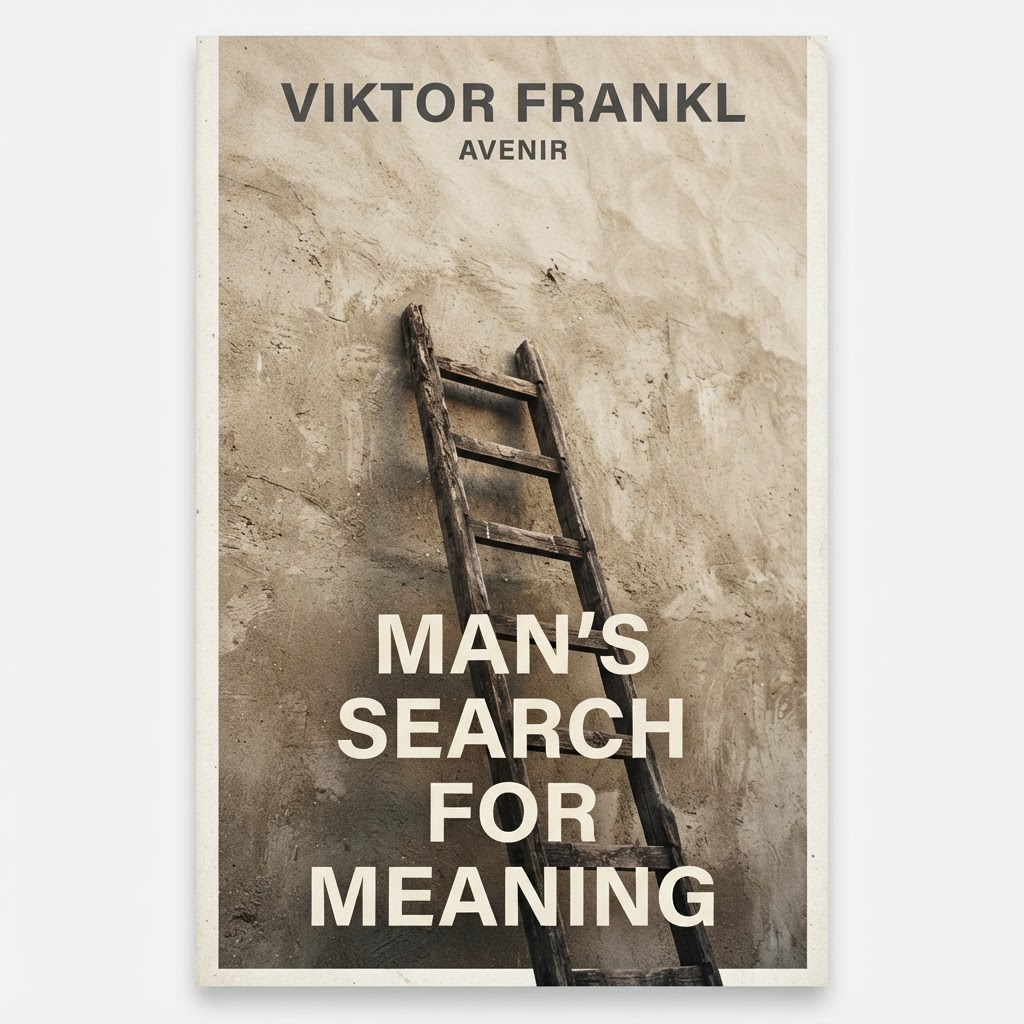
Viktor Frankl
In a world increasingly obsessed with the pursuit of fleeting happiness and the optimization of the self, Viktor Frankl’s 'Man’s Search for Meaning' serves as a necessary, sobering, and ultimately life-affirming corrective. Having survived the horrors of Nazi concentration camps, Frankl does not offer a clinical manual on trauma; rather, he provides a profound existential framework. He argues that the primary human drive is not pleasure, as Freud suggested, but the discovery and pursuit of what we personally find meaningful. His concept of 'logotherapy' posits that even in the most dehumanizing circumstances, we retain the ultimate freedom: the ability to choose our attitude in any given set of circumstances. What strikes me most upon every re-reading is Frankl’s observation that those who survived the camps were often those who had a 'why'—a future project, a loved one, or a sense of duty that transcended their immediate suffering. He writes, 'He who has a why to live can bear almost any how.' This is not mere optimism; it is a rigorous psychological discipline. Frankl forces us to confront the reality that suffering is an ineradicable part of life, and that our task is not to escape it, but to transform it into an achievement or a realization of character. This book matters now more than ever because we live in an era of profound existential vacuum. We are surrounded by technological convenience and material abundance, yet we report record levels of loneliness and purposelessness. Frankl reminds us that meaning is not something we find waiting for us; it is something we create through our actions, our work, and our capacity to love. It is a challenging, essential read that strips away the trivialities of modern life and demands that we take responsibility for the meaning of our own existence.
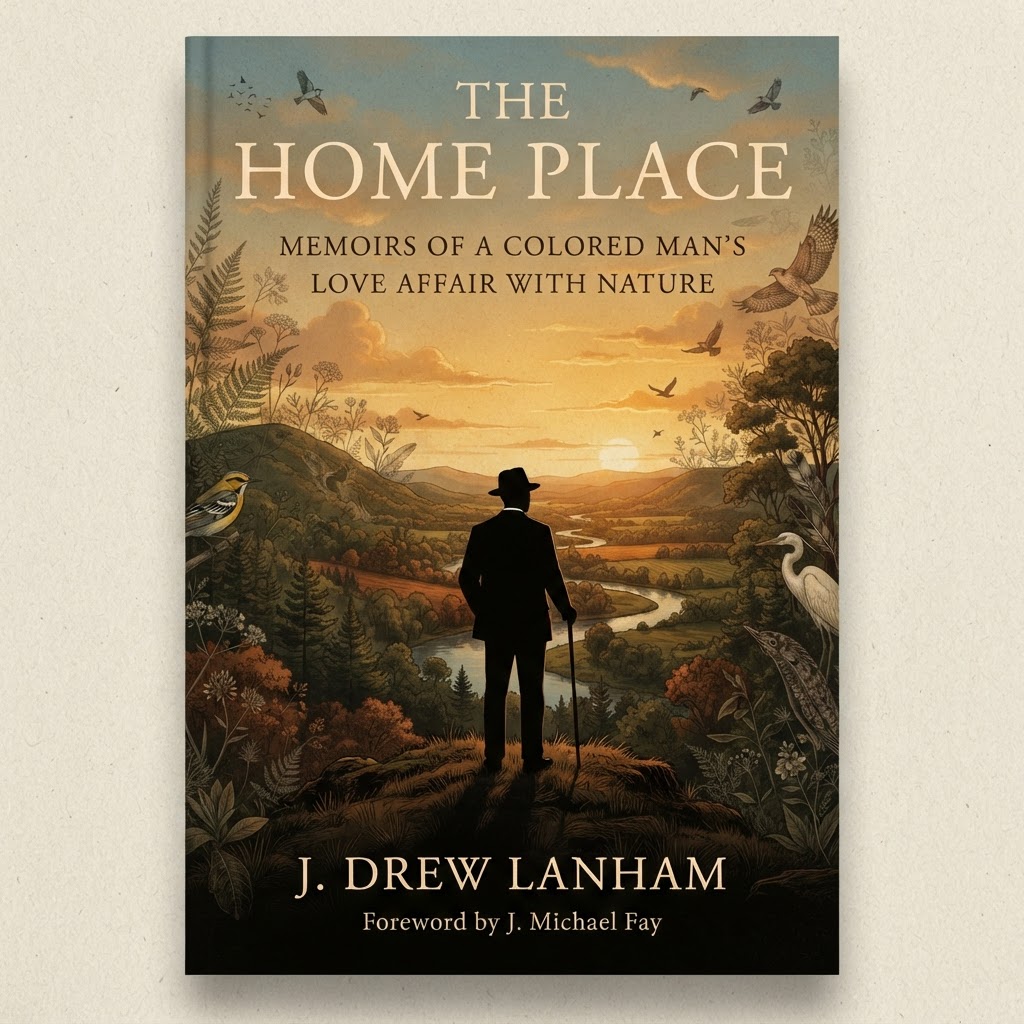
J. Drew Lanham
J. Drew Lanham’s 'The Home Place' is a profound, necessary intervention in the genre of nature writing. For too long, the literature of the outdoors has been dominated by a singular, often exclusionary perspective. Lanham, an ornithologist and professor, shatters this by weaving his personal history as a Black man in the American South with his deep, scientific, and spiritual connection to the land. He doesn't just observe the birds and the soil; he interrogates the history of the ground he walks on, acknowledging the ghosts of the past while finding solace in the flight of a warbler. It is a masterclass in how to hold two seemingly contradictory truths: that the land can be a site of trauma and exclusion, and simultaneously a place of profound belonging and healing. What makes this book essential reading right now is its refusal to separate the 'natural' world from the 'human' world. Lanham shows us that our ecological crises are inextricably linked to our social ones. His prose is lyrical yet grounded, moving from the intimate details of his childhood in Edgefield County to the broader, often uncomfortable realities of being a Black man in the field of conservation. He challenges the reader to expand their definition of who 'belongs' in nature, arguing that our survival depends on our ability to see the landscape as a shared, complex home. This is not just a memoir; it is a call to broaden our empathy and our ecological imagination.
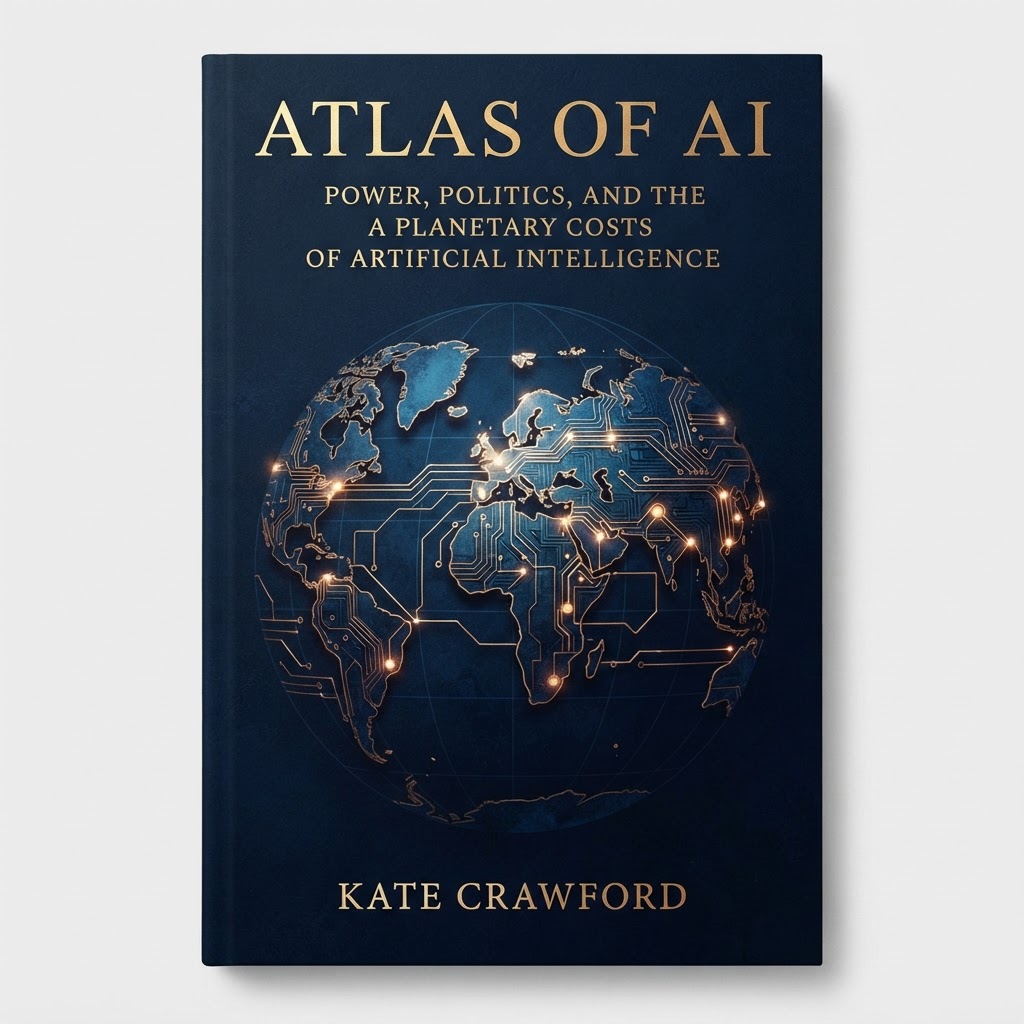
Kate Crawford
In a landscape saturated with breathless hype about artificial intelligence, Kate Crawford’s 'Atlas of AI' serves as a necessary, grounding corrective. While most tech literature focuses on the 'intelligence' of these systems, Crawford shifts the lens to the material reality: the lithium mines, the massive data centers, and the invisible labor forces that sustain our digital infrastructure. She masterfully deconstructs the myth that AI is 'cloud-based' or ethereal, revealing it to be a deeply extractive industry that relies on the exploitation of both natural resources and human workers. Reading this book felt like pulling back a curtain on a stage I thought I understood, only to realize I had been ignoring the machinery behind the scenes. Her analysis of how training data is essentially a form of 'data mining'—often harvested without consent—is particularly chilling. She forces us to confront the reality that AI is not just a set of algorithms, but a political project that reinforces existing power structures. It is a profound, sobering, and essential read for anyone who wants to understand the true cost of the tools we use every day. In an era where we are rushing toward automation, Crawford’s work is a vital reminder that we must look at the planetary and human toll of our technological ambitions before we call them progress.
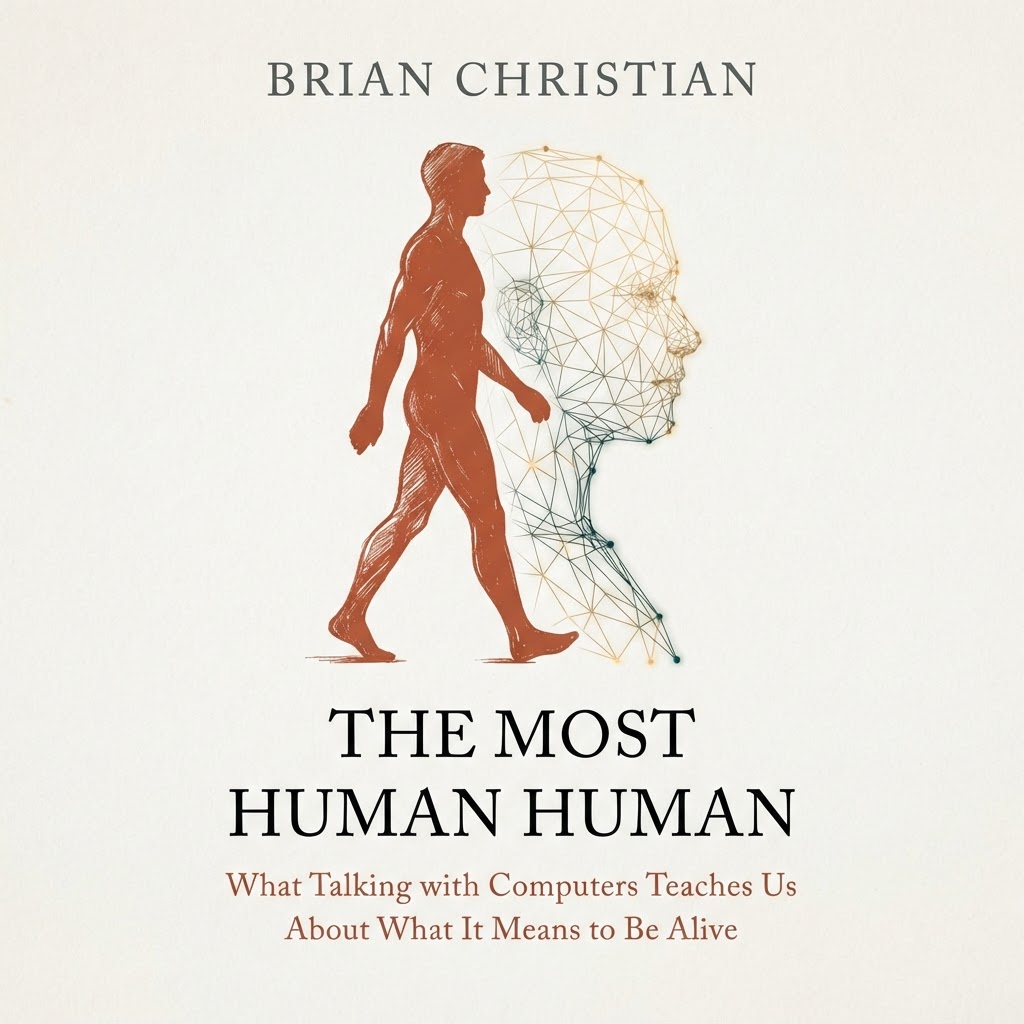
Brian Christian
In an era where we are increasingly obsessed with teaching machines to mimic human behavior, Brian Christian’s 'The Most Human Human' serves as a vital, grounding corrective. Christian, who possesses the rare dual-background of a poet and a computer scientist, uses the framework of the Turing Test—specifically the Loebner Prize competition—to explore the boundaries of our own humanity. He doesn't just analyze the algorithms; he analyzes the art of conversation, empathy, and the messy, non-linear nature of human connection that AI still struggles to replicate. What makes this book essential reading right now is its refusal to treat technology as a separate, cold entity. Christian argues that by trying to build a machine that can pass for human, we are forced to define what 'human' actually means. He masterfully deconstructs the 'human' side of the equation, showing that our greatest strengths—our ability to be vulnerable, to be unpredictable, and to find meaning in the mundane—are exactly what the machines lack. It is a profound meditation on how we often reduce ourselves to data points, and how we might reclaim our agency in a world that rewards algorithmic efficiency over genuine depth. I found his reflections on the 'human' in the Turing Test to be particularly poignant. He suggests that being 'human' is not about being a perfect processor of information, but about the capacity for nuance and the willingness to engage in the 'un-computable' aspects of life. If you are feeling overwhelmed by the rapid encroachment of AI into our creative and social spheres, this book offers a philosophical anchor. It reminds us that our value does not lie in our ability to compute, but in our ability to connect, to err, and to experience the world with a consciousness that no code can ever truly simulate.
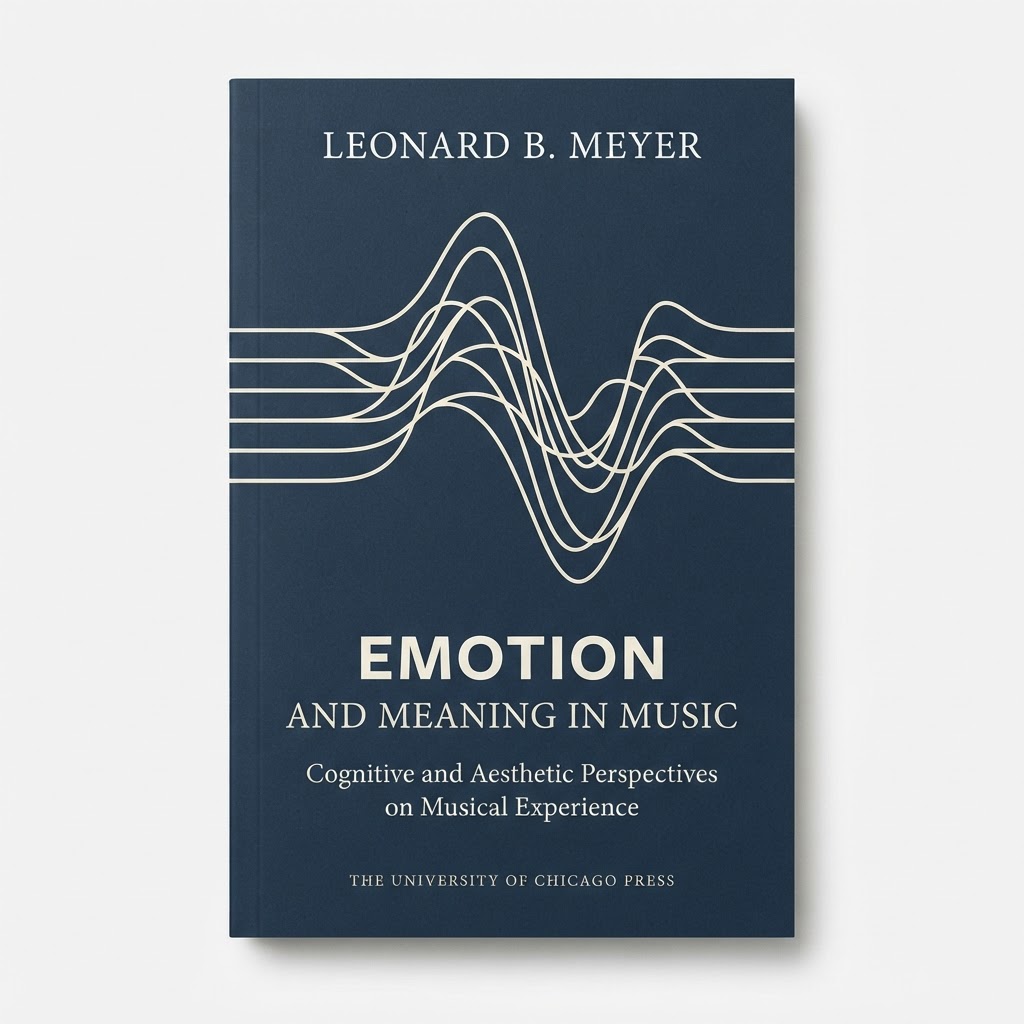
Leonard B. Meyer
In a world where music is often treated as mere background noise or a fleeting emotional trigger, Leonard B. Meyer’s 'Emotion and Meaning in Music' remains a towering, essential intervention. Meyer does not merely describe how music sounds; he dissects the cognitive architecture of how we experience it. By applying Gestalt psychology to musical structure, he argues that musical emotion arises from the frustration and fulfillment of expectations. When a melody deviates from the path our brain anticipates, we experience tension; when it resolves, we feel release. This is not just music theory—it is a profound insight into the human need for order and the thrill of the unexpected. Reading this book fundamentally changed how I listen to everything from Bach to modern jazz. It forces you to stop being a passive consumer and start engaging with the 'structural gaps' and patterns that define our aesthetic lives. In an era of algorithmic playlists that prioritize familiarity, Meyer’s work is a vital reminder that the true power of art lies in its ability to challenge our cognitive habits. It is a rigorous, intellectually demanding text that rewards the reader with a deeper, more conscious connection to the sounds that shape our internal worlds. If you want to understand why a specific chord progression can bring you to tears or why a sudden silence feels so heavy, this is the definitive guide.
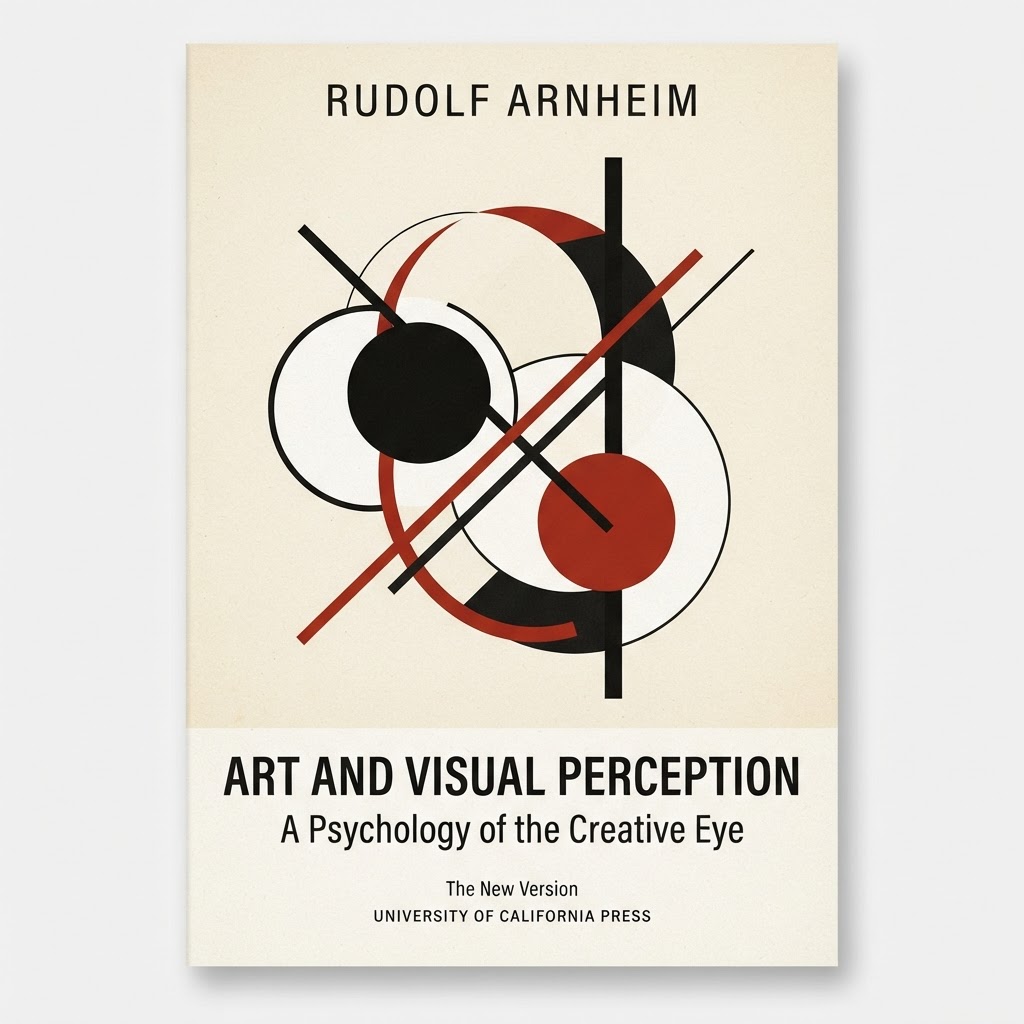
Rudolf Arnheim
In an era where we are constantly bombarded by digital imagery, our ability to truly 'see' has arguably atrophied. Rudolf Arnheim’s masterpiece is the antidote to this visual numbness. Rather than treating art as a static object to be analyzed through historical context alone, Arnheim applies the rigor of Gestalt psychology to explain how the human eye actively organizes visual material. He breaks down the fundamental forces—balance, shape, form, space, and light—that govern our perception, revealing that looking at a painting is not a passive act, but a dynamic, cognitive event. Reading this book fundamentally altered how I walk through a gallery; I no longer just see colors and subjects, but the underlying tensions and structural energies that make a composition 'work.' Arnheim’s brilliance lies in his ability to bridge the gap between the scientific and the aesthetic, proving that the creative eye is governed by definite psychological laws. It is a profound reminder that art is not merely decoration, but a sophisticated language of human experience. Whether you are an artist, a designer, or simply someone who wants to reclaim their attention in a visual-first world, this book is essential. It challenges you to stop consuming images and start engaging with the architecture of vision itself.
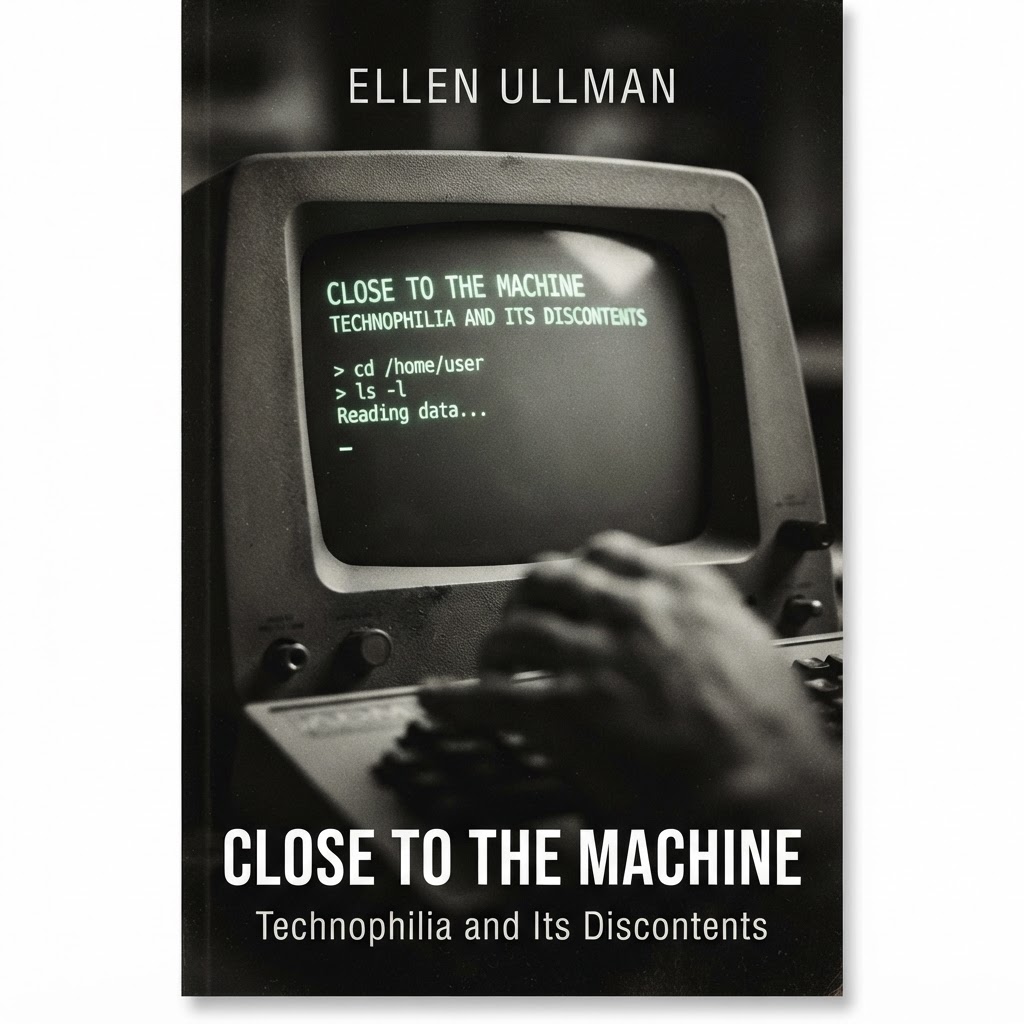
Ellen Ullman
In a landscape currently saturated with breathless hype about artificial intelligence and the 'inevitability' of digital progress, Ellen Ullman’s 'Close to the Machine' remains a haunting, essential corrective. Written from the trenches of software engineering in the 1990s, this memoir captures the visceral, often lonely reality of living inside the code. Ullman does not treat technology as a neutral tool; she treats it as a psychological environment that fundamentally alters how we perceive time, logic, and human connection. Her prose is sharp, unsentimental, and deeply observant, stripping away the veneer of 'innovation' to reveal the messy, human-centric labor that keeps the digital world running. Reading her reflections on the 'technophilia' that drives developers to prefer the predictable, binary world of machines over the chaotic, emotional reality of people feels more relevant today than ever. She forces us to confront the cost of our obsession with efficiency and the way we have allowed our tools to dictate the terms of our existence. This book is not just a history of computing; it is a profound meditation on the alienation that accompanies our total immersion in the digital. It matters now because we are currently living through the consequences she warned of decades ago—the surrender of our culture to the logic of the machine. Ullman’s work serves as a vital reminder that behind every algorithm is a human choice, and that we must remain vigilant about what we are sacrificing in our rush to build the future.
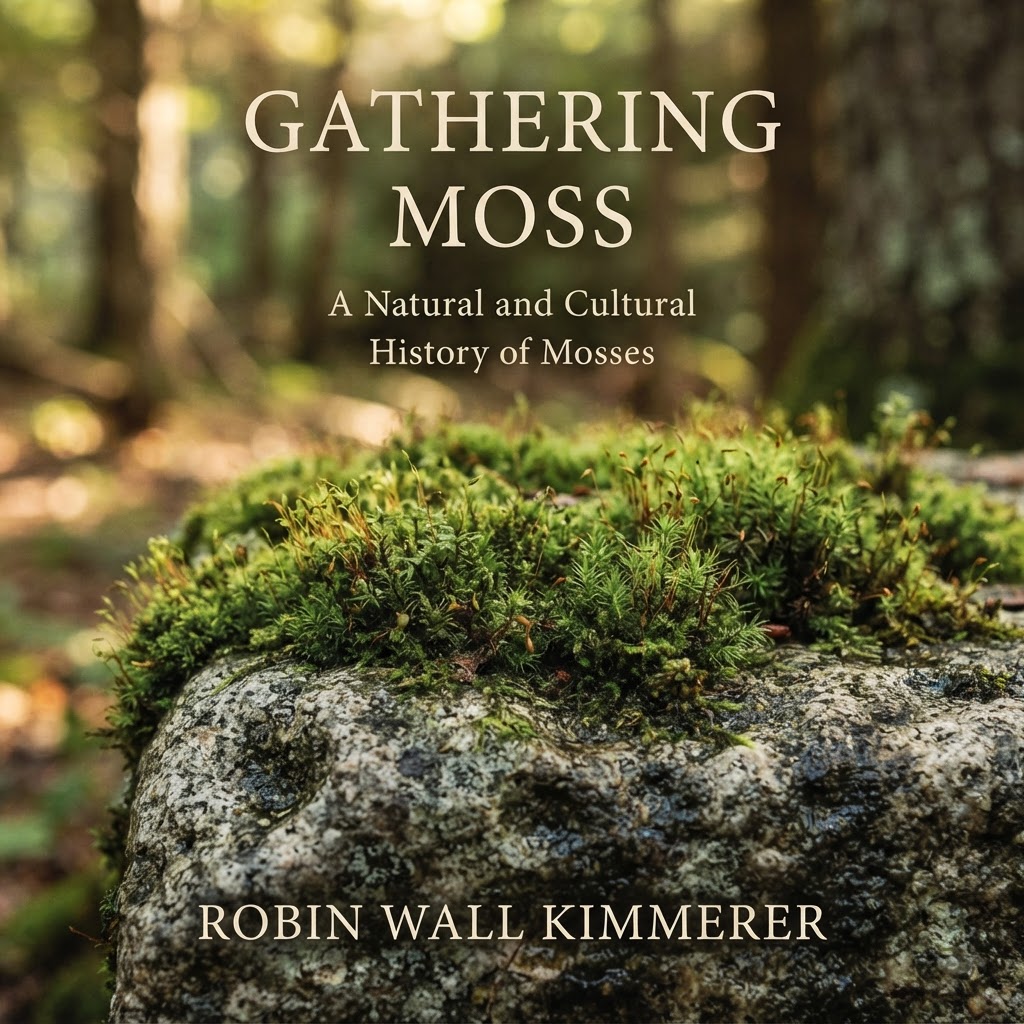
Robin Wall Kimmerer
In a world that often demands we look at the grand, sweeping vistas of nature, Robin Wall Kimmerer invites us to do something far more radical: to kneel down and look at the moss. Gathering Moss is not merely a botanical study; it is a profound meditation on the intersection of scientific rigor and indigenous wisdom. Kimmerer, a bryologist and member of the Citizen Potawatomi Nation, writes with a lyrical precision that transforms these tiny, overlooked organisms into teachers of resilience, patience, and interconnectedness. She masterfully bridges the gap between the objective data of ecology and the subjective, lived experience of being a human in a living landscape. One of the most striking aspects of the book is how Kimmerer describes the 'ancient' nature of mosses—survivors that have persisted through eons by choosing a path of humility and slow growth rather than aggressive dominance. Her reflections on the 'cultural history' of these plants force the reader to reconsider their own relationship with the environment. In an era defined by rapid technological acceleration and ecological anxiety, this book serves as a necessary corrective. It teaches us that there is immense power in the small, the quiet, and the persistent. By the time you finish, you will never walk through a forest the same way again; you will find yourself stopping to touch the velvet green carpets on a stone, recognizing them not as mere background scenery, but as complex, ancient societies that have much to tell us about how to endure and thrive in a changing world.
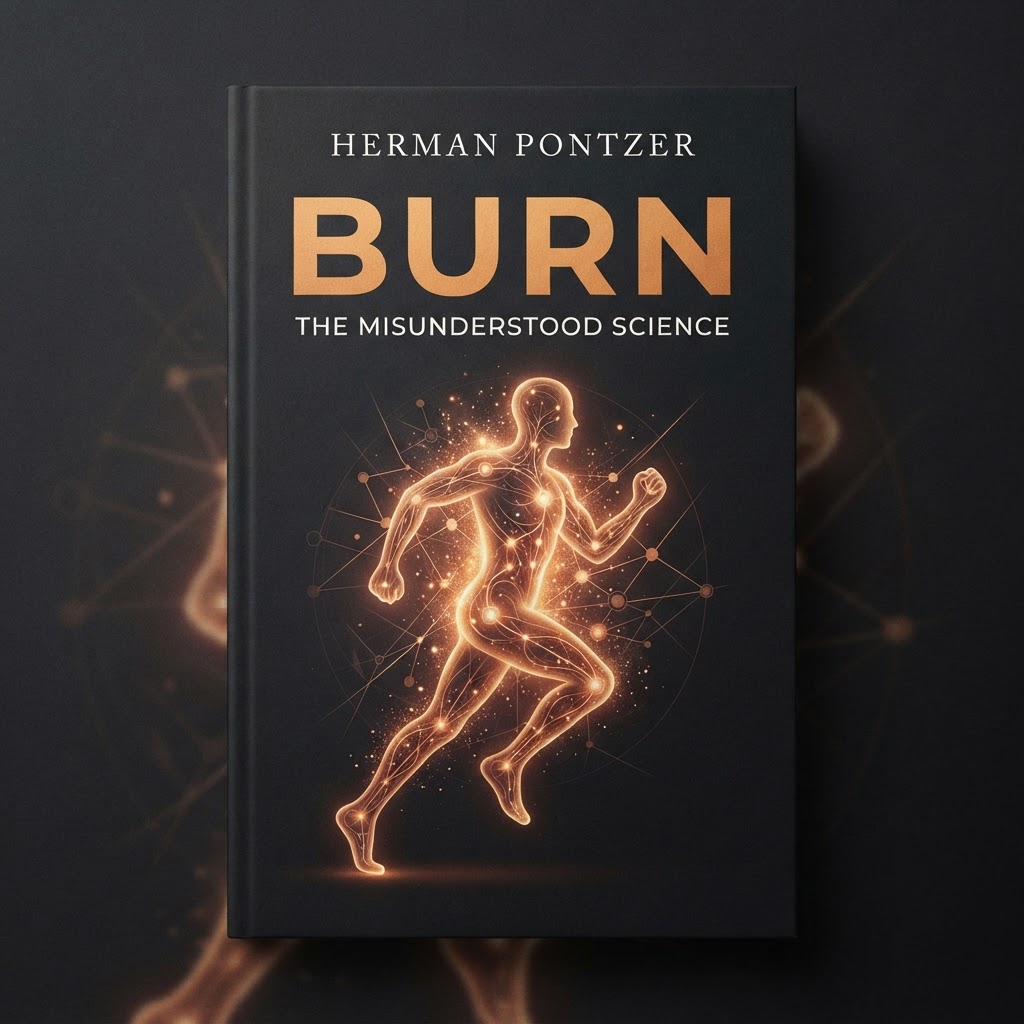
Herman Pontzer
In a landscape saturated with fitness influencers and fad diets, Herman Pontzer’s 'Burn' arrives as a necessary, cold splash of water. As an evolutionary anthropologist, Pontzer dismantles the pervasive 'calories-in, calories-out' myth that has dominated our health discourse for decades. His central thesis—that our daily energy expenditure is constrained by our evolutionary history—is both humbling and liberating. He illustrates this through his fascinating fieldwork with the Hadza hunter-gatherers, showing that their physical activity levels, while vastly different from ours, result in a similar total daily energy expenditure. This revelation forces us to confront the reality that exercise is not a magic bullet for weight loss, but rather a vital tool for internal health and metabolic regulation. It is a profound shift in perspective that moves the goalposts from 'burning calories' to 'optimizing metabolic function.' What makes this book essential reading right now is its ability to cut through the noise of modern wellness culture. Pontzer doesn't offer a quick fix; instead, he provides a rigorous, evidence-based framework for understanding why our bodies behave the way they do. By explaining how our metabolism controls everything from immune function to reproductive health, he invites the reader to stop viewing the body as a simple machine and start seeing it as a complex, adaptive system. It is a masterclass in science communication that manages to be intellectually rigorous while remaining deeply accessible. If you want to understand the biological constraints that define your health, this is the book to read.
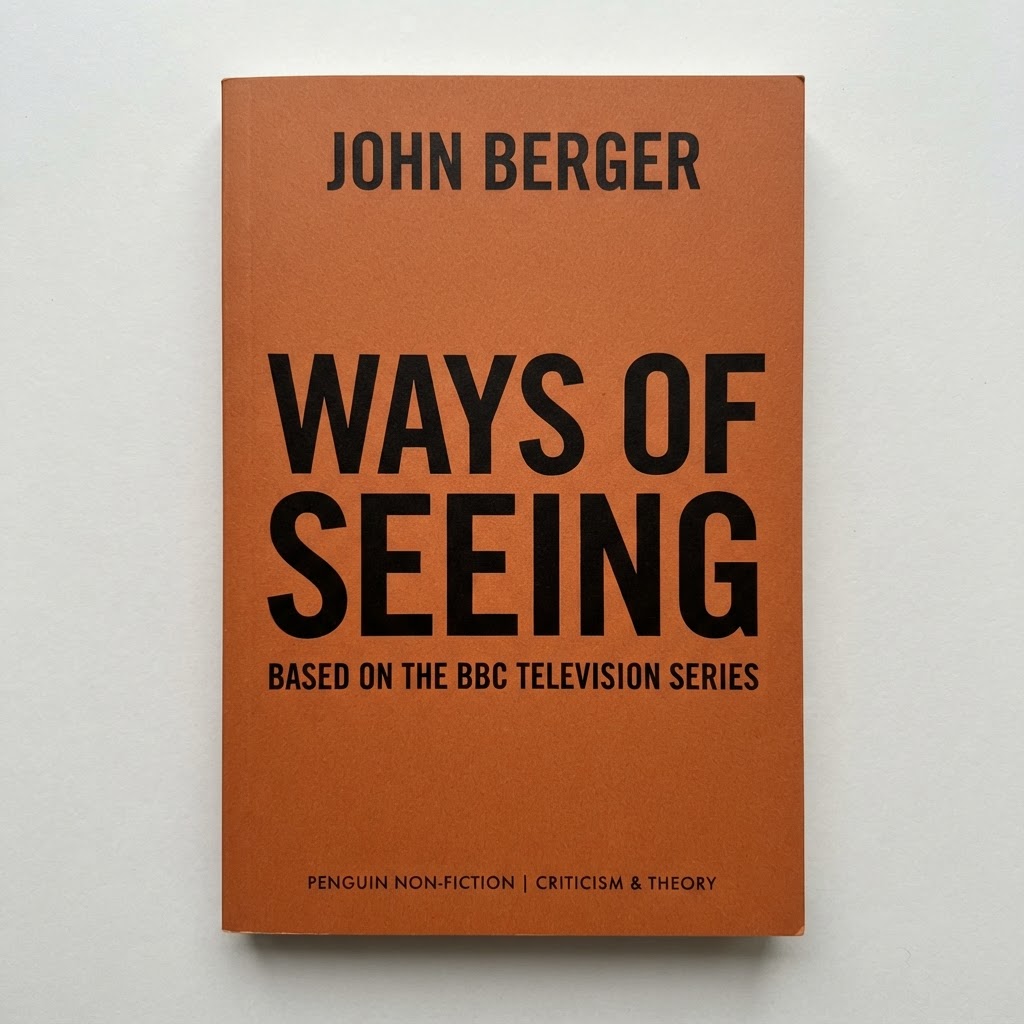
John Berger
John Berger’s Ways of Seeing is not merely a book about art; it is a fundamental deconstruction of how we perceive reality. Opening with the profound observation that 'the relation between what we see and what we know is never settled,' Berger strips away the elitist 'mystification' that often surrounds traditional art criticism. He forces us to confront the uncomfortable truth that our gaze is never neutral—it is conditioned by history, gender, and the pervasive influence of capitalism. By examining how oil paintings functioned as status symbols for the wealthy, he reveals that the way we value art is often tied to the act of ownership rather than the aesthetic experience itself. What makes this work so vital today is its prescient analysis of visual culture. Berger’s dissection of publicity and advertising feels even more urgent in our current era of social media and algorithmic consumption. When he writes, 'Publicity proposes to each of us that we transform ourselves, or our lives, by buying something more,' he perfectly captures the psychological engine of modern digital life. He teaches us to look past the surface of images to understand the power dynamics they reinforce, particularly his sharp insight that 'men look at women, and women watch themselves being looked at.' Reading this book is an act of intellectual liberation. It encourages a skepticism that is necessary for navigating a world saturated with curated imagery. Berger does not just tell you what to think; he provides the tools to dismantle the visual narratives that shape your identity and desires. Whether you are an artist, a designer, or simply a person trying to maintain agency in a hyper-visual society, this book remains an essential, transformative guide to reclaiming your own vision.
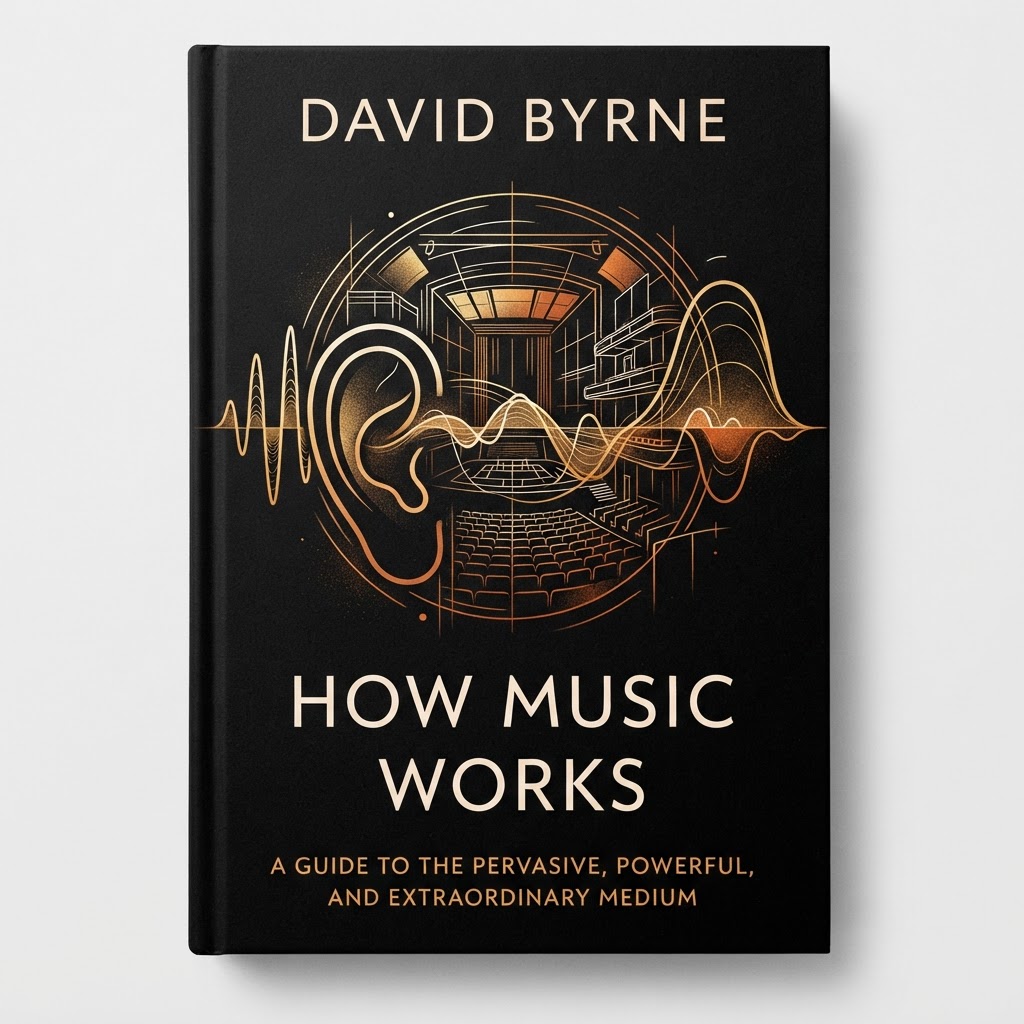
David Byrne
I have long believed that we often mistake music for a product—a static file or a polished recording—rather than what it truly is: a biological and social phenomenon shaped entirely by its environment. David Byrne’s 'How Music Works' dismantled my simplistic views on the subject. He argues that music is never created in a vacuum; it is a collaborative response to the physical spaces where it is performed. Whether he is dissecting the acoustics of a cathedral, the grimy intimacy of CBGB, or the way recording technology dictates the very structure of a song, Byrne shifts the focus from the 'genius' of the artist to the ecological context of the sound. What struck me most was his chapter on the 'creation in reverse'—the idea that our musical preferences are often retroactively justified by the technology we use to consume them. When he writes about how the limitations of early recording equipment forced artists into certain stylistic choices, I couldn't help but draw parallels to our current digital age. We are living in a time of infinite choice and perfect fidelity, yet we often feel a strange, hollow detachment from the music we stream. Byrne invites us to consider how our tools are not merely conduits for art, but active participants in its evolution. This book matters now more than ever because we are currently navigating a radical shift in how human culture is produced. As AI-generated audio and algorithmic curation threaten to homogenize our soundscapes, Byrne’s insistence on the human, messy, and physical nature of music feels like a necessary act of resistance. He reminds us that music is a form of communication that relies on community and physical space. If you want to stop just 'listening' to music and start understanding the complex, beautiful machinery behind it, this is the book that will change your relationship with sound forever.
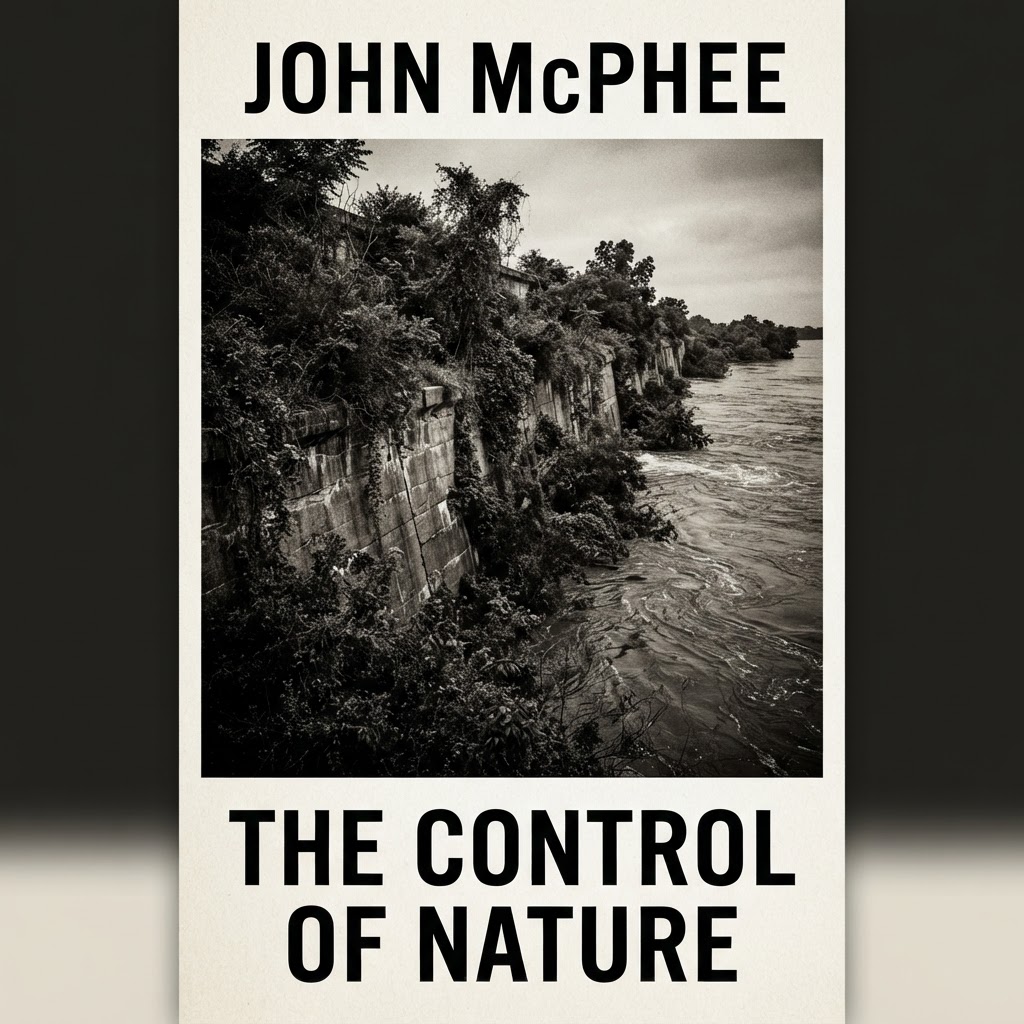
John McPhee
John McPhee’s The Control of Nature is a masterclass in journalistic humility and a sobering meditation on the hubris of the human species. Through three distinct case studies—the attempt to divert lava flows in Iceland, the effort to keep the Mississippi River from changing course, and the struggle against debris flows in the San Gabriel Mountains—McPhee documents our relentless, often futile, desire to impose order upon a chaotic, indifferent natural world. His prose is surgical, precise, and devoid of the romanticism that often plagues nature writing, making the reality of our geological insignificance all the more striking. What makes this book essential reading today is its profound relevance to our current climate crisis. We are living in an era where the 'control' of nature has become a matter of survival, yet McPhee reminds us that nature is not a problem to be solved, but a force to be negotiated with. He captures the tension between human engineering and geological time with such clarity that you cannot help but feel the weight of our collective arrogance. It is a book that forces you to look at a levee or a concrete channel and see not just infrastructure, but a fragile, temporary truce with the earth. It is a humbling, intellectually rigorous experience that shifts your perspective from one of mastery to one of stewardship and caution.
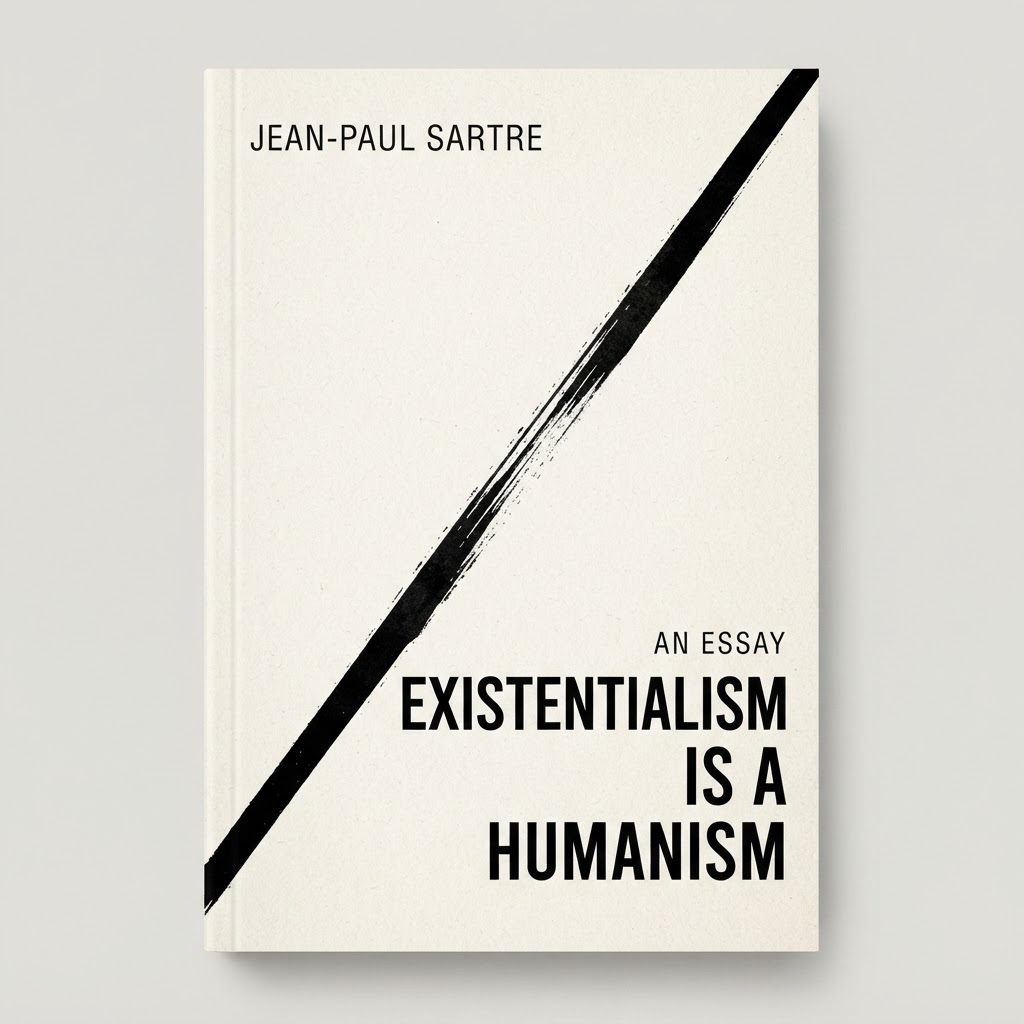
Jean-Paul Sartre
In a world increasingly defined by algorithmic determinism and the erosion of individual agency, Jean-Paul Sartre’s 'Existentialism is a Humanism' feels less like a historical artifact and more like a necessary wake-up call. Originally delivered as a lecture in 1945, this slim volume serves as a potent defense of the existentialist project against its critics. Sartre’s central thesis—that 'existence precedes essence'—remains one of the most liberating concepts in the history of thought. It posits that we are not born with a pre-defined purpose or blueprint; rather, we are thrust into the world and must define ourselves through our actions. This is not a license for nihilism, but a radical call to responsibility. When Sartre argues that in choosing for oneself, one chooses for all of humanity, he elevates the individual from a passive observer to an active architect of moral reality. This is a heavy burden, which he famously describes as being 'condemned to be free.' Reading this today, I am struck by how often we seek to escape this freedom by hiding behind social roles, technological convenience, or the comfort of collective opinion. Sartre forces us to confront the 'anguish' of our own choices, reminding us that there is no external authority—divine or otherwise—to blame for the lives we lead. It is a bracing, uncomfortable, and ultimately empowering read that demands we stop waiting for permission to become who we are. If you feel adrift in the noise of modern life, this book provides the compass you didn't know you were missing.
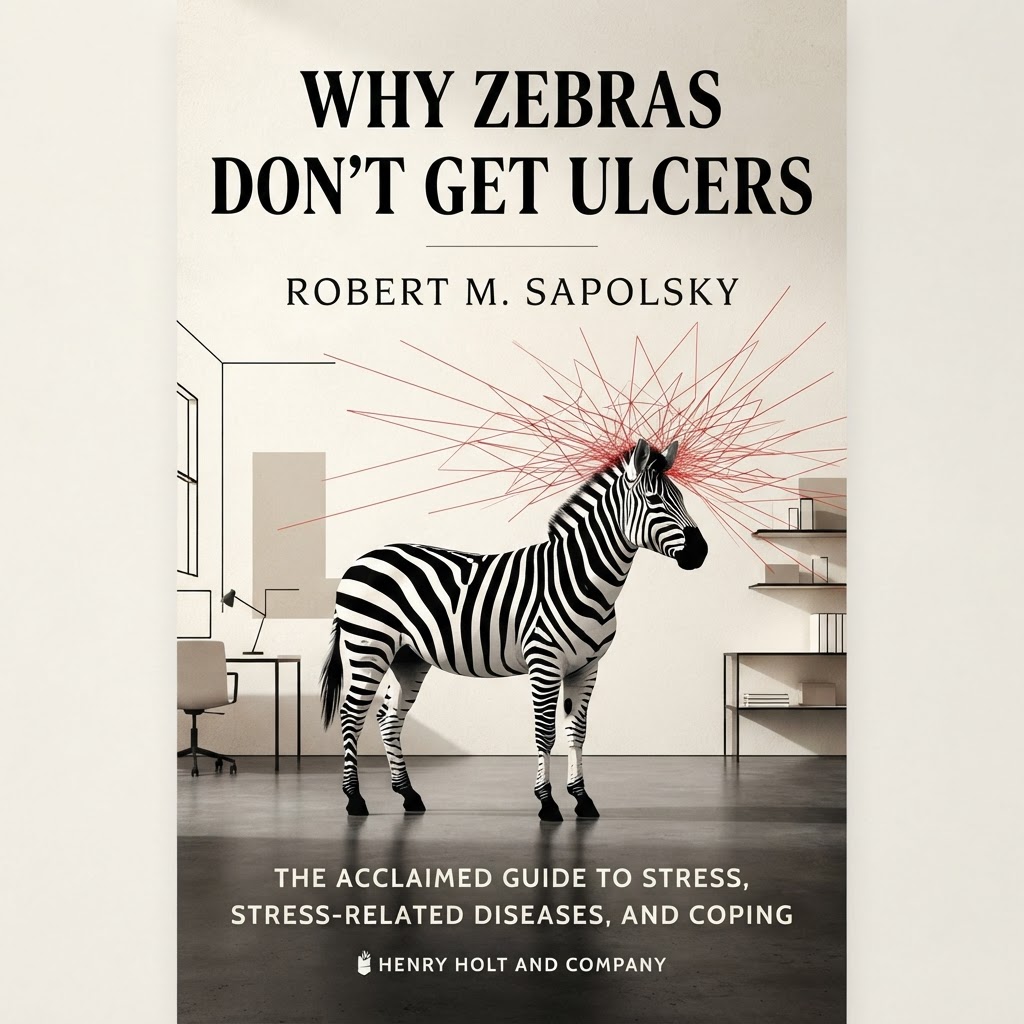
Robert Sapolsky
In a world where we are constantly bombarded by the 'hustle culture' of modern existence, Robert Sapolsky’s 'Why Zebras Don't Get Ulcers' serves as a vital, sobering, and deeply intellectual anchor. Sapolsky, a neurobiologist with a rare gift for translating complex physiological processes into accessible prose, masterfully explains the disconnect between our evolutionary biology and our contemporary stressors. The central premise is as elegant as it is devastating: while a zebra experiences a short-term stress response to escape a lion, humans have evolved the unique, maladaptive ability to trigger that same 'fight or flight' system over abstract, long-term psychological worries—like a looming deadline or a social slight. This chronic activation is the silent architect of our modern health crises. What I find most compelling is Sapolsky’s refusal to offer a 'quick fix.' He doesn't promise a miracle diet or a simple meditation hack. Instead, he provides a rigorous, evidence-based map of how stress infiltrates every system of the body, from the cardiovascular to the immune. He forces the reader to confront the reality that our bodies were never designed for the relentless, low-grade anxiety of the 21st century. Reading this book changed how I view my own 'stressors.' It shifted my perspective from seeing stress as a badge of productivity to recognizing it as a biological tax I am paying on my own longevity. It is a profound meditation on the limits of human adaptation and a necessary read for anyone trying to navigate the high-pressure environment of modern life with their sanity and health intact.

Benjamin Bikman
In a landscape saturated with conflicting nutritional advice and fad diets, Benjamin Bikman’s 'Why We Get Sick' stands out as a masterclass in clarity and scientific rigor. As a professor of pathophysiology, Bikman does not merely offer another set of rules; he provides a fundamental shift in perspective. He argues that the vast majority of our modern chronic ailments—from type 2 diabetes and heart disease to Alzheimer’s and even certain cancers—are not disparate, unrelated tragedies, but rather symptoms of a singular, underlying metabolic dysfunction: insulin resistance. By tracing the physiological mechanisms of how our cells process energy, he makes the invisible visible, turning abstract biochemistry into a compelling narrative of human health. What makes this book essential reading right now is its refusal to accept the status quo of 'managing' disease. Bikman challenges the medical establishment's tendency to treat symptoms in isolation, instead advocating for a root-cause approach. He explains the 'why' behind insulin’s role as a master regulator, showing how its chronic elevation creates a cascade of cellular chaos. It is a sobering look at how our modern environment has hijacked our biology, but it is also deeply empowering. The book provides a clear, evidence-based roadmap for reclaiming metabolic health through dietary and lifestyle interventions that are both accessible and profound. Reading this felt like finally seeing the map of a territory I had been wandering through blindly. It is a vital, urgent, and intellectually satisfying work that demands we stop treating our bodies as machines to be patched and start treating them as complex, responsive systems that require proper fuel and care to thrive.
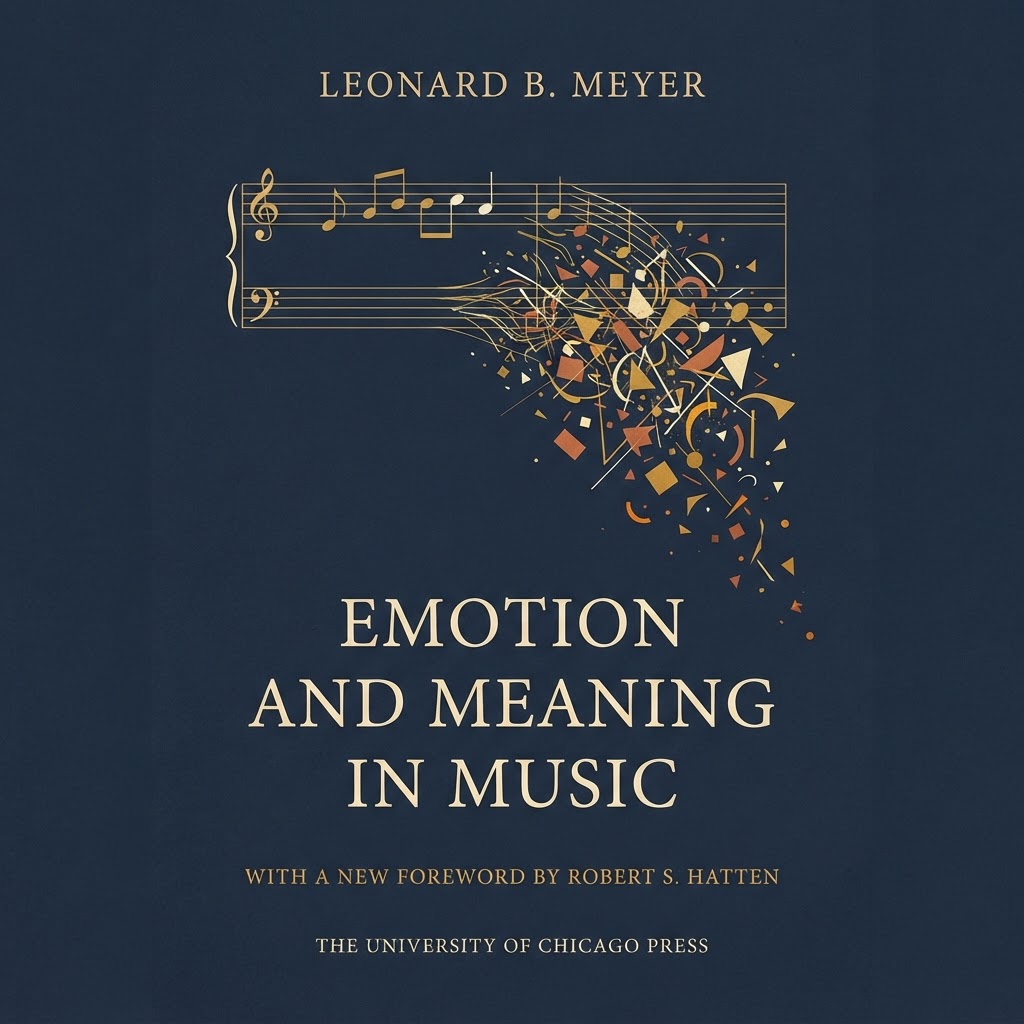
Leonard B. Meyer
In an era where music is often reduced to algorithmic playlists and background noise, Leonard B. Meyer’s 'Emotion and Meaning in Music' remains a vital, bracing corrective. Meyer does not merely analyze music; he dissects the very architecture of our emotional response to sound. By applying Gestalt psychology to musical structure, he argues that musical meaning arises from the tension between expectation and fulfillment. When a melody deviates from the path our brain anticipates, we experience a 'delay'—a psychological suspension that creates the profound emotional resonance we associate with great art. It is a rigorous, intellectual journey that demands patience, but it rewards the reader with a fundamental understanding of why we are moved by a simple cadence or a complex symphony. What makes this book essential reading today is its ability to strip away the mysticism surrounding musical 'genius' and replace it with a clear-eyed look at human cognition. Meyer explains that our aesthetic experiences are not random; they are deeply rooted in our biological and cultural conditioning. He masterfully navigates the relationship between pattern and meaning, showing how composers manipulate our internal 'musical grammar' to evoke everything from melancholy to triumph. Reading this, I found myself listening to my favorite records with a new, heightened awareness of the 'inhibitions' and 'resolutions' occurring in real-time within my own mind. This is not a light read, but it is a transformative one. It challenges the listener to move beyond passive consumption and engage with the mechanics of their own feelings. In a world that constantly tries to quantify human experience, Meyer reminds us that the most powerful emotions are often those that arise from the most precise, structural manipulations. If you want to understand why music is not just a luxury, but a core component of the human condition, this book is the definitive starting point.
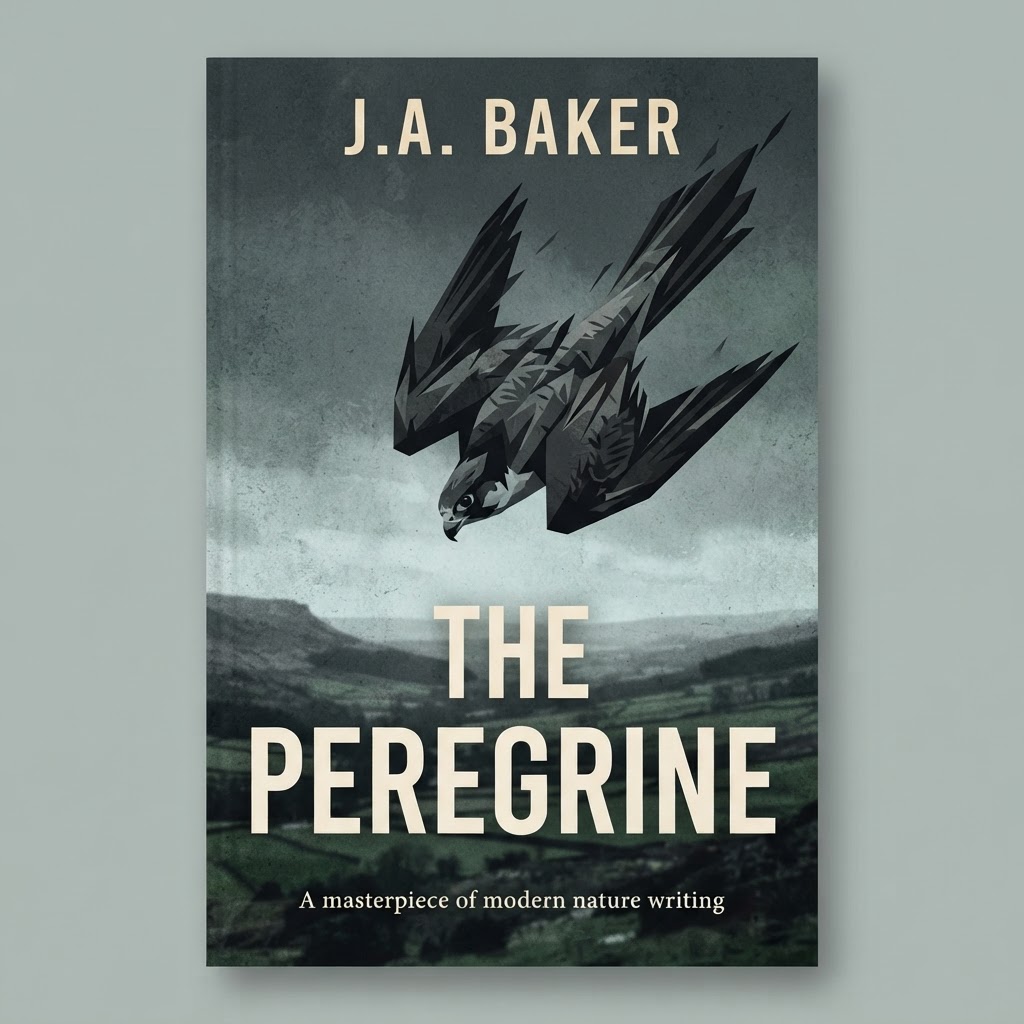
J.A. Baker
There are books about nature, and then there is J.A. Baker’s The Peregrine—a work that feels less like a piece of nature writing and more like a fever dream of total immersion. Baker spent a decade tracking peregrine falcons across the marshes of Essex, England, and the result is a prose style so sharp, so visceral, and so relentlessly focused that it borders on the hallucinatory. He does not merely observe the bird; he attempts to dissolve the boundary between human and raptor, writing, 'I wanted to shed my human skin and become a bird.' It is a masterclass in restraint and obsession, stripping away the sentimentality often found in the genre to reveal the cold, beautiful, and terrifying reality of the wild. What makes this book essential reading today is its challenge to our modern, detached relationship with the environment. In an era where we consume nature through screens and curated documentaries, Baker demands we go outside and actually look—not with the intent to categorize or control, but with the intent to witness. His descriptions of the landscape are as stark as his descriptions of the hunt, reminding us that we are not separate from the natural world, but participants in a brutal, ancient cycle. It is a haunting, singular achievement that forces the reader to confront the limits of their own perception. If you want to understand what it means to truly pay attention, read this book.
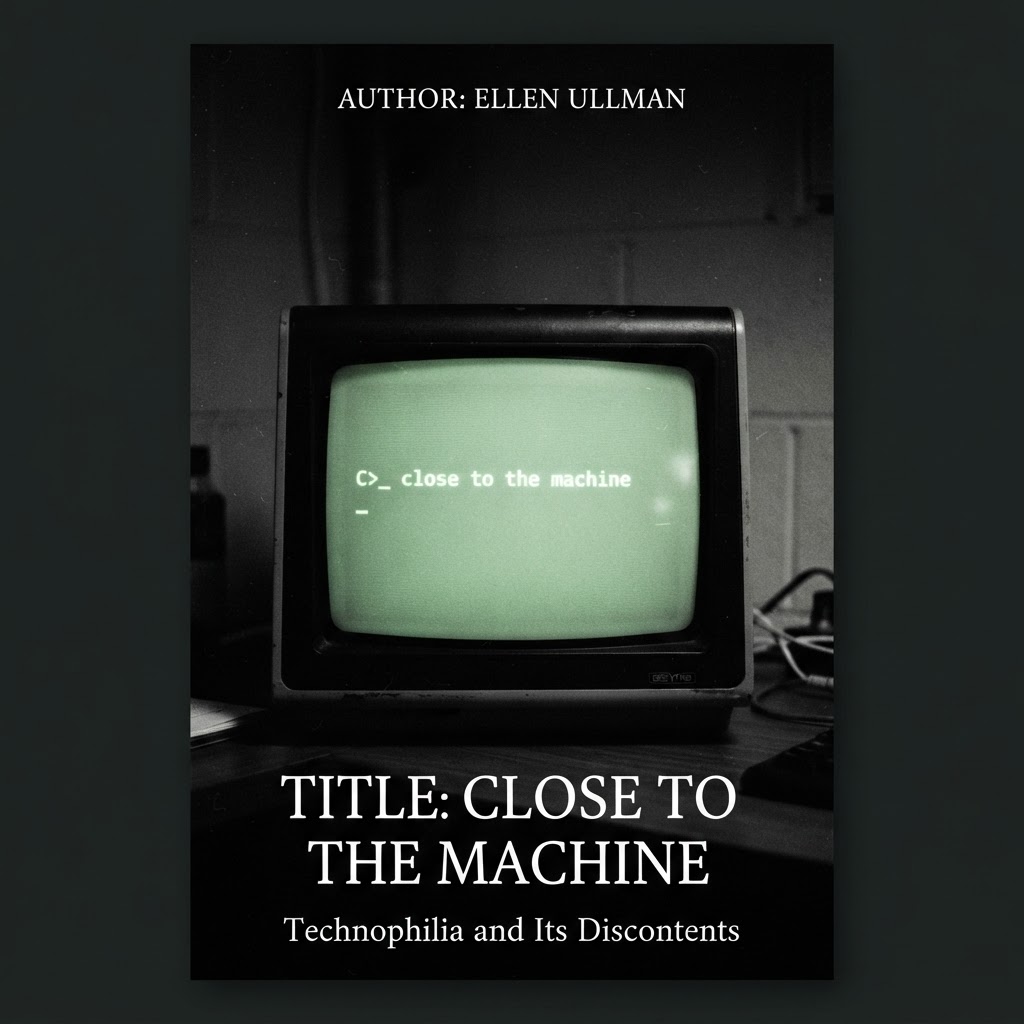
Ellen Ullman
In an era where we are constantly bombarded by the shiny, frictionless promises of Silicon Valley, Ellen Ullman’s 'Close to the Machine' serves as a necessary, grounding corrective. Writing from the trenches of the 1990s dot-com boom, Ullman offers a rare, visceral look at the life of a software engineer—not as a heroic innovator, but as a human being caught in a strange, recursive dance with the logic of the machine. Her prose is hauntingly beautiful, capturing the specific, lonely ecstasy of debugging code while simultaneously questioning the cost of our obsession with digital efficiency. What makes this book essential reading today is its profound honesty about the 'technophilia' that defines our current moment. Ullman writes with the precision of a programmer and the soul of a poet, exploring how the act of coding inevitably shapes the coder. She describes the machine as a 'cold, logical, and demanding' partner, one that requires us to strip away the messy, irrational parts of our humanity to communicate with it. As we move deeper into an age of generative AI and algorithmic governance, her reflections on the 'discontents' of this relationship feel more urgent than ever. We are all, in some sense, becoming closer to the machine, and Ullman helps us understand what we might be losing in the process. This is not a technical manual or a business memoir; it is a philosophical meditation on the nature of work, identity, and the limits of human reason. Ullman’s ability to articulate the tension between the desire for control and the reality of human fallibility is unmatched. If you want to understand why technology often feels like it is solving problems while simultaneously creating new, deeper voids in our lives, this book is your map. It is a brilliant, melancholic, and deeply human work that reminds us that no matter how sophisticated our tools become, the most important questions remain stubbornly, beautifully human.
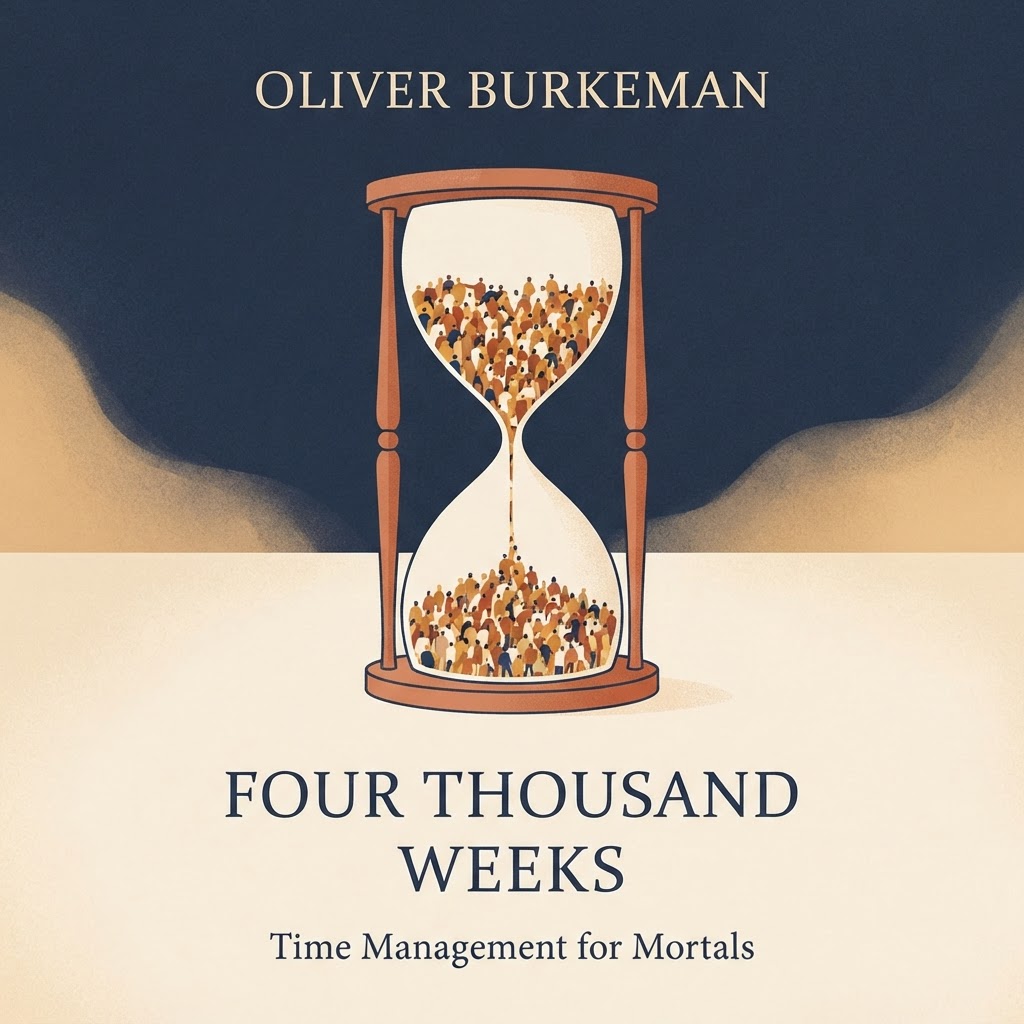
Oliver Burkeman
In an era obsessed with productivity hacks and the relentless optimization of our daily schedules, Oliver Burkeman’s 'Four Thousand Weeks' arrives as a necessary, bracing splash of cold water. The title itself is a stark reminder of our finitude: if you are lucky, you have about four thousand weeks on this planet. Burkeman argues that our modern anxiety stems from the futile attempt to 'get everything done,' a goal that is not only impossible but fundamentally misaligned with the human experience. He shifts the focus from efficiency to what he calls 'existential overwhelm,' urging us to embrace our limitations rather than fight them. By accepting that we will never clear our to-do lists, we are finally free to focus on what actually matters. This book is not a guide to doing more; it is a guide to being more present. It challenges the reader to confront the discomfort of choosing one path while inevitably sacrificing others. In a world that demands our constant attention, Burkeman’s philosophical pivot toward 'finitude' is profoundly liberating. It is a rare book that manages to be both deeply researched and deeply comforting, reminding us that the point of life is not to master time, but to experience it.
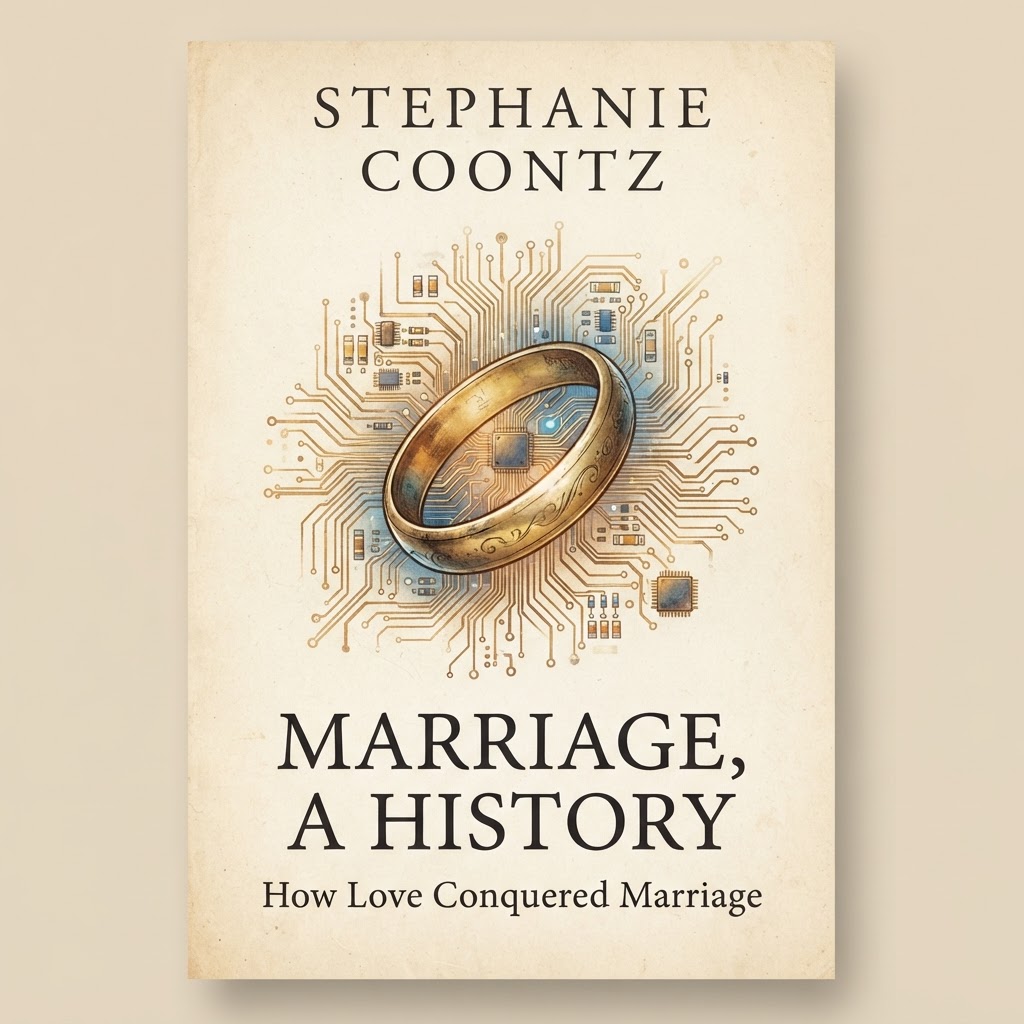
Stephanie Coontz
In a world where we treat marriage as the ultimate personal project—a private sanctuary for self-actualization—Stephanie Coontz’s 'Marriage, a History' acts as a necessary, sobering cold shower. Coontz masterfully dismantles the myth that marriage has always been about 'love.' By tracing the institution from ancient political alliances to the Victorian shift toward emotional intimacy, she reveals that our current obsession with the 'soulmate' model is a historical anomaly, not a timeless tradition. It is a profound relief to read a historian who refuses to romanticize the past while simultaneously explaining why our modern expectations are so uniquely heavy. Coontz argues that when we moved marriage into the purely emotional sphere, we inadvertently burdened it with the impossible task of fulfilling every human need. This book matters now more than ever because we are currently living through the fallout of that shift. As we navigate the pressures of infinite choice and the erosion of traditional social scripts, Coontz provides the intellectual scaffolding to understand why our relationships feel so fragile. She doesn't offer trite advice on how to 'fix' your partner; instead, she offers the perspective required to stop viewing your marriage as a failure simply because it doesn't mirror a fairy tale. It is a brilliant, witty, and deeply researched corrective to the narcissism of modern romance.
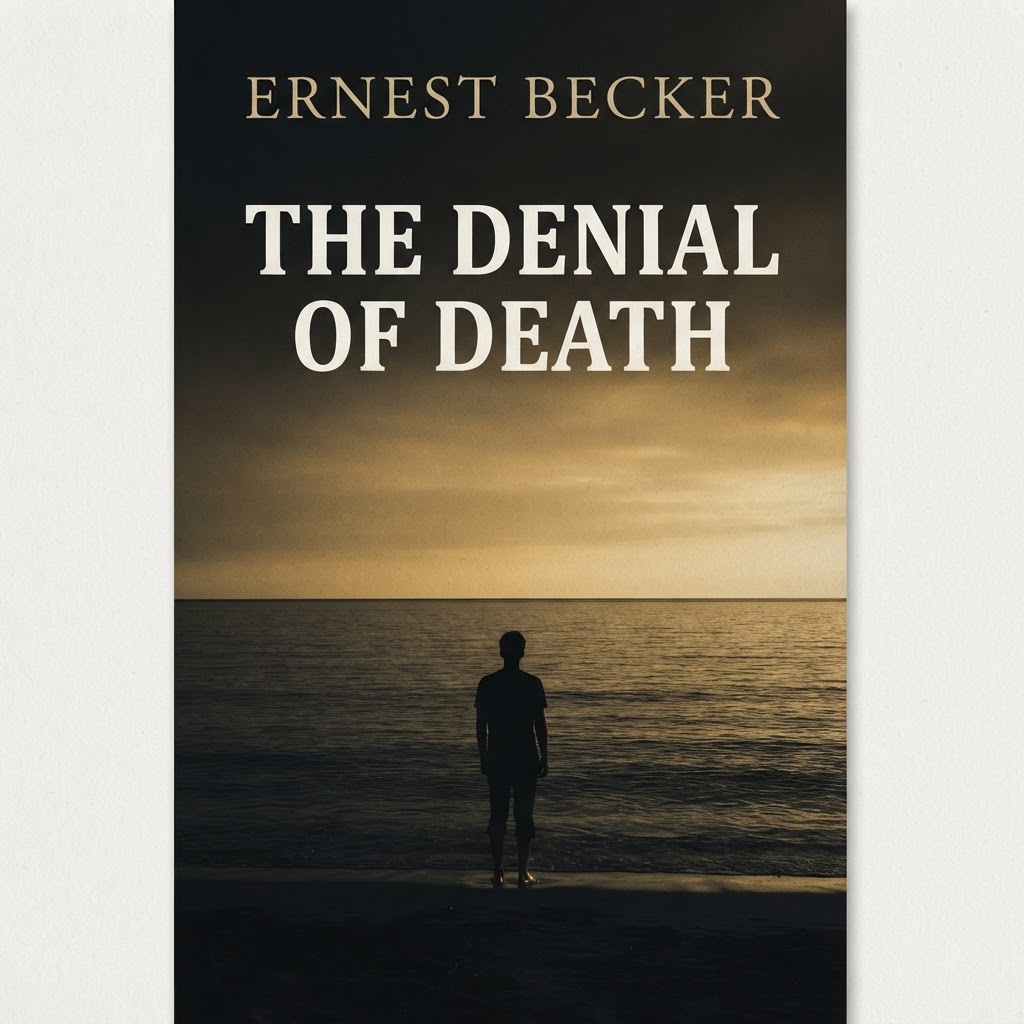
Ernest Becker
There are books you read, and then there are books that fundamentally rearrange the furniture of your mind. Ernest Becker’s Pulitzer Prize-winning 'The Denial of Death' belongs firmly in the latter category. I first encountered this work during a period of existential restlessness, and its thesis—that human civilization is essentially a grandiose, symbolic defense mechanism against the terror of our own mortality—hit me with the force of a revelation. Becker posits that we are gods with anuses, caught in a permanent tug-of-war between our desire for significance and the biological reality of our inevitable decay. What makes this book so piercingly relevant in our current moment is how it illuminates the 'hero systems' we construct to stave off anxiety. In an age of digital immortality, where we curate online legacies and obsess over personal branding, Becker’s analysis of 'immortality projects' feels prophetic. He argues that we desperately seek to become part of something larger than ourselves—be it nation, religion, career, or ideology—to escape the crushing awareness of our finiteness. Reading his deconstruction of Otto Rank and Kierkegaard, I found myself constantly looking up from the page to observe my own behavior; why do I feel this specific urge to create? Why does social validation feel like a matter of survival? This isn't a comforting read, nor is it meant to be. It is a bracing, intellectual deep dive that forces you to confront your own psychology head-on. Becker doesn't offer a 'cure' for the human condition, but he offers something much more valuable: clarity. By understanding the roots of our collective denial, we gain a sliver of freedom from the unconscious drives that govern our modern lives. If you have ever felt the gnawing absurdity of existence, this book will not only validate that feeling—it will provide the architecture to understand it.
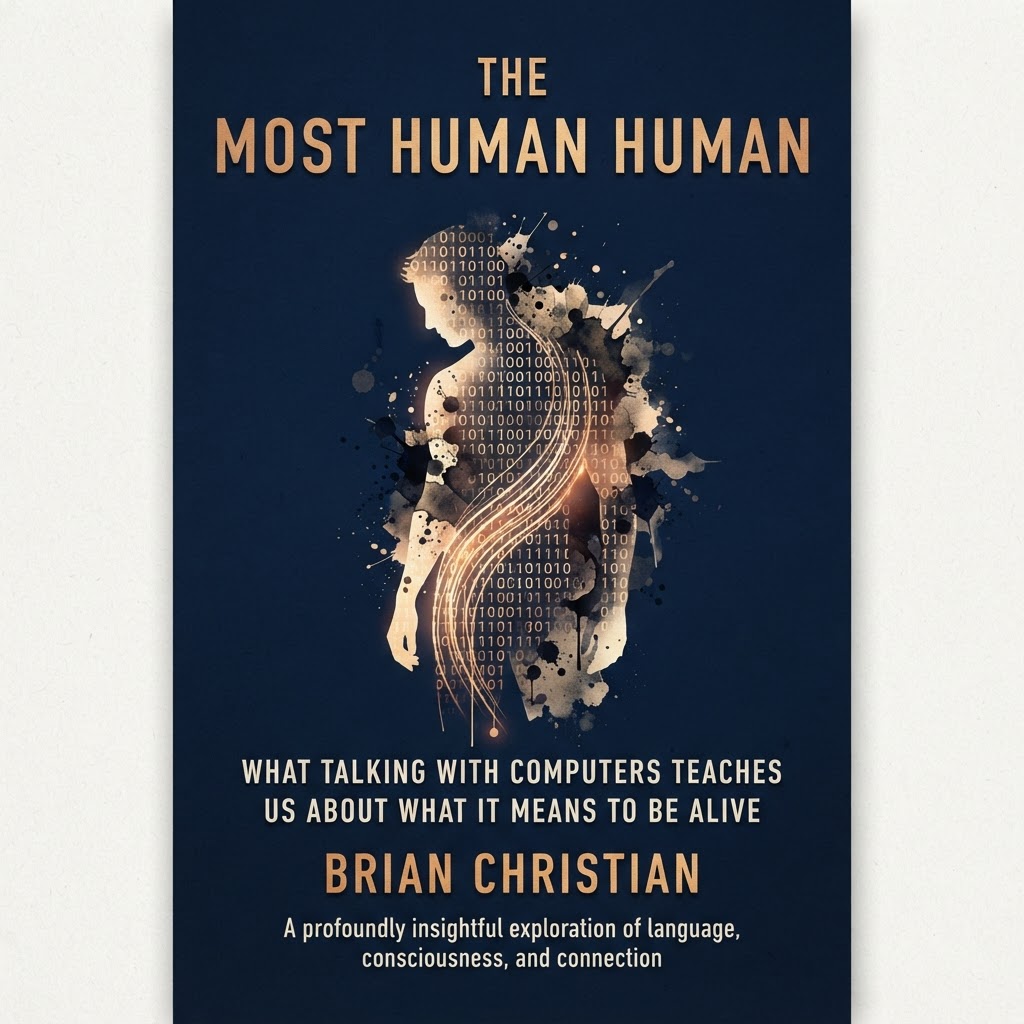
Brian Christian
In an era where we are increasingly obsessed with the 'intelligence' of our machines, Brian Christian offers a refreshing, deeply humanistic pivot. As a poet with a background in computer science, Christian uses the framework of the Turing Test—specifically the Loebner Prize competition—to explore the boundary between algorithmic mimicry and genuine human connection. He doesn't just analyze AI; he participates in it, acting as a human foil to chatbots, and in doing so, he uncovers profound truths about our own cognitive and emotional architecture. It is a rare book that manages to be both technically rigorous and beautifully lyrical. Christian argues that the 'most human' human is not the one who acts like a machine, but the one who embraces the messy, unpredictable, and often inefficient qualities that define our species. He challenges the reader to consider that our greatest strength in the age of automation is our capacity for nuance, empathy, and the 'poetic' leaps that no large language model can truly replicate. This book matters now more than ever because we are currently outsourcing our decision-making and creative processes to systems that prioritize optimization over meaning. Christian reminds us that to be alive is to be capable of error, vulnerability, and genuine surprise. It is a vital read for anyone feeling the creeping anxiety of a world that seems to value data over depth.
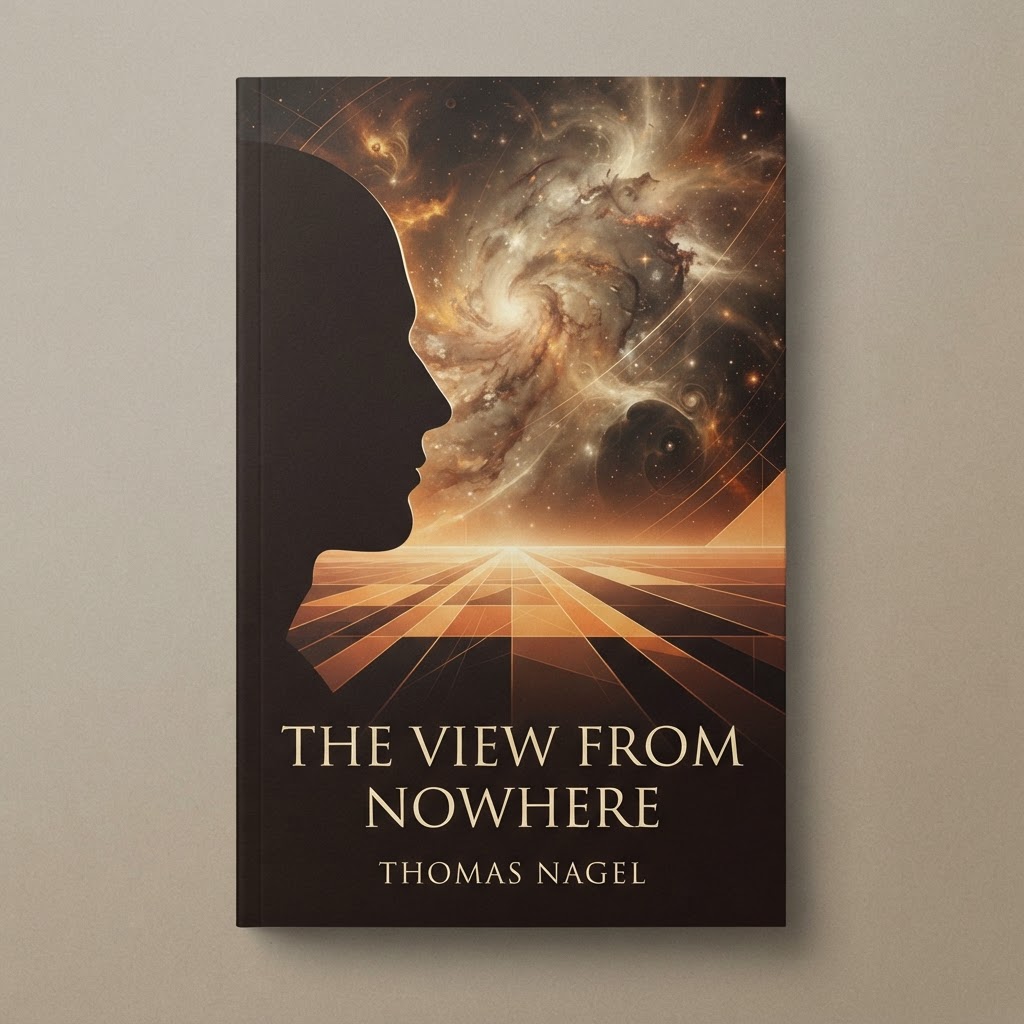
Thomas Nagel
In a world increasingly obsessed with the 'objective'—with data, algorithms, and the cold metrics of efficiency—Thomas Nagel’s The View From Nowhere serves as a vital, grounding corrective. Nagel tackles the fundamental tension of human existence: we are physical objects in a physical world, yet we are also subjects who experience that world from a specific, internal perspective. He masterfully explores how we attempt to transcend our own subjectivity to reach an 'objective' view, only to realize that the more we pull back to see the 'whole,' the more we risk losing the very thing that makes us human: our consciousness, our values, and our agency. Reading this book feels like watching a master architect dismantle the foundations of your own certainty. Nagel does not offer easy answers; instead, he forces you to confront the 'absurdity' of trying to reconcile our personal lives with the vast, indifferent universe. His analysis of the mind-body problem and the nature of moral objectivity is as rigorous as it is poetic. It matters now more than ever because we are currently living through an era where we are encouraged to outsource our thinking to machines that possess no 'view' at all. Nagel reminds us that the subjective experience is not a bug in the system of reality—it is the very lens through which reality is constructed. This is a challenging, dense, and deeply rewarding work that demands you slow down and reconsider what it actually means to 'know' anything at all. It is a book for those who are tired of shallow certainties and are ready to sit with the profound, beautiful discomfort of the truth.
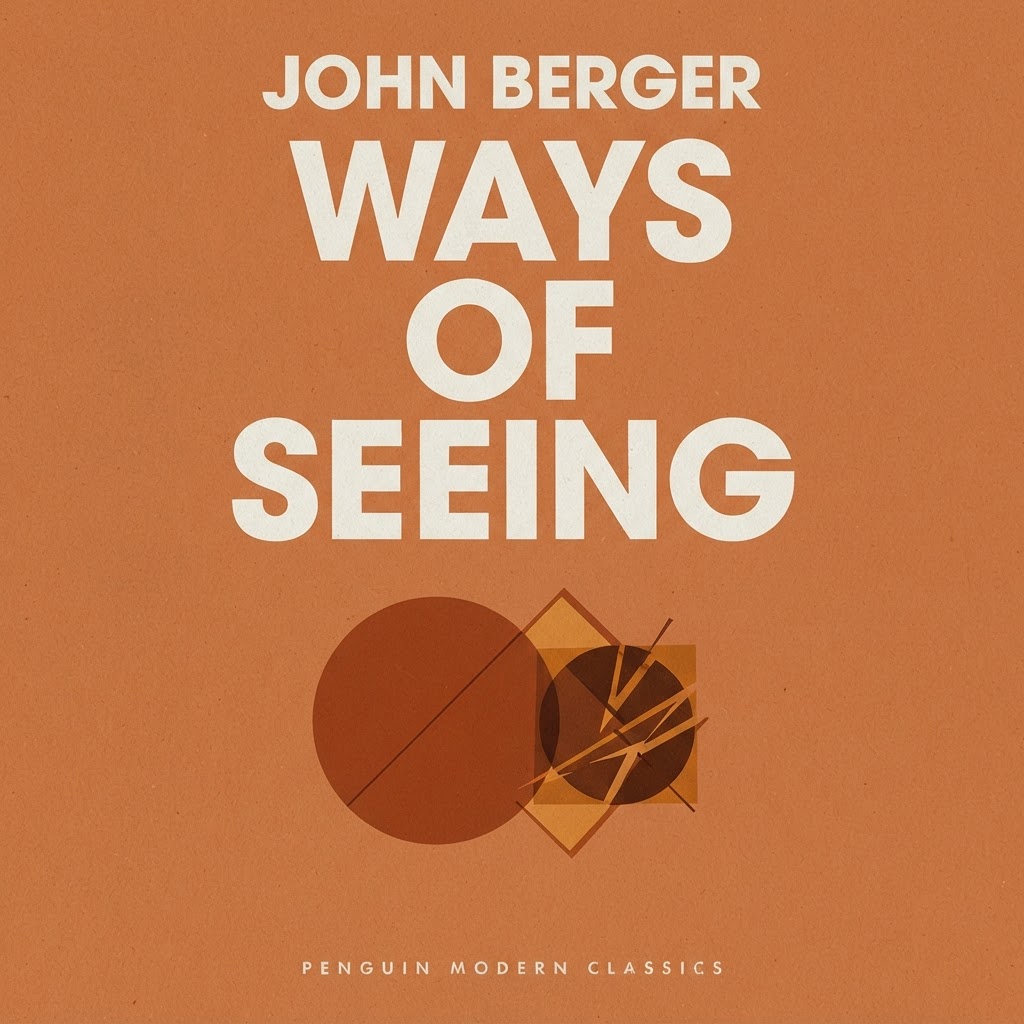
John Berger
John Berger’s 'Ways of Seeing' is not merely a book about art history; it is a radical deconstruction of the visual language that shapes our reality. Berger famously opens with the assertion that 'seeing comes before words,' reminding us that our initial engagement with the world is pre-linguistic and deeply intuitive. However, he quickly pivots to show how our 'seeing' is perpetually colonized by cultural assumptions, class structures, and the pervasive influence of advertising. By stripping away the mystification often surrounding 'high art,' Berger forces us to confront the uncomfortable truth that paintings are, at their core, objects of property and status. His analysis of the 'male gaze'—the idea that men look at women while women watch themselves being looked at—remains one of the most profound psychological insights into gender dynamics ever committed to paper. It is a short, punchy, and visually driven text that demands you stop being a passive consumer of images. In an era defined by the relentless, algorithmic feed of social media, Berger’s work is more urgent than ever. We are currently drowning in a sea of curated imagery designed to make us feel inadequate so that we might purchase our way to a better self. 'Ways of Seeing' provides the intellectual armor needed to navigate this landscape. It teaches you to look past the surface of an image to identify the power structures hiding in plain sight. Reading this book is an act of reclamation; it restores your agency as a viewer and forces you to acknowledge that the relationship between what we see and what we know is never settled.
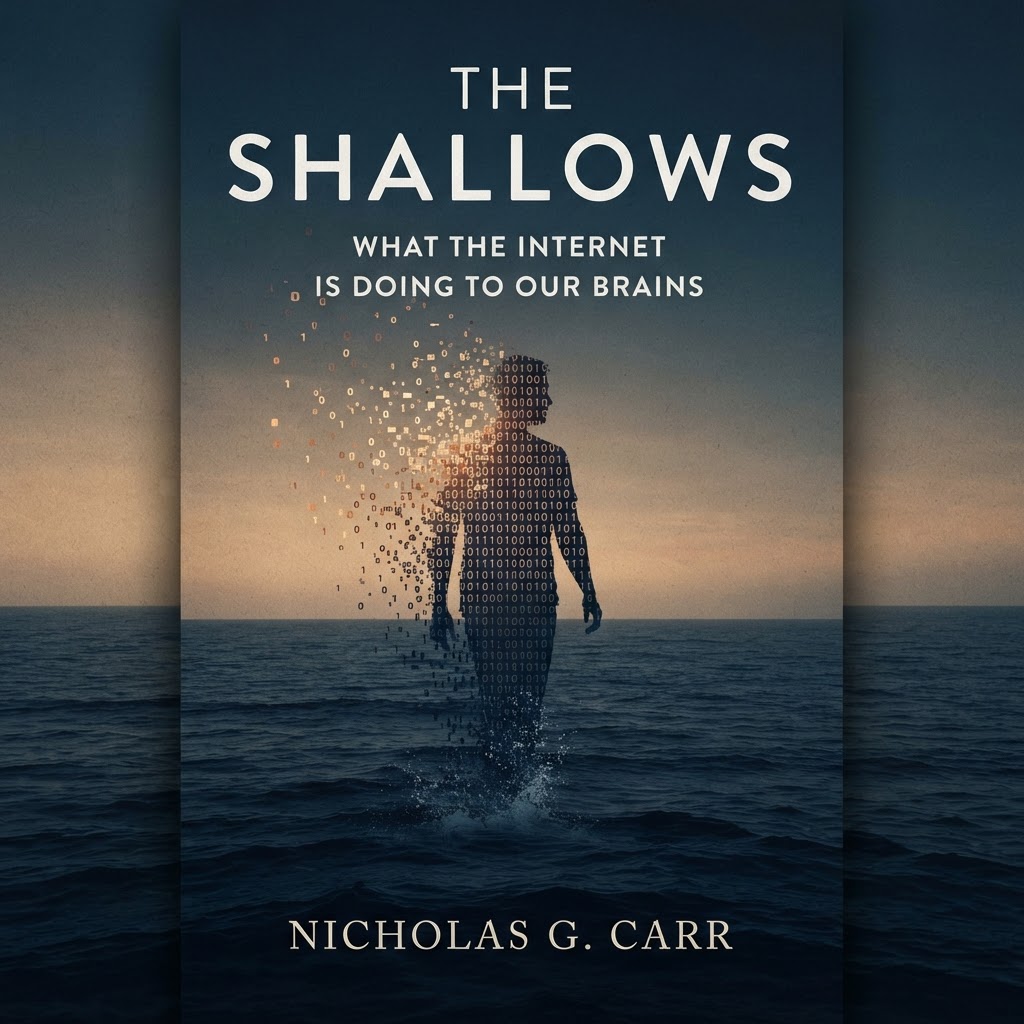
Nicholas G. Carr
In an era where our cognitive habits are increasingly dictated by the relentless ping of notifications and the infinite scroll, Nicholas Carr’s 'The Shallows' serves as a vital, sobering mirror. Carr masterfully weaves together neuroscience and intellectual history to argue that our tools are not merely passive conduits for information; they are active agents that reshape the very architecture of our brains. He posits that the internet, by design, encourages a state of 'continuous partial attention,' effectively eroding our capacity for the deep, linear focus required for complex thought and sustained contemplation. Reading this book felt like a necessary intervention in my own digital life, forcing me to confront how my own reading habits have fragmented over the last decade. Carr’s exploration of neuroplasticity—the idea that our brains physically adapt to the tasks we perform most frequently—is both fascinating and terrifying. When we trade the deep immersion of a book for the rapid-fire scanning of web pages, we are literally pruning the neural pathways associated with patience and synthesis. This book matters now more than ever because we are currently living through the consequences he predicted. As we integrate AI and even more immersive interfaces into our daily routines, the struggle to maintain a 'deep' mind is no longer just a philosophical preference; it is a fundamental challenge to our intellectual autonomy. Carr does not demand we abandon technology, but he does demand we recognize the cost of our convenience. It is a profound, essential read for anyone who feels the fraying edges of their own concentration.
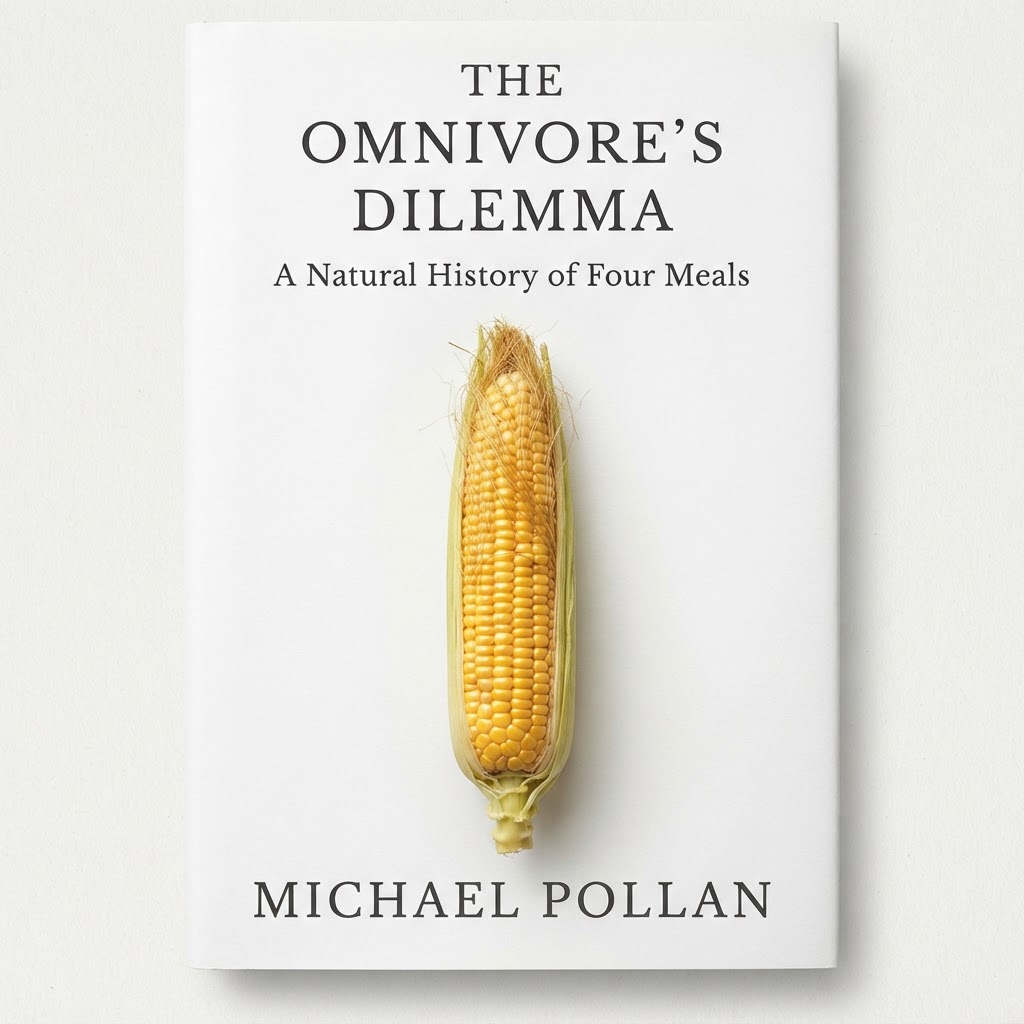
Michael Pollan
In an era where our relationship with food has become increasingly abstracted by industrial processing and marketing, Michael Pollan’s The Omnivore's Dilemma remains the essential corrective. Pollan does not merely write about nutrition; he investigates the philosophical and ecological consequences of what we put on our plates. By tracing four distinct food chains—industrial, industrial organic, pastoral, and hunter-gatherer—he forces the reader to confront the uncomfortable reality that we are, quite literally, what we eat. His exploration of the 'industrial corn' system is particularly haunting, revealing how a single crop has come to dominate our landscape and our biology in ways we are only beginning to understand. What makes this book so vital today is its refusal to offer simple, prescriptive diet advice. Instead, Pollan invites us to reclaim our agency as eaters. He challenges the modern obsession with 'nutritionism'—the reduction of food to mere chemical components—and argues for a return to the cultural and biological wisdom of eating real, whole foods. His prose is as nourishing as the meals he describes, blending investigative journalism with a deep, almost reverent curiosity about the natural world. Reading this book is a transformative experience that fundamentally alters how you walk through a grocery store. It is a call to mindfulness that extends far beyond the dinner table, reminding us that our health is inextricably linked to the health of the soil, the animals, and the complex systems that sustain us. In a time of climate anxiety and metabolic crisis, Pollan’s work is not just a book about health; it is a manifesto for a more conscious, connected existence.
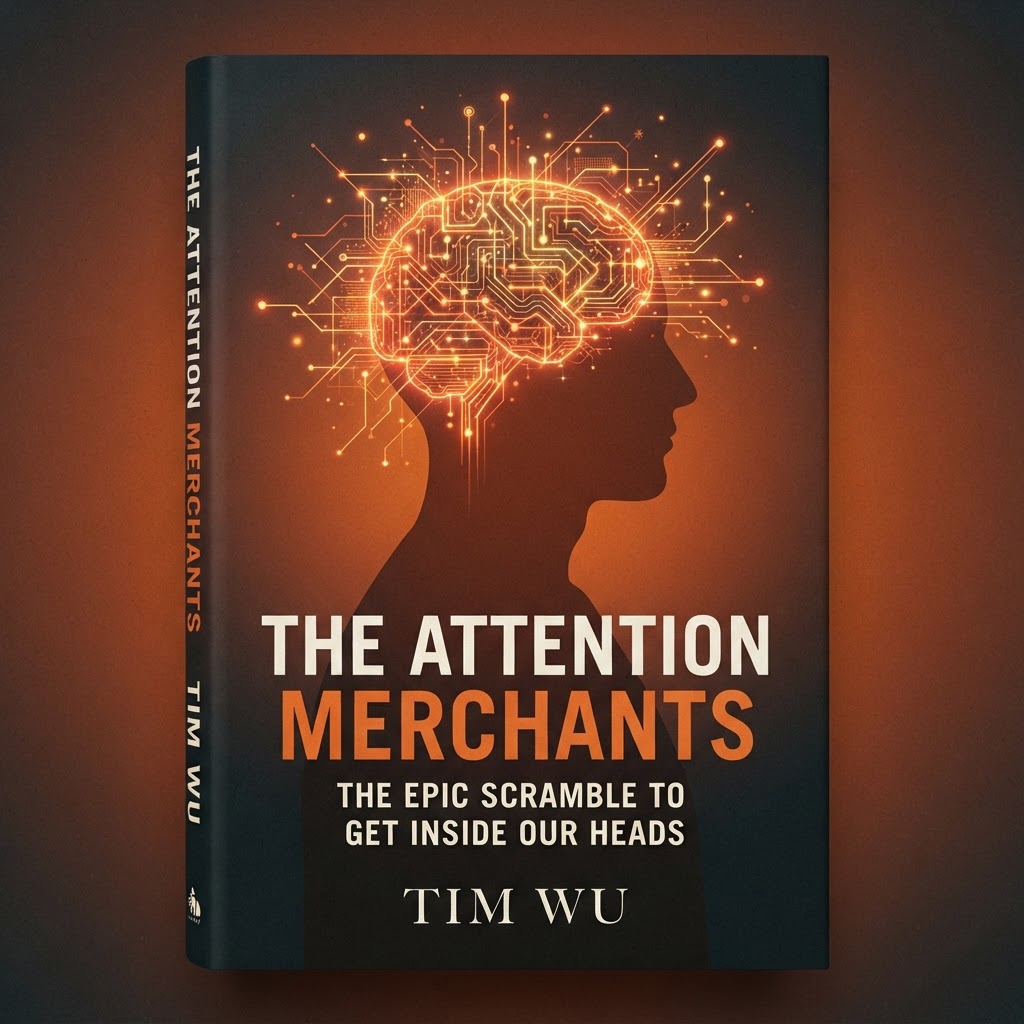
Tim Wu
In an era where our cognitive bandwidth is treated as the ultimate natural resource to be mined, Tim Wu’s 'The Attention Merchants' is not just a history of advertising—it is a necessary autopsy of our modern mental state. Wu traces the evolution of the 'attention economy' from the early days of the penny press and radio to the hyper-targeted, algorithmic feedback loops of today’s social media giants. He masterfully illustrates how we have moved from a world where we paid for content to one where we are the product, our focus harvested and sold to the highest bidder. What makes this book so chillingly relevant is its focus on the 'attention capture' mechanism. Wu explains how the constant, low-level stimulation of our devices is not a bug, but a feature designed to bypass our rational defenses. He forces us to confront the reality that our 'free' digital lives come at the cost of our autonomy. Reading this, I found myself constantly pausing to reflect on my own digital habits, realizing how much of my internal life has been colonized by platforms designed to keep me in a state of perpetual, distracted engagement. This book is essential reading for anyone who feels the fraying of their own focus. It provides the intellectual framework to understand why we feel so exhausted by the very tools that promised to liberate us. It is a sobering, brilliant, and deeply necessary call to reclaim the most precious asset we possess: our own consciousness.
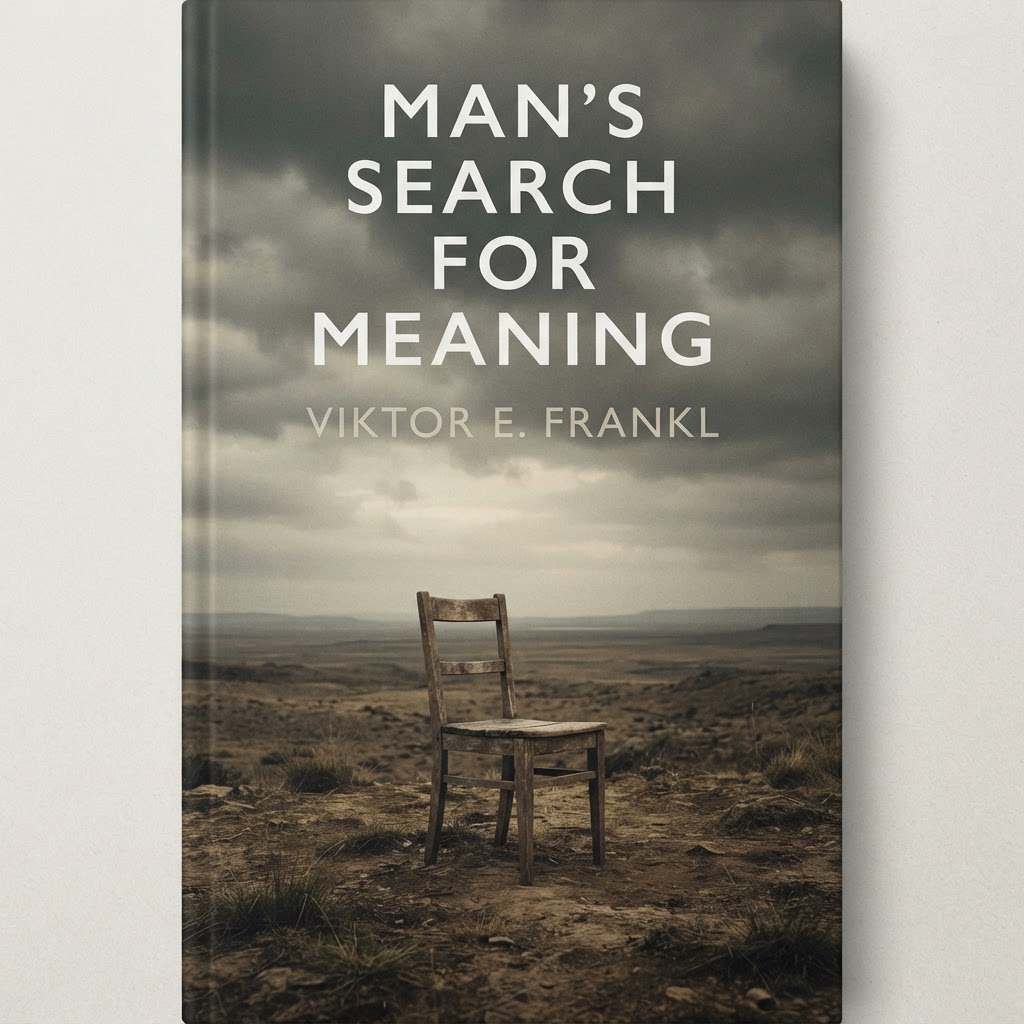
Viktor E. Frankl
In a world obsessed with the pursuit of fleeting happiness, Viktor Frankl’s 'Man's Search for Meaning' serves as a necessary, sobering corrective. Having survived the horrors of Nazi concentration camps, Frankl does not offer platitudes about positive thinking. Instead, he posits a profound psychological truth: that our primary drive is not pleasure, but the discovery and pursuit of what we personally find meaningful. This book is essential reading because it forces us to confront the 'existential vacuum'—that pervasive sense of emptiness that haunts modern life—and provides a framework for filling it through work, love, or the dignity we maintain in the face of unavoidable suffering. What struck me most deeply was Frankl’s observation that even in the most dehumanizing conditions, the 'last of the human freedoms' remains: the ability to choose one's attitude in any given set of circumstances. He illustrates this through the lens of logotherapy, his own school of psychotherapy, which argues that we are not victims of our past or our environment, but architects of our own purpose. It is a challenging read because it strips away the excuses we use to justify our stagnation. When Frankl writes, 'He who has a why to live can bear almost any how,' he isn't just theorizing; he is speaking from the crucible of human experience. This book matters now more than ever. We live in an era of unprecedented distraction and digital noise, where the pressure to conform to external metrics of success often drowns out our internal compass. Frankl reminds us that meaning is not something we find, but something we create. It is a call to take radical responsibility for our lives, urging us to stop asking what we expect from life and start asking what life expects from us. It is a short, dense, and transformative work that I find myself returning to whenever I feel the weight of modern cynicism.
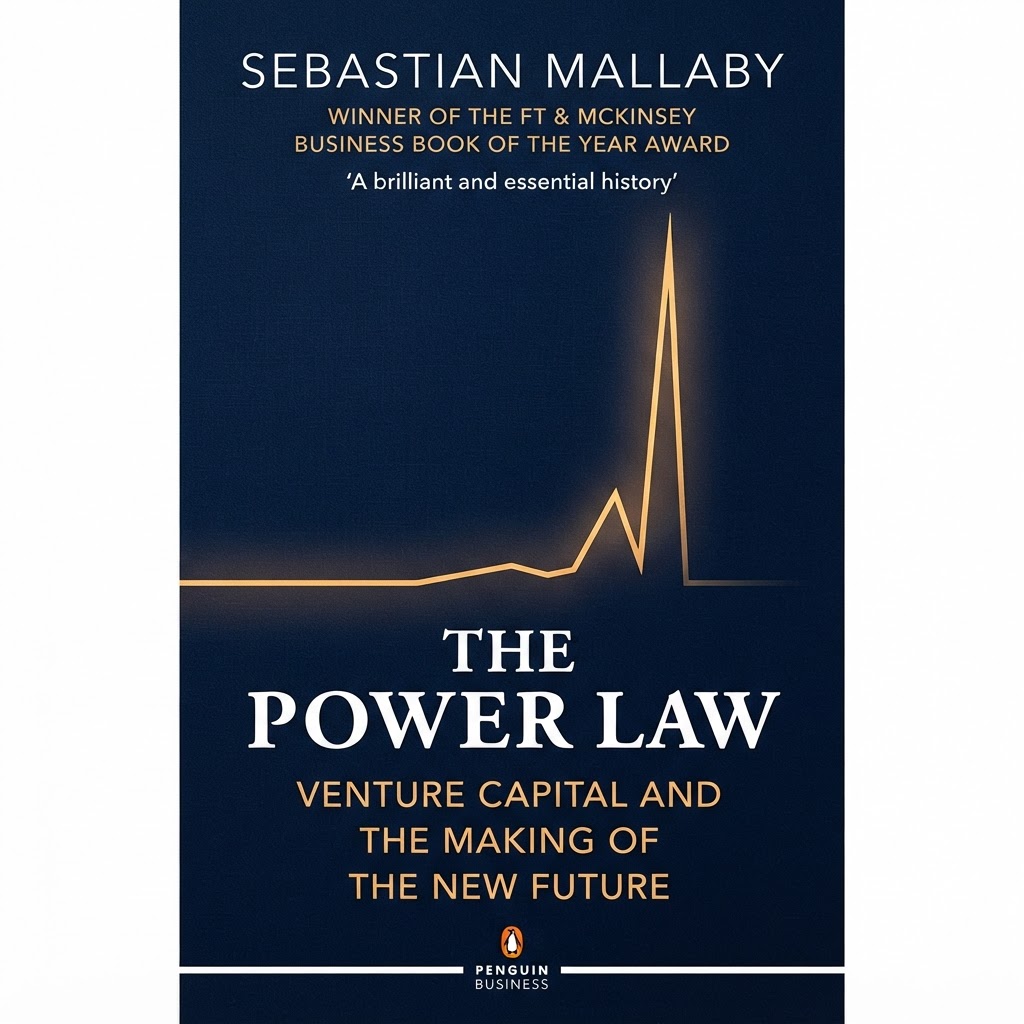
Sebastian Mallaby
In a landscape often cluttered with 'how-to' manuals for startups, Sebastian Mallaby’s The Power Law stands apart as a profound historical and sociological examination of the venture capital industry. Mallaby does not merely recount the rise of Sand Hill Road; he dissects the very mechanism that drives innovation in our modern era. The central thesis—that a tiny fraction of investments accounts for the vast majority of returns—is not just a financial metric; it is a philosophy of extreme risk-taking that has fundamentally reshaped the global economy. By gaining unprecedented access to the architects of firms like Sequoia and Kleiner Perkins, Mallaby reveals the human fallibility and the sheer, often irrational, conviction required to bet on the 'implausible.' He captures the tension between the cold, mathematical reality of the power law and the messy, human process of discovery. What struck me most was his exploration of how VCs act as 'talent scouts' for the future, often backing founders who are not just building products, but attempting to rewrite the rules of entire industries. This book is essential reading now because we are living in the wake of the systems these investors helped build. Whether you are a founder, an investor, or simply a curious observer of the tech-driven world, Mallaby forces you to confront the uncomfortable truth that progress is rarely a linear, democratic process. It is, instead, a series of high-stakes gambles that define the boundaries of what is possible. It is a masterclass in understanding how capital, when deployed with enough audacity, can bend the arc of the future.
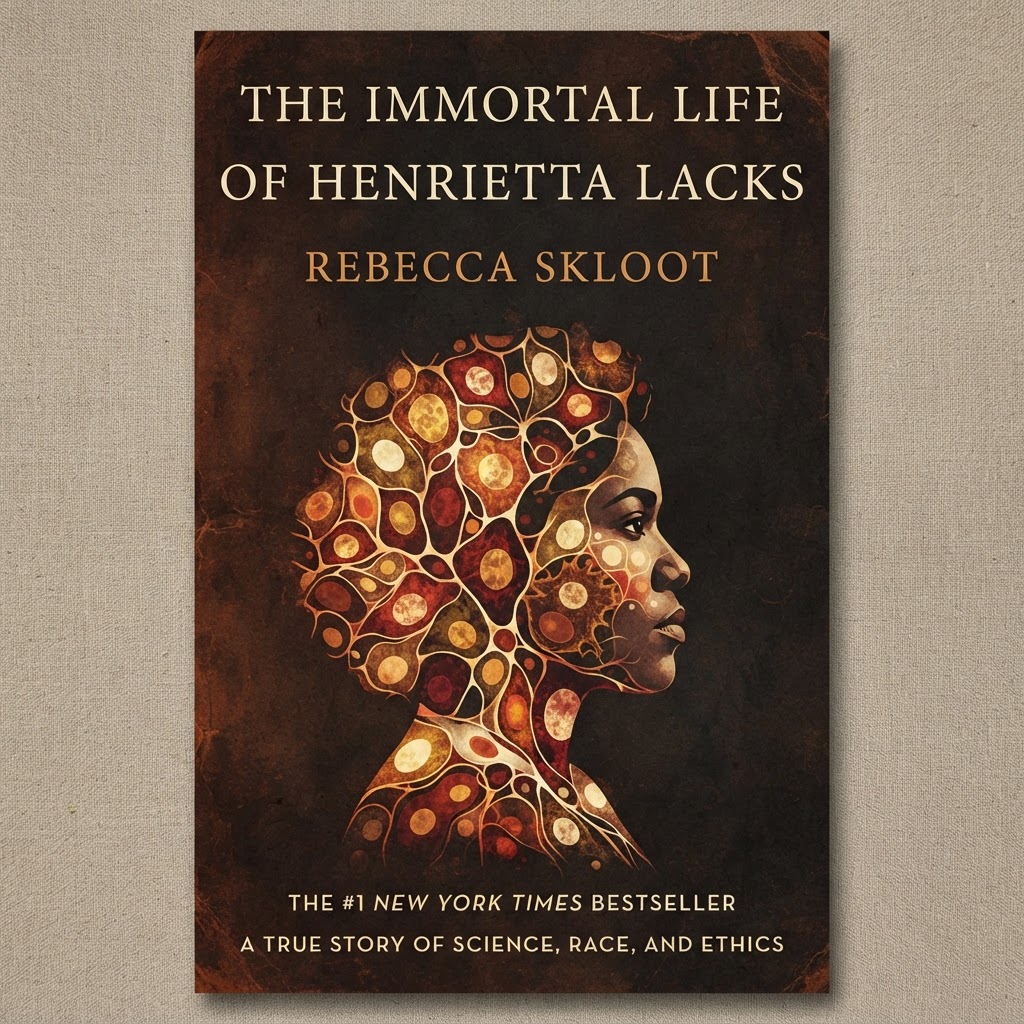
Rebecca Skloot
Rebecca Skloot’s masterpiece is not merely a biography of a woman; it is a profound investigation into the intersection of ethics, race, and the commodification of the human body. Henrietta Lacks, a poor tobacco farmer, had her cells taken without her knowledge in 1951, cells that would go on to become the 'HeLa' line—the foundation for countless medical breakthroughs, from the polio vaccine to gene mapping. Skloot masterfully weaves the scientific history of these cells with the deeply personal, often tragic story of the Lacks family, who remained in poverty while the medical industry profited from Henrietta’s biological legacy. What strikes me most is the tension between the 'immortality' of the cells and the erasure of the woman who provided them. Skloot forces us to confront the uncomfortable reality that scientific progress often rests on the backs of the marginalized, frequently without consent or recognition. It is a haunting reminder that behind every data point or medical miracle, there is a human life with a history, a family, and a right to dignity. In an era where biotechnology and AI are rapidly accelerating, this book is more relevant than ever. It challenges us to consider the ethics of ownership over our own biological information. Skloot’s prose is both clinical and deeply empathetic, making the complex science accessible while never losing sight of the human cost. It is a book that fundamentally shifts how you view the medical establishment and the very concept of bodily autonomy.
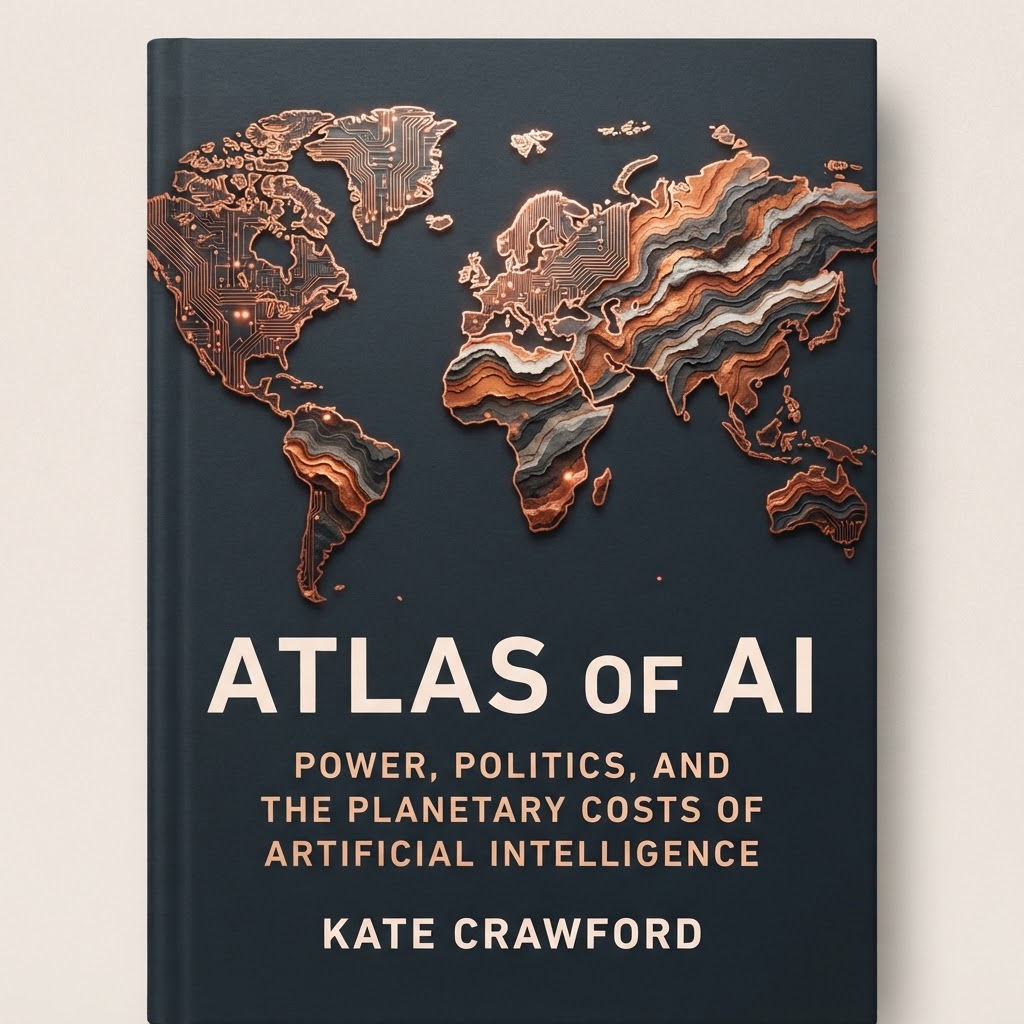
Kate Crawford
In a landscape saturated with breathless hype about artificial intelligence, Kate Crawford’s 'Atlas of AI' serves as a necessary, grounding corrective. Rather than treating AI as an ethereal, cloud-based abstraction, Crawford meticulously maps the material reality of these systems. She forces us to look at the lithium mines, the massive data centers, and the exploited labor forces that underpin what we casually call 'intelligence.' It is a profound shift in perspective that moves the conversation from the abstract potential of algorithms to the concrete, often destructive, physical footprint of the industry. One of the most striking aspects of the book is how Crawford deconstructs the 'data' we feed into these systems. She argues that data is not a natural resource to be mined, but a social and political construct. By tracing the history of how we categorize and label the world, she reveals how AI often codifies existing power structures and biases under the guise of objective mathematical truth. It is a sobering reminder that technology is never neutral; it is a reflection of the values and interests of those who build it. Reading this book today feels urgent. As we integrate generative models into every facet of our lives, we risk sleepwalking into a future where the 'planetary costs'—both environmental and social—are ignored in favor of efficiency. Crawford’s work is not a Luddite manifesto; it is a call for a more rigorous, human-centered, and ecologically conscious approach to innovation. It challenges the reader to stop viewing AI as a magical black box and start seeing it as a complex, global infrastructure that requires our active, critical oversight.
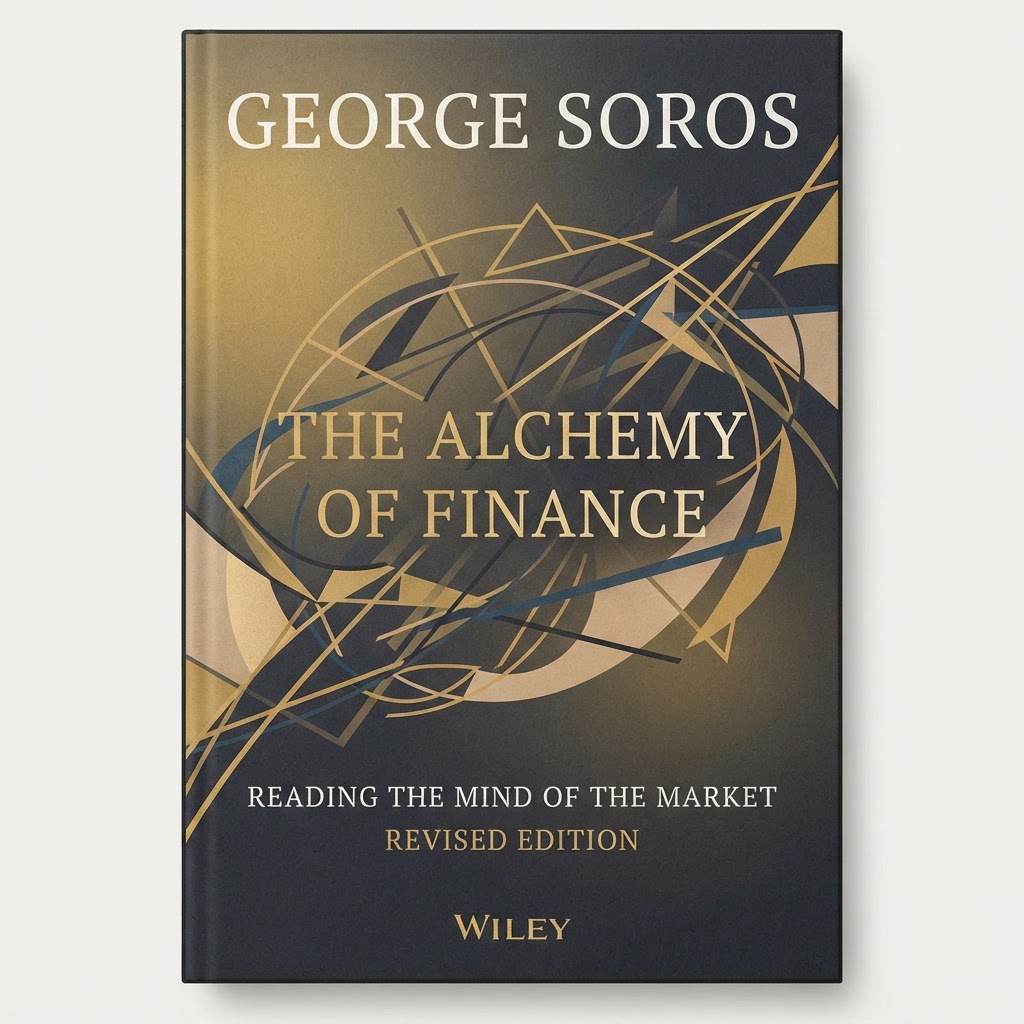
George Soros
There is a prevailing myth in the world of venture and investment that markets operate like Newtonian physics—predictable, rational, and governed by underlying laws. George Soros shatters this illusion in 'The Alchemy of Finance.' Through his theory of reflexivity, Soros argues that the participants' biases and misconceptions actually change the fundamentals of the market itself. It is a feedback loop: our thoughts influence the event, and the event influences our thoughts. Reading this felt less like reading a finance book and more like untangling the threads of human psychology as they manifest in global capital. What stuck with me most was Soros’s candid documentation of his own 'real-time experiment.' He doesn't just theorize; he diarizes his trades and his internal monologues during periods of extreme market volatility. He writes, 'I am only rich because I know when I am wrong.' This humility, contrasted with his massive success, is profound. He treats the market as a laboratory for fallibility, forcing the reader to confront the reality that we are never truly objective observers of the systems we participate in. It is a jarring, intellectually rigorous exercise in self-awareness. In our current era of algorithmic trading, AI-driven sentiment analysis, and venture capital herd mentality, this book is more relevant than ever. We live in an age where narrative often outpaces reality, and Soros provides the framework to understand how these narratives become self-fulfilling prophecies. If you are involved in high-stakes ventures, you shouldn't be reading books on 'hacks' or 'shortcuts.' You should be reading this to understand the reflexive nature of the reality you are trying to shape. It is a masterclass in intellectual honesty.
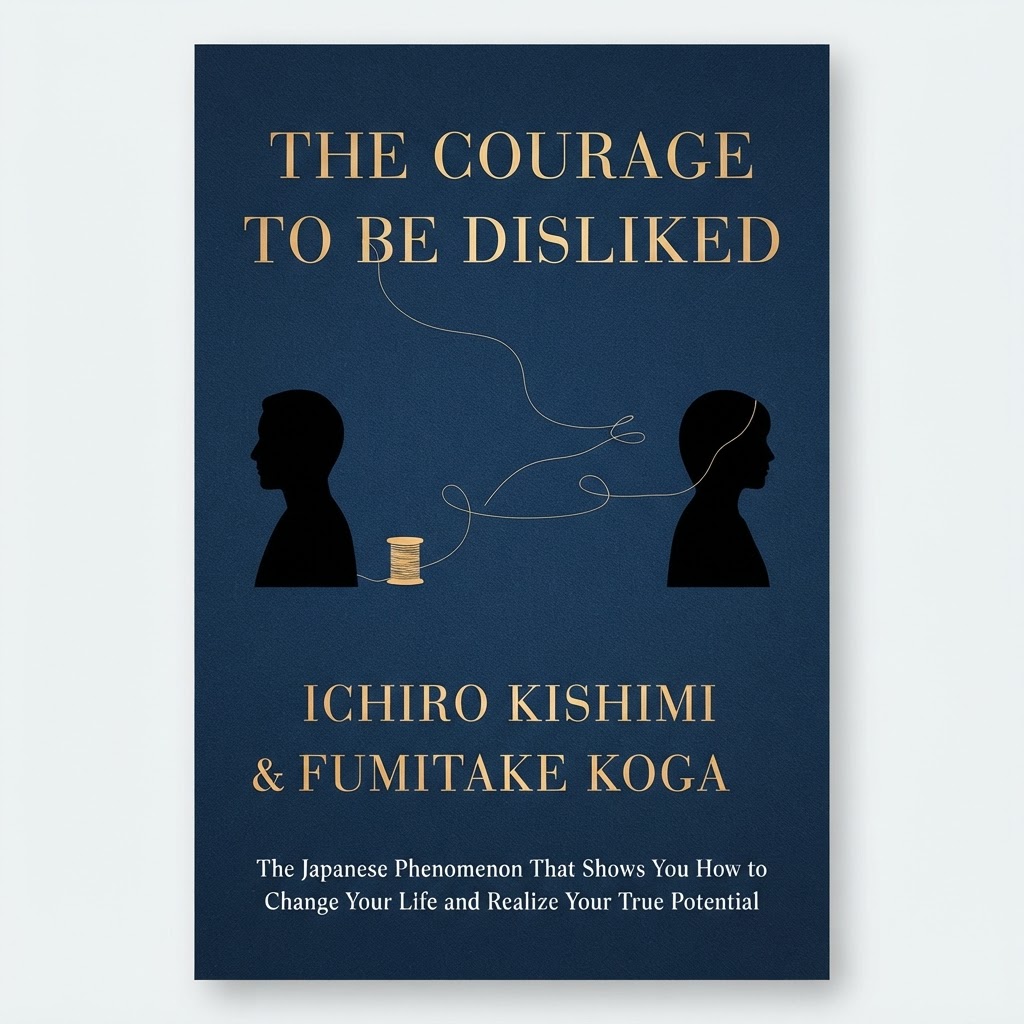
Ichiro Kishimi and Fumitake Koga
Most modern self-help peddles an intoxicating cocktail of relentless optimization, daily affirmations, and external validation. 'The Courage to Be Disliked' takes a sledgehammer to that entire apparatus. Styled as a classical Socratic dialogue between a cynical youth and an Adlerian philosopher, the book introduces the 19th-century psychology of Alfred Adler—a contemporary of Freud whose ideas were far more radical and emancipatory. Where Freud anchors our pain in deterministic past trauma, Adler argues for teleology: we choose our misery to serve present purposes. The most transformative concept explored across these five nights of dialogue is the 'separation of tasks.' Kishimi and Koga articulate a rigorous boundary: you are responsible only for your own choices, not for how other people perceive or react to them. When you attempt to manage others' feelings or bend your identity to win praise, you mortgage your freedom. True interpersonal harmony doesn't come from being liked; it comes from contributing to a community without expecting a ledger of repayment. This book matters desperately right now because we live in an attention economy designed to cultivate neurotic people-pleasing. Social algorithms condition us to curate lives for approval, fostering a fragile self-worth that collapses under scrutiny. Reading this was a shock to my nervous system, stripping away my habitual justifications for resentment and anxiety. It reframes genuine freedom not as limitless leisure or effortless acclaim, but as the quiet, stoic willingness to be misunderstood while living authentically.
Esther Perel
Most relationship manuals preach honesty, radical closeness, and total domestic transparency as the ultimate virtues of love. Esther Perel boldly dismantles this dogma. In 'Mating in Captivity', Perel confronts an uncomfortable paradox at the core of modern domesticity: the very conditions that nourish love—comfort, predictability, emotional security, and safety—frequently extinguish desire, which thrives on mystery, distance, risk, and tension. We ask one single partner to provide what an entire village once did, demanding emotional shelter and intoxicating novelty all in one package. Perel writes with surgical precision and immense compassion as a practicing psychotherapist. Her analysis of how domestic familiarity breeds a form of erotic paralysis is revelatory, particularly when exploring chapters like 'Democracy vs. Desire' and the complex dynamics of intimacy versus passion. She unpacks the seductive lie that emotional transparency naturally leads to passionate fulfillment; often, merging entirely with your partner leaves no gap across which the spark of desire can jump. Loving someone requires knowing them; desiring someone requires an appetite for the unknown. This book is urgently relevant right now. In an era dominated by hyper-connected lifestyles and blurred boundaries between home, work, and personal space, Perel’s insistence on cultivating separateness within togetherness offers a vital antidote to marital burnout. 'Mating in Captivity' isn't a collection of cheap bedroom hacks—it is a sophisticated, philosophical re-examination of how we negotiate freedom and commitment, providing a provocative blueprint for sustaining erotic vitality over decades.
Robert A. Caro
Most biographies trace the trajectory of an extraordinary mind; Robert A. Caro's masterpiece investigates something far more dangerous: the anatomy of unbridled power. Spanning over a thousand meticulous pages, this is the definitive account of Robert Moses, an idealistic civil service reformer who evolved into an unelected sovereign possessing more authority over the physical infrastructure of New York than mayors, governors, and presidents combined. Caro does not merely recount Moses's life; he lays bare the precise mechanisms through which democratic systems can be legally circumvented and captured. What makes the work profoundly unsettling is its moral arc, particularly captured in chapters like 'One Mile,' where Moses ruthlessly carves the Cross Bronx Expressway directly through East Tremont, eviscerating a vibrant working-class community simply because he refused to alter his survey line by a mere fraction. Caro forces the reader to confront a terrifying psychological transformation: how an initial crusade to build public parks, beaches, and scenic parkways curdled into an absolute disdain for the very citizens Moses claimed to serve, actively designing bridges too low for mass-transit buses to deliberately exclude the urban poor. This book matters now more urgently than ever. As we enter an era dominated by unelected technocrats, hyper-scaled infrastructural investments, and automated governance systems, 'The Power Broker' serves as an indispensable field guide to power literacy. It dismantles the naive illusion that technical competence is morally neutral, reminding us that every blueprint, algorithm, and bypass road encodes the political biases of whoever wields the drafting pen.
Oliver Burkeman
Most self-help titles operating under the banner of productivity are complicit in an insidious modern delusion: that if you just download the right app, wake up at 5:00 AM, and optimize your routine, you will finally 'get on top of everything.' Oliver Burkeman blows this myth to pieces in Four Thousand Weeks. Assuming you live to be eighty, you have roughly four thousand weeks on Earth. Burkeman’s thesis is not a grim memento mori designed to induce panic; it is an act of radical philosophical liberation. What captivated me most was his interrogation of 'the efficiency trap.' In chapters like 'The Efficiency Trap' and 'The Inevitability of Settling,' Burkeman demonstrates that clearing your inbox or optimizing workflows doesn’t buy leisure—it merely invites more work to rush into the vacuum, like widening a highway only to induce more traffic. Drawing deeply on Martin Heidegger’s concept of finitude and Seneca’s insights on the brevity of life, Burkeman shows that real life isn't a rehearsal waiting on a cleared schedule. Life is the very act of choosing what to neglect. In our current era—paralyzed by infinite scroll, relentless FOMO, and an ambient sense of cognitive burnout—this book functions as an antidote to modern anxiety. It reframes 'missing out' not as a personal failure or an optimization deficit, but as the very precondition for choosing anything meaningful at all. Burkeman demands that we stop treating time as an external resource to be conquered and instead accept that we *are* time. I closed this book with a profound sense of relief. It cured me of the toxic fantasy that infinite productivity is possible, grounding me instead in the messy, finite beauty of doing a few deliberate things well before the clock runs out.
Alain de Botton
Most love stories end precisely where life actually begins: at the wedding altar, basking in the euphoria of mutual discovery. In *The Course of Love*, Alain de Botton executes a daring and necessary reversal. Following Rabih and Kirsten through decades of courtship, marriage, infidelity, parenting, and mundane domestic fatigue, the novel pairs intimate narrative with philosophical margin notes. It reads less like an ordinary romance and more like an astute dissection of how modern culture sets us up for relational despair by mistaking romantic infatuation for sustainable commitment. De Botton's sharpest insights hit during the quiet indignities of everyday partnership. In scenes depicting explosive rows over something as inconsequential as choosing an Ikea drinking glass, he diagnoses our deepest anxieties: the terror of vulnerability masquerading as petty irritation. He persuasively argues that we do not seek partners who treat us well; we seek partners whose emotional shortcomings feel familiar from childhood. His concept of 'romantic sulking'—the irrational belief that our partner should telepathically anticipate our pain without our having to articulate it—is an unflinching mirror that will make any honest reader wince with recognition. We live in an era overwhelmed by algorithmic courtship, disposable relationships, and a fairy-tale insistence on 'compatibility' that leads to chronic dissatisfaction. *The Course of Love* matters right now because it reclaims marriage not as an effortless union of soulmates, but as an ongoing pedagogical exercise. De Botton reminds us that true love is not an enthusiastic feeling, but a practiced skill—one that demands generosity toward our partner's inherent brokenness and the wisdom to embrace ordinary endurance over manic ecstasy.
Oliver Sacks
Long before contemporary neuroimaging could map sonic response in high definition, Oliver Sacks understood that our relationship to music is fundamentally ontological. In 'Musicophilia', Sacks approaches the phenomenon of human musicality not as an incidental aesthetic hobby, but as an indispensable neural architecture. Through a tapestry of clinical case studies—ranging from a surgeon struck by lightning who develops an insatiable compulsion to play Chopin, to amnesic patients who retain their entire piano repertoire—Sacks demonstrates how deeply tone, rhythm, and pitch are embedded in the biological bedrock of our consciousness. What makes this book enduringly vital is Sacks's humanist gaze. In chapters like 'A Bolt from the Blue' and 'Papa Blows His Horn', he explores conditions like musical hallucinations, synesthesia, and severe aphasia, revealing that musical memory frequently survives where episodic and semantic memory crumble entirely. He quotes Novalis's aphorism that 'every sickness is a musical problem; the healing is a musical solution,' illustrating how rhythm can organize motor control for severe Parkinson's patients and how melody can restore communication when language fails. Sacks never treats his subjects as mere anomalies; they are mirrors reflecting the strange, miraculous wiring that makes all of us musical creatures. In our present cultural moment—where automated streaming algorithms flatten music into functional background noise designed for study sessions or ambient sleep—'Musicophilia' serves as an urgent reminder of what sonic art actually does to the soul and the synapse. Sacks demands that we stop treating sound as passive decor and recognize it for what it truly is: a potent, irreducible force that constructs our memory, heals our traumas, and binds our sanity together.
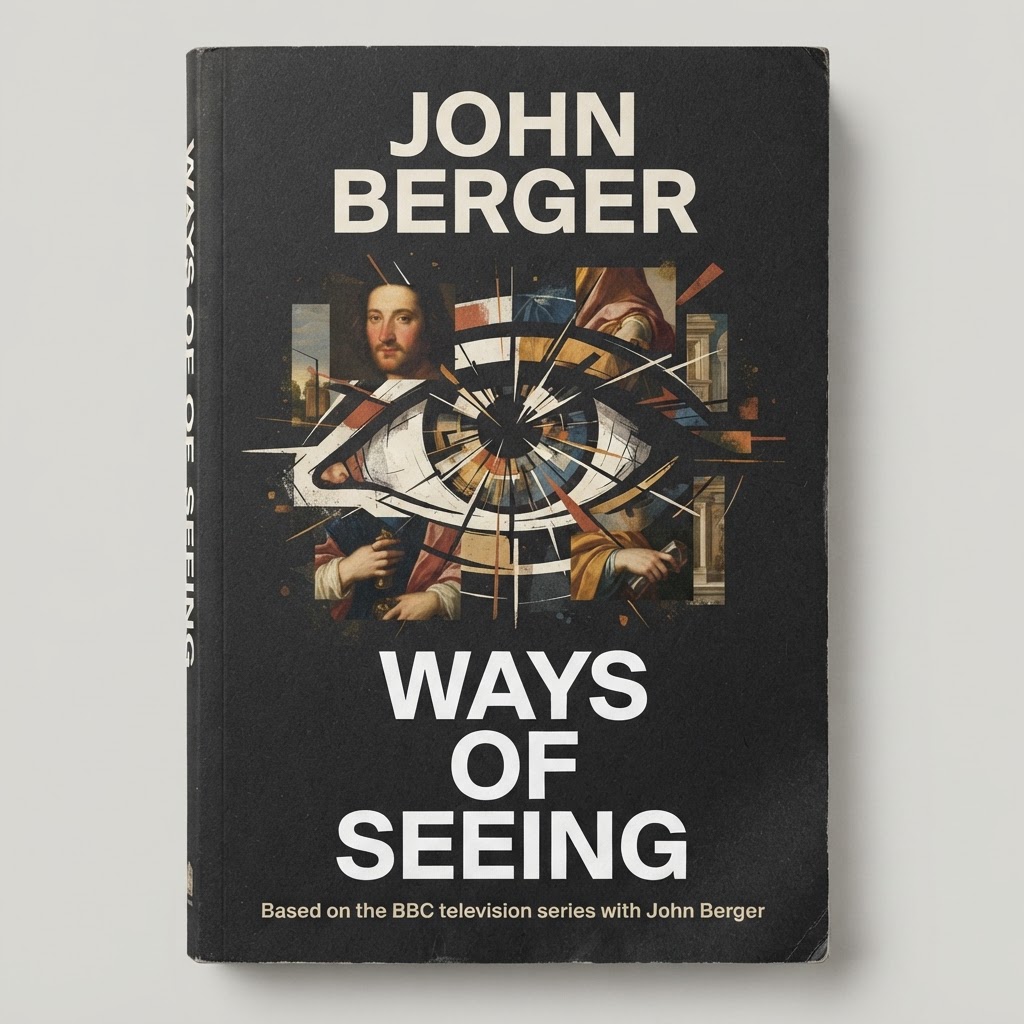
John Berger
“The relation between what we see and what we know is never settled.” John Berger opens this deceptively slender volume not with a primer on aesthetics or formalist technique, but with an epistemological gauntlet. Most art criticism treats masterpieces as sacred relics sealed inside an untouchable aura of genius. Berger does the opposite: he wrenches oil painting out of the reverent hush of the museum and drags it directly into the crosshairs of capital, ownership, and ideological control. Reading Berger feels like having a pair of heavy ideological spectacles removed without anesthesia. In his brilliant second essay on the nude versus the naked, he dissects how centuries of European art trained women to scrutinize their own visibility: "Men act and women appear. Men look at women. Women watch themselves being looked at." Long before the term 'male gaze' became common vernacular, Berger laid bare the architecture of voyeurism and visual property. Later, when he explores how mechanical reproduction severs an image from its singular location, he anticipates the fragmented, hyper-circulated nature of our current visual ecosystem with haunting precision. This book matters now more than ever because we exist in an era of unprecedented visual saturation. Algorithmic feeds, targeted advertising, and generative imagery bombard our consciousness every second, quietly training us on what to desire, how to consume, and what constitutes status. Berger teaches us that seeing is never passive—it is an active, political choice. To read 'Ways of Seeing' today is to reclaim one's own vision from the relentless machinery of persuasion.
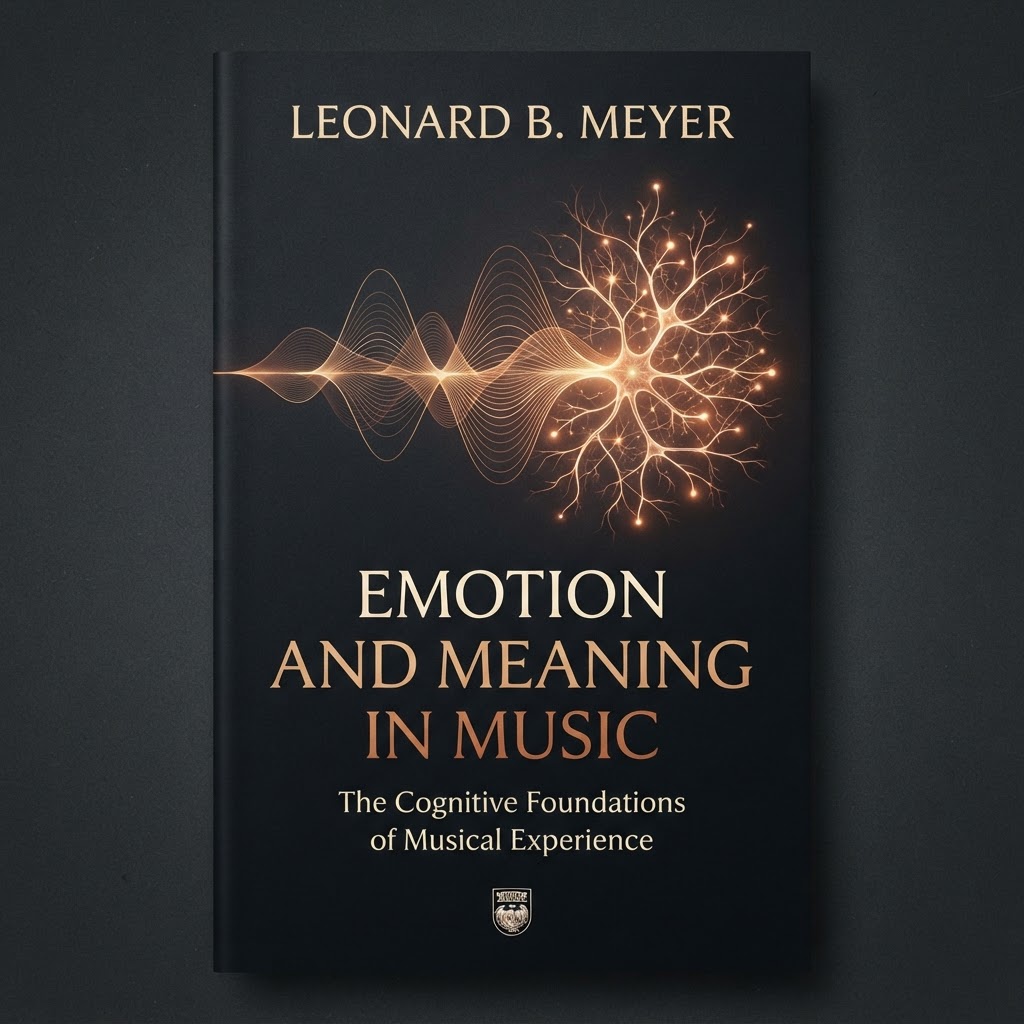
Leonard B. Meyer
Why does a sequence of purely abstract acoustic vibrations make us weep, shiver, or feel a surge of profound triumph? For centuries, critics dodged the question by treating music either as an impenetrable occult mystery or as a mere acoustic trick. Leonard B. Meyer tore through that fog with 'Emotion and Meaning in Music', a work of profound interdisciplinary brilliance that bridges Gestalt psychology, aesthetic philosophy, and information theory. Meyer’s central thesis remains startlingly elegant: emotion in music is provoked when an expectation—organically created by the listener’s internalized understanding of musical style and syntax—is temporarily delayed, inhibited, or redirected. Reading the core chapters on musical deviation and pattern completion forever altered how I listen to sound. Meyer meticulously demonstrates that music does not refer outward to tangible objects the way propositional language does; rather, its meaning is intramusical and embodied. When a cadence is postponed or a melodic resolution arrives via an unexpected harmonic detour, our psychological tension spikes. In that friction between habit and surprise, affective consciousness is born. Meaning is not a decorative ornament plastered on top of sound; it is identical to the dynamic process of anticipating, waiting, and resolving. In our current era of algorithmic background music and automated playlists designed for passive consumption, Meyer’s insights are more urgent than ever. We live immersed in soundscapes engineered to pacify, stripping music of tension and friction in favor of relentless predictability. Meyer reminds us that genuine aesthetic depth demands active cognitive investment. Music only touches our souls when we let it test our anticipations and play with our sense of time.
Anil Seth
Most of us walk through life assuming our perception works like a transparent window: light enters our eyes, our brain maps the scene, and we behold external reality directly. Anil Seth completely dismantles this naive realism in 'Being You'. Anchoring his thesis in cognitive psychology and predictive processing, Seth makes the startling, rigorously argued case that our perception is essentially a 'controlled hallucination.' The brain sits locked in a silent, bony vault, fielding ambiguous sensory signals and constantly generating best-guess internal simulations to explain them. When our predictions align with sensory feedback, we call it everyday reality; when they come unmoored, we call it delusion. What fascinated me most is how Seth extends this predictive machinery from how we see a cup of coffee to the profound enigma of selfhood itself. In the brilliant middle chapters on interoception and the 'beast machine,' he demonstrates that the subjective feeling of being an embodied self is not a passive witness inside our heads, but an active homeostatic control mechanism. Our emotions, moods, and fundamental sense of 'I' exist primarily to keep our biological machinery alive. Seth draws a line directly from visceral regulation—the heart rate, glucose levels, internal chemical balances—to our highest conscious reflections. This matters intensely right now, in an era cluttered with noisy debates about artificial intelligence and digital identity. By shifting the question of consciousness from abstract computation to fleshy, metabolic survival, Seth provides a crucial corrective to techno-utopian assumptions about silicon minds. 'Being You' does not just teach you how cognition operates; it transforms the felt experience of looking at your hands, feeling your heartbeat, and navigating the waking world.
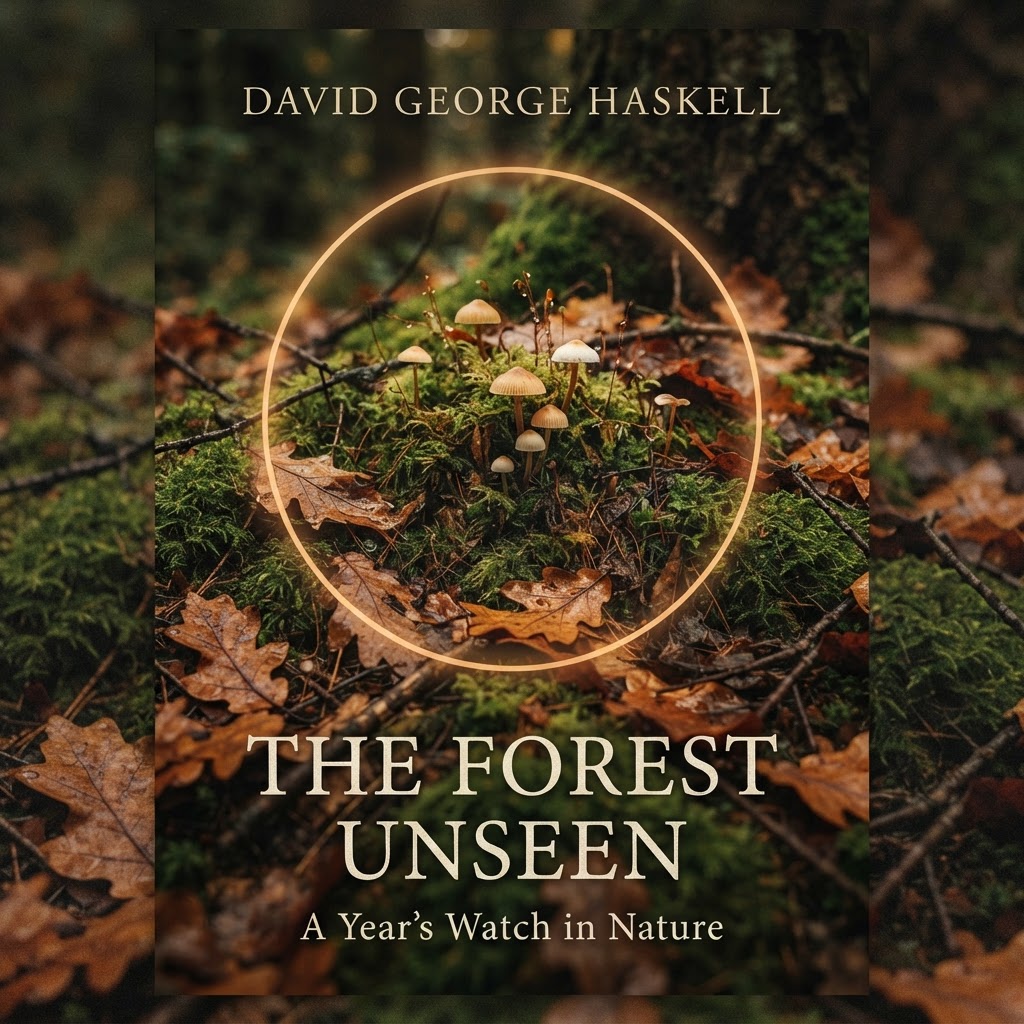
David George Haskell
A biologist walks into an old-growth Tennessee forest, delineates a circle of earth exactly one meter wide, and resolves to visit it for a full calendar year. It sounds almost monastic, yet David George Haskell’s 'The Forest Unseen' is anything but dry asceticism. Haskell approaches this tiny patch of soil—a 'mandala' of forest floor—with the rigorous gaze of an evolutionary biologist and the sensitive, luminous prose of a contemplative poet. By refusing the grand, sweeping vistas common in romantic nature writing, he forces us down into the dizzying architecture of leaf litter, mosses, and fungal filaments, revealing that infinity is curled up right beneath our boots. What hooked me immediately was how Haskell braids minute observation into sweeping evolutionary narratives. In an early chapter on snow, he unpacks the physics of ice crystal formation alongside the miraculous physiology of overwintering wood frogs, whose blood turns to slush while their hearts stop beating entirely. Later, watching spring ephemerals race against the canopy's impending shade, he traces how wildflower seeds rely on the fatty 'elaiosome' treats attached to them to recruit ants as underground couriers. The book dismantles the modern myth that biological competition is our planet's sole engine; again and again, Haskell demonstrates that survival on this planet has always been an orchestration of quiet, mutualistic interdependence. In our hyper-accelerated digital moment, Haskell's book feels urgent and corrective. We live distracted by manufactured emergencies, increasingly estranged from biological reality and the physical matter supporting our existences. 'The Forest Unseen' does not ask you to embark on an expensive pilgrimage to the Arctic or the Amazon; it asks you to sit still, silence your phone, and look closely at the square meter of earth beneath your feet. Haskell reminds us that attention is the highest form of ecological devotion—and perhaps our only real antidote to alienation.
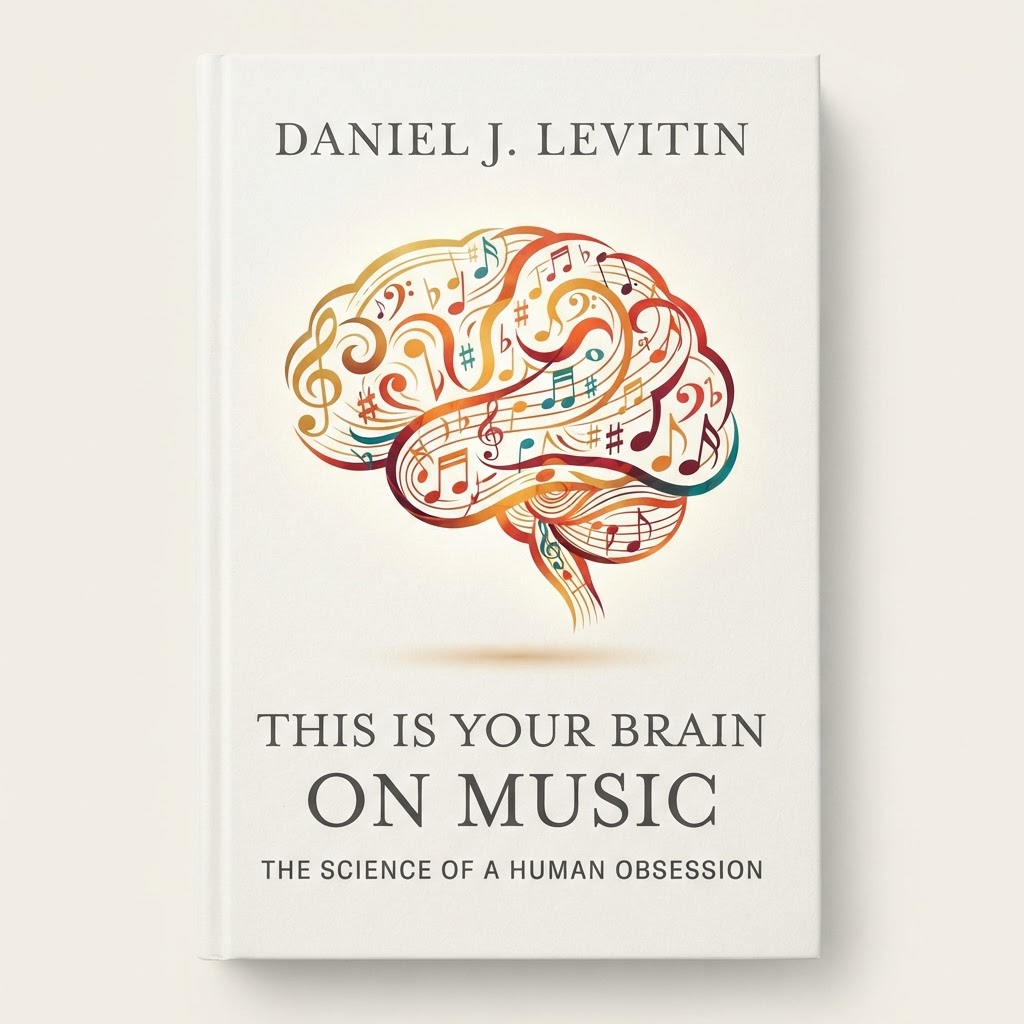
Daniel J. Levitin
I have always been fascinated by the 'why' of art—why a specific sequence of vibrations in the air can reduce a listener to tears or incite a stadium to riot. Daniel J. Levitin’s This Is Your Brain on Music [7 Essential Books on Music, Emotion, and the Brain](https://www.themarginalian.org/2011/03/21/must-read-books-music-emotion-brain/) was the first book that gave me a rigorous, scientific framework for that mystery without stripping away the magic. Levitin, who transitioned from a high-level record producer to a neuroscientist [Popular Music Psychology Books](https://www.goodreads.com/shelf/show/music-psychology), writes with the soul of a musician and the precision of a researcher. He argues that music is not an evolutionary accident, but a fundamental part of what makes us human, deeply hardwired into our species. One of the most transformative concepts in the book is the idea of 'musical expectation.' Levitin explains how our brains are constantly predicting what note comes next based on our cultural exposure to scales and harmony. When a composer uses a 'deceptive cadence'—leading us toward a resolution and then pivoting to a minor chord instead—it triggers a physical neurochemical response. Our brains love being right, but they are electrified by being surprised. I found his exploration of the cerebellum particularly striking; it is the part of the brain involved in timing and movement, which explains why we cannot help but tap our feet. Music is not just something we think about; it is something our bodies 'do' before our conscious mind even registers the melody. In our current era of algorithmic curation and AI-generated background tracks, this book feels more urgent than ever. It serves as a reminder that music is a high-bandwidth communication channel between human nervous systems. Levitin’s discussion on the neuroplasticity required to master an instrument highlights the sheer cognitive load of musicality. Reading this changed my relationship with my own record collection. I stopped listening to music as a passive background activity and started hearing it as a complex dialogue between the performer’s intent and my brain’s architecture. It is a profound look at the science of obsession.
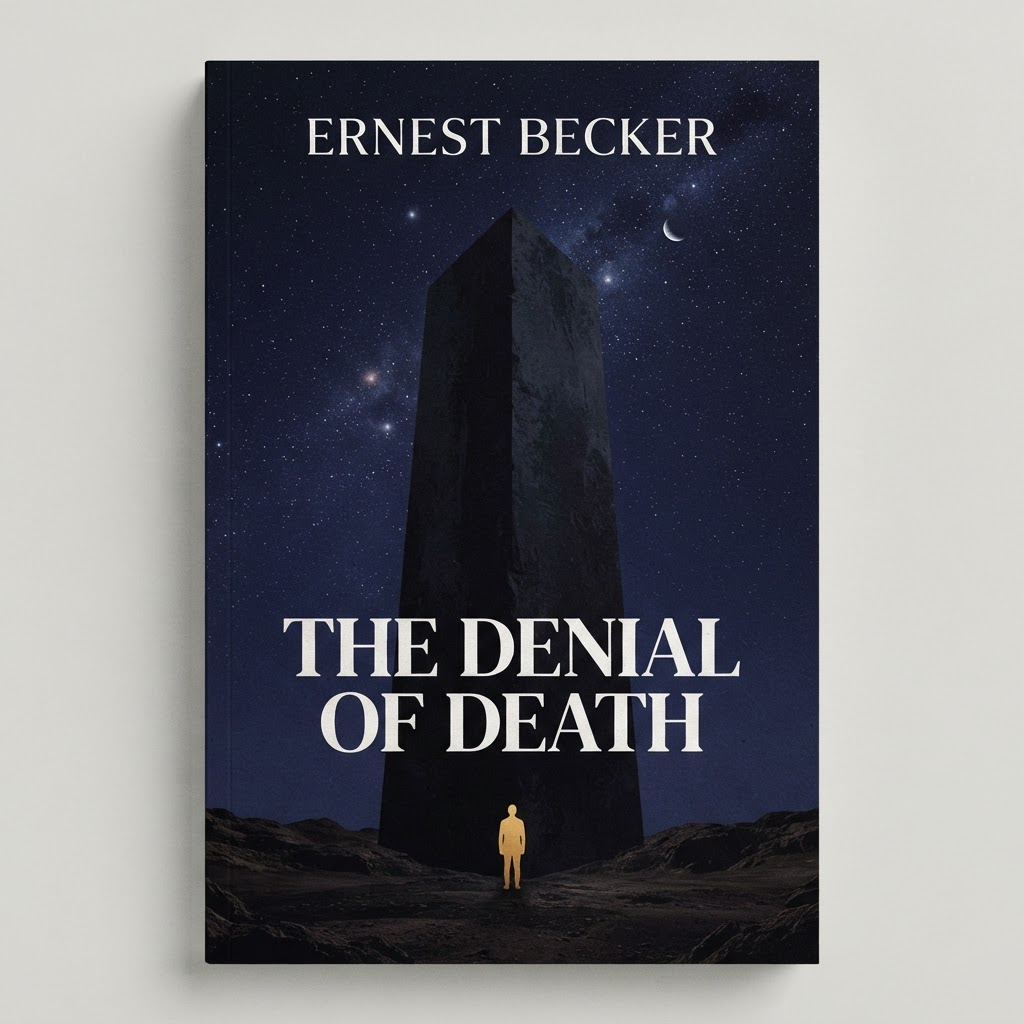
Ernest Becker
Most self-help literature attempts to fix the plumbing of the human psyche—better habits, sharper focus, smoother social interactions. Ernest Becker’s Pulitzer-winning masterpiece goes straight for the foundation. I first encountered this book during a period of deep existential malaise, and it didn’t offer a hug; it offered a mirror. Becker’s central thesis is that the 'mainspring of human activity' is not libido or power, but the terror of our own mortality. We spend our lives building 'immortality projects'—careers, families, artworks, and ideologies—specifically designed to convince us that we are not merely 'food for worms.' In the chapter 'The Twin Ontological Needs,' Becker brilliantly dissects the human struggle to be both a unique individual (the 'causa sui' project) and a part of a greater whole. He argues that we are torn between the desire for standing out and the safety of disappearing into a mass movement. Reading this today, I see our modern obsession with digital legacy and social media curation as the ultimate, desperate immortality project. We are frantically archiving our lives to prove that our biological finitude is a lie. Becker challenges the reader to look at their ambitions and ask: 'Is this a vital lie, or a meaningful contribution?' What makes this 'self-help' in the truest sense is its refusal to offer easy consolations. In the final chapters, particularly 'A Retrospective View,' Becker suggests that the only way to live authentically is to acknowledge our 'creatureliness'—our physical vulnerability—and to find a 'heroism' that is not based on delusion. It matters now because we live in an age of hyper-optimization where we believe we can outrun aging and death through biohacking and data. Becker reminds us that the fear of death is actually the fear of life, and only by confronting the abyss can we stop acting out of unconscious terror. It is a grueling, exhilarating, and ultimately liberating read that reframes every choice you make.

Ichiro Kishimi and Fumitake Koga
I remember picking this up with a healthy dose of skepticism. The title sounds like a platitude, but the content is a rigorous, often abrasive, exploration of Adlerian psychology delivered through a Socratic dialogue between a cynical youth and a wise philosopher. It doesn't offer the warm hug of modern mindfulness; instead, it offers a cold splash of water. As noted in recent guides to life-changing literature, the book centers on the theories of Alfred Adler, arguing that we must listen to our own hearts rather than the opinions of others ([Life-Changing Reads: The Best Self-Help Books To Read In 2025](https://english.jagran.com/smart-guide/reading-corner/life-changing-reads-the-best-self-help-books-to-read-2860)). The central thesis—that 'trauma does not exist' in the sense that it doesn't determine our future—is a radical rejection of the Freudian etiology that dominates our current discourse. Adler argues for teleology: we choose our goals and then use our past experiences to justify them. The most transformative concept for me was the 'separation of tasks.' The philosopher argues that almost all interpersonal conflict arises from intruding on other people's tasks or having others intrude on ours. 'Whose task is it?' becomes the ultimate diagnostic tool for anxiety. If someone is offended by your choices, that is their task, not yours. This isn't an invitation to be cruel; it's a mandate to be free. By focusing only on what we can control, we stop being victims of our environment and start being architects of our character. In an age where we are constantly tethered to the opinions of strangers via digital feedback loops, this book is essential. It challenges the modern obsession with being liked and validated, suggesting instead that 'freedom is being disliked by other people.' It is a terrifying thought, but as the book progresses, it becomes the most liberating idea you will ever encounter. It forces you to take absolute responsibility for your happiness, which is the highest form of self-respect. I return to this book whenever I feel the weight of social expectation pressing in. It reminds me that my life is not a performance for an audience, but a series of moments lived in the 'here and now.' If you are tired of self-help books that tell you to just 'think positive,' read this. It won't tell you that you are perfect; it will tell you that you are free, which is far more useful.
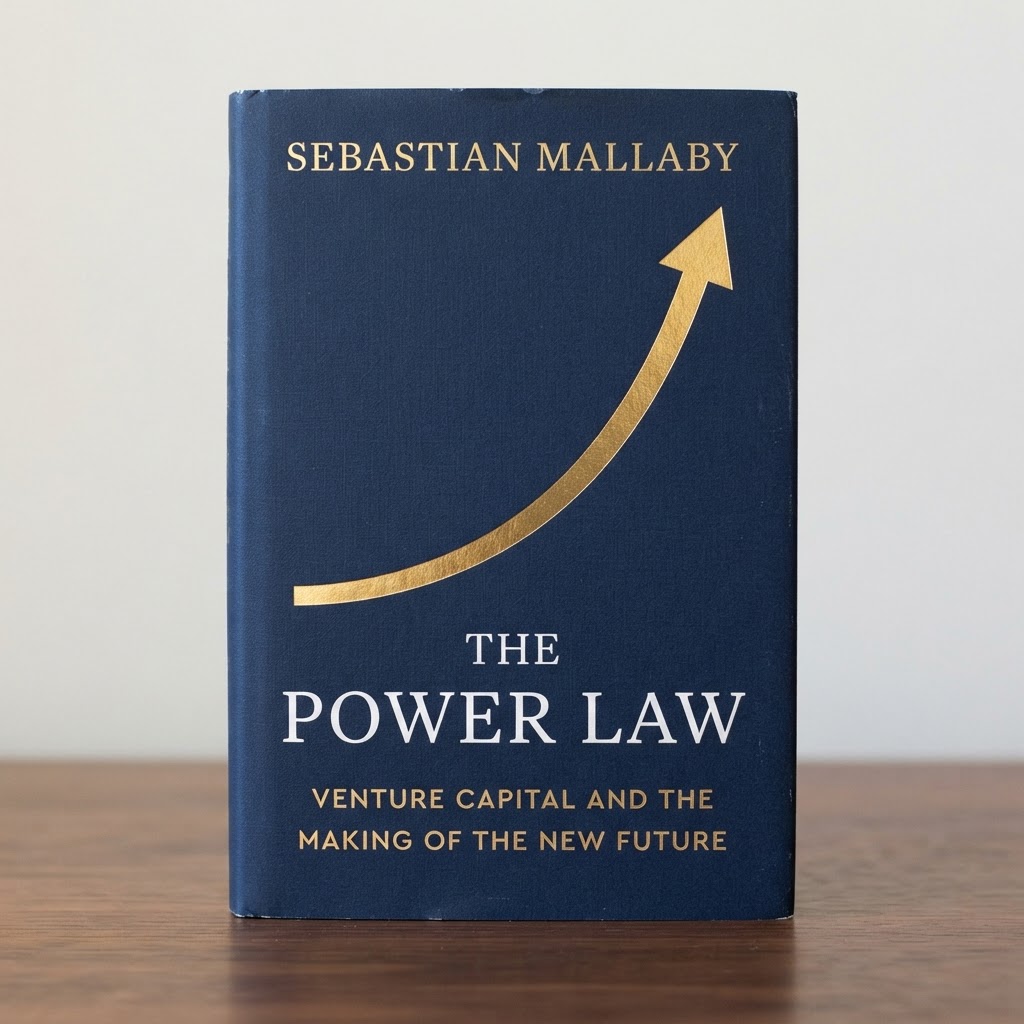
Sebastian Mallaby
I approached Sebastian Mallaby’s The Power Law expecting a standard chronological history of Silicon Valley finance. What I found instead was a profound meditation on the nature of human conviction and the mathematical brutality of the 'power law'—the principle that in venture, the tail wags the dog, and a single outlier can outweigh the sum of a thousand failures. Mallaby doesn't just track dollars; he tracks the evolution of a specific kind of courage: the willingness to look foolish for a decade in exchange for being right in a way that reshapes civilization. It changed how I view risk, moving it from a calculation of probability to a test of one's ability to imagine a world that doesn't yet exist. The book is most electric when it dissects the psychological shift from the 'Whaler' model of East Coast finance to the radical, hands-on partnership style pioneered by figures like Arthur Rock and Don Valentine. I was particularly struck by the chapters detailing the rise of Kleiner Perkins and Sequoia Capital. Mallaby illustrates how venture capital is less about 'picking' winners and more about the grueling, often invisible work of 'making' them through board seats, recruitment, and strategic pivots. He captures the tension between the cold, hard data of portfolio construction and the messy, intuitive art of judging a founder’s character. It’s a study in how a small group of people, armed with a specific mental model, can exert a disproportionate influence on the trajectory of global technology. Why does this matter now? We are currently navigating a period of significant economic recalibration where the fundamental logic of venture is being tested. Mallaby reminds us that true venture capital is a high-conviction, low-probability game that requires a specific kind of intellectual stamina. It’s a reminder that progress isn't a linear march; it’s a series of explosive, unpredictable jumps driven by those who can tolerate the 'long tail' of failure. For anyone trying to understand why our world looks the way it does—from the smartphone in your pocket to the burgeoning biotech revolution—this book provides the underlying blueprint. It is a masterclass in the philosophy of innovation, proving that the most valuable asset in the world isn't just capital, but the insight to see where the curve is about to bend.
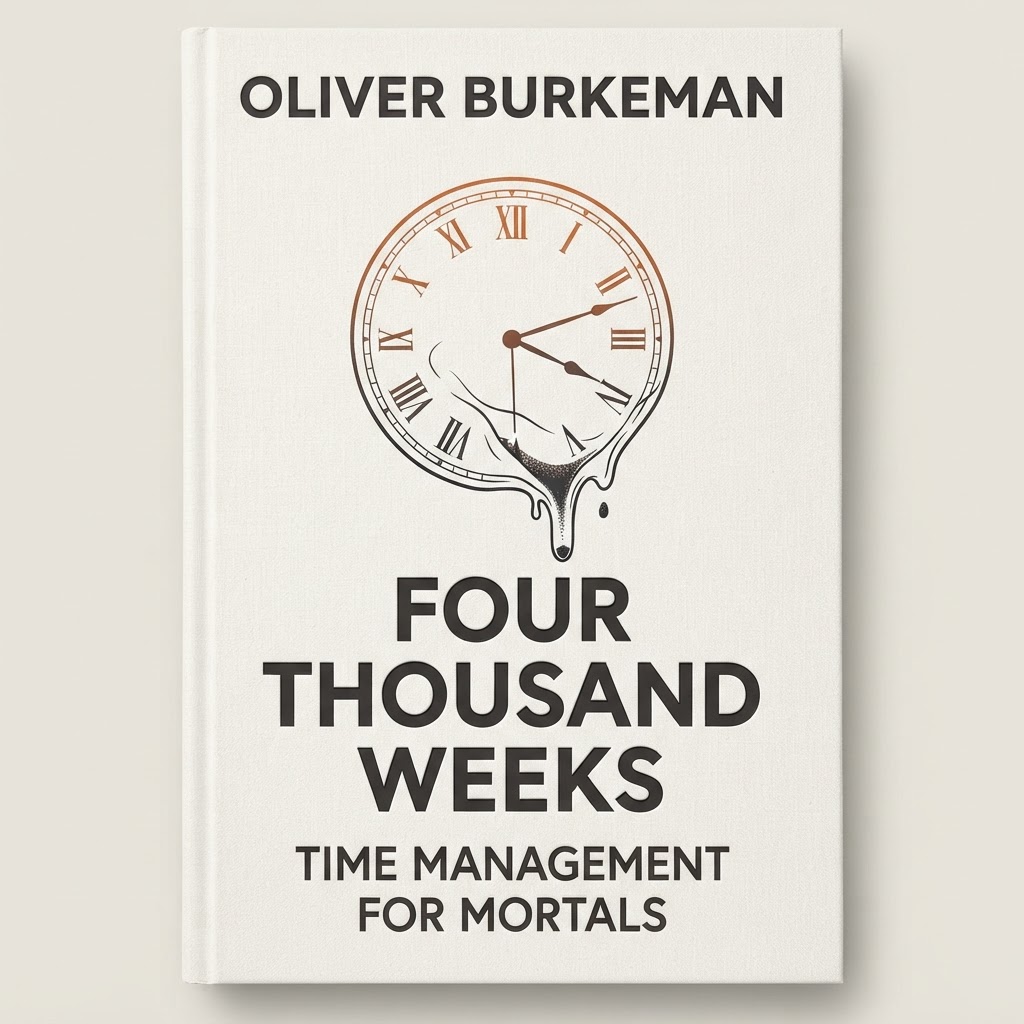
Oliver Burkeman
I spent years as a productivity junkie, chasing the 'inbox zero' dragon and believing that if I just found the right system, I could finally get on top of my life. Oliver Burkeman’s 'Four Thousand Weeks' didn't just break that spell; it shattered the entire mirror. The title refers to the shockingly brief average human lifespan, and the book is a bracing, philosophical cold-water-to-the-face. Unlike typical self-help that promises you can 'have it all,' Burkeman argues that our obsession with efficiency is actually a form of existential denial. We try to master time to avoid the painful reality of our own finitude. By trying to fit everything in, we ensure that we never truly inhabit the moments we actually have. One of the most impactful sections for me was his exploration of the 'Efficiency Trap.' Burkeman explains that productivity is like a faster conveyor belt: the more tasks you clear, the faster new ones arrive to fill the void. He draws on Heidegger and Zen Buddhism to argue that we should stop treating time as a resource to be conquered and start seeing it as the medium we exist within. His chapter on 'The Outrage Economy' is particularly relevant now, explaining how our digital tools exploit our desire to be everywhere at once, ultimately leaving us nowhere. He reframes the 'Fear of Missing Out' not as a psychological flaw to be fixed, but as an inevitable consequence of being a finite creature who makes choices. To choose one path is to kill a thousand others, and that is exactly what gives the chosen path its value. This book matters immensely right now because we are collectively drowning in a sea of 'optimization.' We are burnt out by the false promise that we can eventually reach a state of calm once we 'get through' our to-do lists. Burkeman gives us the radical permission to stop trying. He suggests that the most meaningful work happens not when we clear the decks, but when we decide which important things we are willing to fail at so we can focus on what truly matters. It is a deeply comforting, intellectually rigorous, and ultimately liberating read that changed how I wake up every morning. I no longer try to 'win' the day; I just try to live it.
Daniel Todd Gilbert
In a world obsessed with optimizing our future, Daniel Todd Gilbert’s 'Stumbling on Happiness' serves as a necessary, humbling, and deeply witty intervention. Gilbert, a Harvard psychologist, dismantles the pervasive illusion that we are reliable architects of our own future contentment. He argues that our brains are essentially 'time machines' that are perpetually broken; we consistently misremember our past and, more critically, mispredict what will make us happy in the days to come. By exploring the cognitive biases that lead us to overestimate the impact of future events—what he calls 'impact bias'—Gilbert forces us to confront the reality that our current desires are poor predictors of our future satisfaction. It is a masterclass in understanding the limitations of human foresight. What makes this book essential reading right now is its profound relevance to our modern culture of constant curation and goal-setting. We are living in an era where we are told that if we just plan, track, and optimize enough, we can engineer a perfect life. Gilbert gently but firmly reminds us that we are biologically ill-equipped for such precision. Instead of chasing a mirage of future perfection, he encourages a more nuanced appreciation for the present. His writing is remarkably accessible, blending rigorous scientific research with a conversational, self-deprecating humor that makes complex neurological concepts feel like a chat with a brilliant friend. Reading this book didn't just change how I view my own decision-making; it fundamentally altered my relationship with my own expectations. It is a liberating, intellectually rigorous, and deeply humanizing work that reminds us that while we may be poor at predicting happiness, we are remarkably resilient in finding it in the unexpected.
Alex Ross
I remember the first time I cracked open Alex Ross’s The Rest Is Noise. I expected a dry, chronological march through the history of classical music. Instead, I found a sprawling, visceral biography of the twentieth century itself, told through the medium of sound. Ross has this uncanny ability to make the most abstruse musical concepts—like Schoenberg’s twelve-tone system or the 'emancipation of dissonance'—feel like high-stakes drama. He doesn't just analyze scores; he reconstructs the political and psychological landscapes that birthed them, showing how the 'noise' of the modern world found its way into the concert hall. One of the most haunting sections for me was his treatment of Jean Sibelius and the 'silence from Järvenpää.' Ross explores how a composer who was once the voice of a nation eventually fell into a decades-long creative silence, unable to reconcile his melodic instincts with the fractured, modernist world emerging around him. It’s a profound meditation on the weight of expectation and the terror of irrelevance. Similarly, his exploration of the relationship between Richard Strauss and the Nazi regime is a chilling look at how art can be co-opted, or how artists can become complicit through their own aesthetic isolation. Why does this matter now? We live in an age of 'content,' where music is often reduced to a functional background for productivity or a data point for an algorithm. Ross reminds us that music is a radical, often dangerous, human expression. He breaks down the artificial walls between 'high' and 'low' art, showing how the avant-garde experiments of the early 1900s paved the way for everything from bebop to The Beatles. Reading this book changed the way I walk through a city. I started hearing the rhythm of the subway and the dissonance of traffic not as annoyances, but as part of a continuous, evolving symphony. It’s a demanding read, but it’s one that expands your sensory palette and forces you to confront the messy, beautiful intersection of art and history.
Olivia Laing
I picked up 'The Lonely City' during a period of profound transition, expecting a sociological study of urban isolation. What I found instead was a luminous cartography of the human soul. Olivia Laing doesn’t just critique art; she inhabits it as a form of survival. The book follows her move to New York City, where a sudden romantic rupture leaves her adrift. Rather than fleeing her loneliness, she decides to investigate it through the lives and works of artists who were shaped by it—Edward Hopper, Andy Warhol, David Wojnarowicz, and Henry Darger. Laing’s analysis of Edward Hopper’s 'Nighthawks' is a revelation. She refutes the cliché that it is simply a painting of sadness; instead, she argues it depicts the specific, glass-walled voyeurism of the city—a place where you can be seen but not reached. Her chapter on Andy Warhol is equally subversive, recontextualizing his obsession with tape recorders and cameras not as a lack of emotion, but as a 'prosthetic' used to navigate a world he found overwhelmingly intimate. She writes, 'You can be lonely anywhere, but there is a particular flavor to the loneliness that comes from living in a city, seeing thousands of people go by and yet remaining hidden.' The most haunting section focuses on David Wojnarowicz and the AIDS crisis. Here, Laing shows how art becomes a 'conductive surface'—a way to protest the state-sanctioned silence that surrounds suffering. She challenges the reader to stop viewing loneliness as a personal failure or a pathology to be cured. Instead, she presents it as a political state and a creative catalyst. In an age where our 'connections' are mediated by sterile algorithms, this book is an essential reminder that art is one of the few places where we can truly encounter the 'other' without the masks we wear in polite society. It is a masterpiece of synthesis, blending biography, memoir, and art theory into a singular, aching, and ultimately redemptive narrative.
Lewis Hyde
I first encountered Lewis Hyde’s 'The Gift' during a period of profound creative burnout, and it remains the most vital defense of the artistic spirit I’ve ever read. Hyde’s central thesis—that a work of art is fundamentally a 'gift' rather than a 'commodity'—challenges the very foundation of our market-driven culture. He argues that art exists in a separate economy of exchange where its value is not determined by a price tag, but by the transformative effect it has on the recipient. When we try to force art entirely into the realm of market logic, we don’t just lose money; we lose the 'spirit' of the work itself. Hyde draws on a fascinating array of anthropological and literary sources, from the 'circle of the gift' in tribal societies to the lives of Walt Whitman and Ezra Pound. One idea that has stayed with me for years is his distinction between 'work' and 'labor.' Labor is what we do by the hour for pay; work is the creative act that follows its own internal rhythm and mystery. In the chapter 'The Bond,' Hyde explains how a gift creates a social bond between the giver and the receiver, whereas a commodity transaction is finished the moment the money changes hands. This explains that hollow feeling we often get in the modern art market: when art is treated strictly as an asset class, the human connection is severed. This book feels more urgent today than when it was first published. In an era of 'content creation' and personal branding, where every creative impulse is immediately quantified by algorithms and engagement metrics, Hyde offers a sanctuary. He reminds us that for a gift to stay alive, it must keep moving—it must be passed on. We don't 'own' our talents in the way we own a car; we are merely their stewards. 'The Gift' is a necessary manifesto for anyone feeling the squeeze of the attention economy, providing the philosophical scaffolding needed to protect the sacred, non-commercial core of the human imagination.
Milan Kundera
Milan Kundera’s masterpiece is not merely a novel; it is a profound philosophical inquiry into the tension between weight and lightness, existence and essence. By weaving the lives of four individuals in Soviet-occupied Prague with the Nietzschean concept of 'eternal return,' Kundera forces us to confront the terrifying possibility that our lives, lived only once, are essentially weightless—like a shadow that vanishes the moment it is cast. This 'lightness' is both a liberation and a burden, stripping our choices of the gravity of repetition and leaving us to navigate the void of absolute freedom. It is a book that demands we ask ourselves: if our actions cannot be rehearsed or corrected, how do we bear the responsibility of living? In our current era of digital permanence and performative identity, Kundera’s exploration of the 'kitsch' of life—the desire to hide the ugly, messy realities of existence behind a veil of sentimentality—feels more urgent than ever. He challenges us to look past the curated surfaces of our modern lives and embrace the 'unbearable' truth of our own contingency. Reading this book is an exercise in intellectual and emotional honesty. It does not offer easy answers or comforting platitudes; instead, it invites you to sit with the ambiguity of human connection and the fragility of meaning. It is a rare work that manages to be deeply cerebral while remaining achingly human, reminding us that the weight of our existence is found not in the grand narratives we construct, but in the small, singular moments we choose to inhabit.
Manfred Kuehn
I used to think of Immanuel Kant as the man who never left Konigsberg, a human metronome so predictable that neighbors set their watches by his afternoon walks. But Manfred Kuehn’s Kant: A Biography shattered that caricature for me. Kuehn doesn't just chronicle dates; he excavates the intellectual landscape of the Enlightenment, showing us a man who was deeply engaged with the social and political tremors of his time. Reading this felt like watching a statue come to life, revealing the radical, often lonely courage required to dismantle centuries of metaphysical assumptions. The chapter on the 'Silent Decade'—those ten years where Kant published almost nothing while gestating the Critique of Pure Reason—is particularly haunting. Kuehn captures the immense psychological pressure of a thinker who realized he had to 'destroy knowledge in order to make room for faith,' as Kant famously put it. We see the transition from the 'elegant Magister' of the 1760s, a social butterfly who loved dinner parties, to the austere sage of the 1780s. It is a masterclass in how intellectual commitment can reshape a personality, forcing a choice between the comfort of the status quo and the isolation of a new paradigm. Why read this now? In an age of 'continuous partial attention' and shallow takes, Kant’s life is a testament to the power of deep, sustained focus. Kuehn highlights Kant’s insistence on Sapere Aude—'Dare to know'—which feels like a necessary battle cry against the algorithmic echo chambers we inhabit today. This biography isn't just about a philosopher; it is about the ethics of thinking for oneself. It challenged me to consider whether I am merely reacting to the world or, like Kant, attempting to map the very boundaries of how I perceive it. Ultimately, Kuehn’s work is a reminder that the most profound revolutions often happen in the quietest rooms. It is a slow-paced, dense, and immensely rewarding read that demands you slow down your own internal clock to match the rhythm of a man who tried to think his way into the very structure of reality.
Robert Hughes
I remember the first time I cracked open Robert Hughes’ The Shock of the New. I expected a dry survey of modernism; instead, I was met with prose that felt like a physical confrontation. Hughes doesn’t just describe art; he interrogates it with a voice that is a mix of high-culture erudition and a street fighter’s grit. He begins with a startling premise: that the world changed more between 1880 and 1910 than in the previous two millennia. In the opening chapter, 'The Mechanical Paradise,' he brilliantly illustrates how the Eiffel Tower and the internal combustion engine didn't just change logistics—they shattered the human sense of scale and speed, forcing artists like the Futurists and Cubists to invent a new visual language for a world that had suddenly gone vertical and fast. What makes this book essential is Hughes’ refusal to treat art as a hermetically sealed aesthetic game. He views it as a 'social convulsion.' I was particularly struck by his analysis of Van Gogh, whom he describes as the 'hinge' on which 19th-century romanticism swung into 20th-century expressionism. He avoids the sentimental 'tortured artist' trope, focusing instead on the structural necessity of Van Gogh’s intensity. Hughes is equally sharp when he pivots to the 'Culture of Congestion,' warning us about the dilution of meaning when art becomes a mere asset class for the wealthy. He has a unique ability to explain why a painting matters while simultaneously admitting when he finds a movement pretentious or failing. In our current moment, where we are drowning in a sea of algorithmically generated 'content,' Hughes’ astringent critical eye is a necessary tonic. He reminds us that art’s job is to confront, disturb, and reassure, not just to decorate. He despises what he calls 'populist shit,' and reading him today feels like a call to arms for anyone who believes that visual culture should be more than a price sticker or a digital distraction. It is a masterclass in how to look at the world and demand more from it. It is not just a history of art; it is a history of the modern soul.
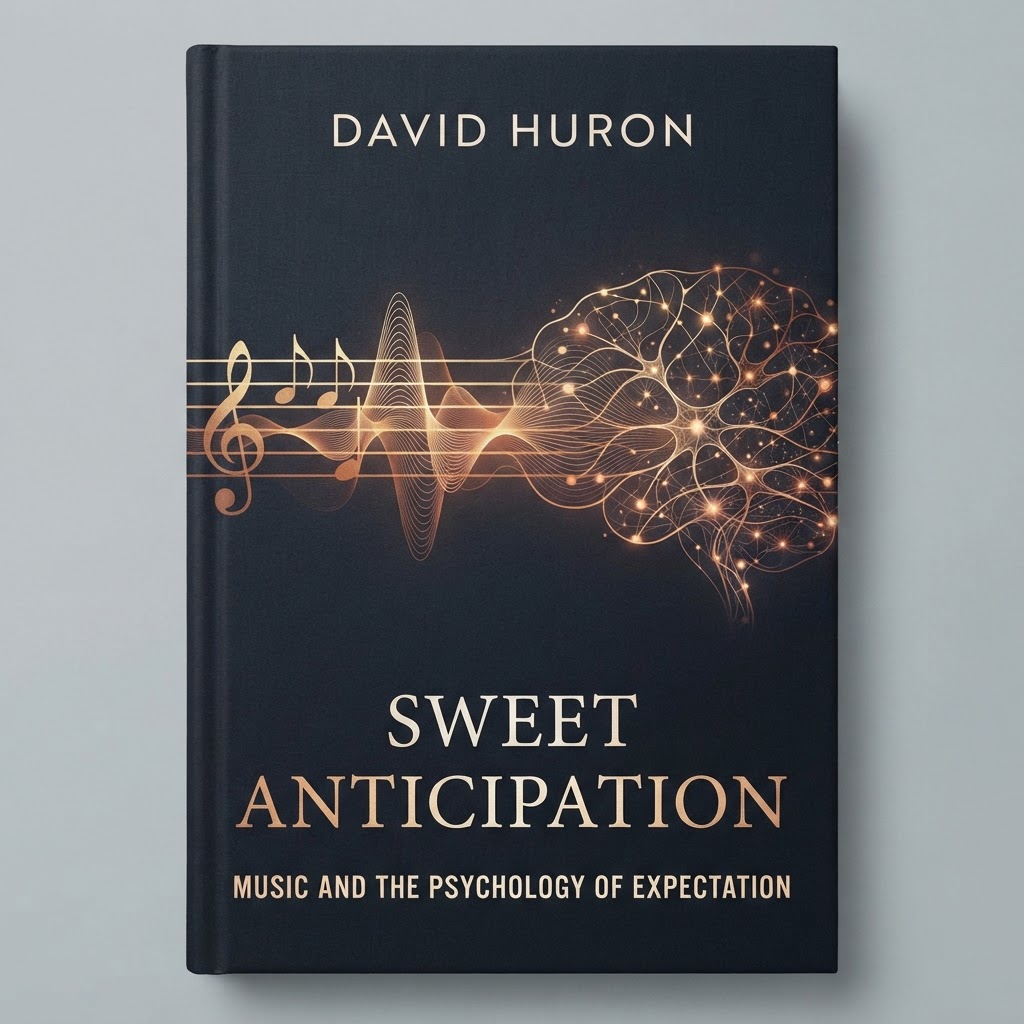
David Huron
We often treat music as a purely emotional experience, a mysterious force that bypasses the intellect to strike directly at the heart. In 'Sweet Anticipation,' David Huron dismantles this romanticized view, not by stripping away the magic, but by revealing the sophisticated biological machinery that makes it possible. Huron argues that our enjoyment of music is fundamentally rooted in our brain's ability to predict the future. He introduces the ITPRA theory—Imagination, Tension, Prediction, Reaction, and Appraisal—to explain how we navigate the sonic landscape. It is a brilliant, rigorous look at why a delayed resolution in a melody can feel like a physical ache, or why a sudden harmonic shift can trigger a rush of dopamine. What makes this book essential reading is how it bridges the gap between evolutionary biology and aesthetic pleasure. Huron posits that our musical responses are not arbitrary; they are evolutionary adaptations. When we listen to a piece of music, we are essentially engaging in a high-speed, low-stakes simulation of survival, constantly testing our predictions against the unfolding reality of the sound. This framework provides a profound new way to listen to everything from Bach to bebop. It forces you to stop being a passive consumer of sound and start recognizing the 'prediction errors' that composers use to manipulate your nervous system. In an era where our attention is constantly fragmented by algorithmic feeds, Huron’s work serves as a vital reminder of the complexity of human cognition. It matters now because it helps us understand the mechanics of engagement. Whether you are a musician trying to understand why your phrasing works or a listener curious about why you return to the same songs for comfort, this book offers a masterclass in the psychology of expectation. It is a rare, intellectually satisfying bridge between the cold precision of science and the warm, messy reality of human feeling.
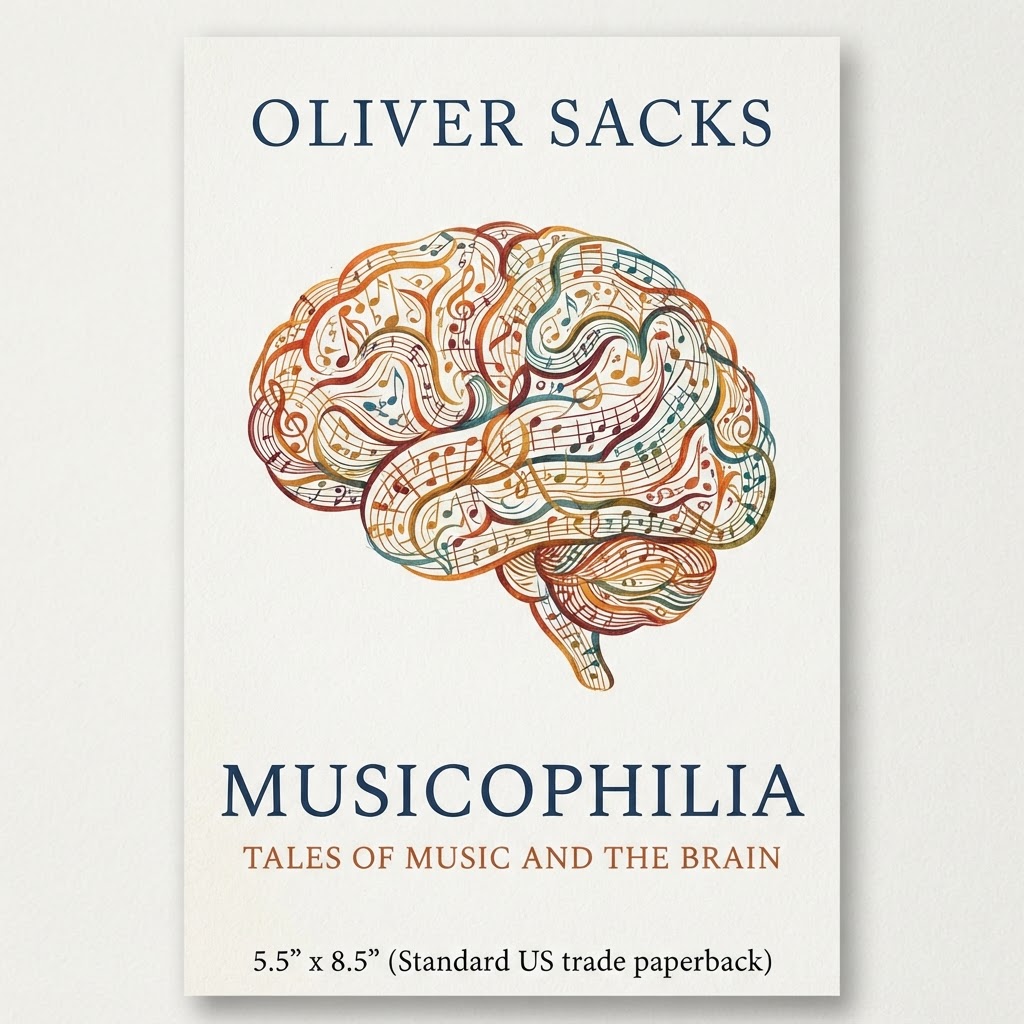
Oliver Sacks
I remember finishing Oliver Sacks's Musicophilia and feeling as though the very air around me had begun to vibrate with a new frequency. Sacks, a neurologist who wrote with the soul of a poet, doesn't just document clinical cases; he explores the profound, often startling ways music is hardwired into the human condition. He argues that our musicality is a fundamental part of our biology, perhaps even more ancient and essential than language itself. This isn't a dry textbook; it is a collection of tales that challenge our understanding of identity and the brain's plasticity. One of the most haunting sections involves musical hallucinations--the phenomenon where the brain, deprived of external stimuli, begins to play internal soundtracks with such vividness that they are indistinguishable from reality. Sacks describes patients who hear entire symphonies or hymns on a loop, a phantom limb of the auditory cortex. He also introduces us to Tony Cicoria, an orthopedic surgeon who, after being struck by lightning, developed a sudden, insatiable obsession with piano music. These stories suggest that music isn't just something we do; it is something that can be unlocked within us, a latent force waiting for the right neurological spark. Why does this matter in our current moment? We live in an era where music is often reduced to content--a utility for focus or a background for scrolling. Sacks reminds us that music is a profound therapeutic force, capable of reaching patients with advanced Alzheimer's or Parkinson's when all other forms of communication have failed. He shows us that rhythm is the bridge to the self, a way to re-anchor a drifting mind to the present. Reading this book expanded my thinking by forcing me to realize that music is not a luxury of culture, but a biological necessity of the nervous system. It is a testament to the resilience of the human spirit and the mysterious, melodic architecture of the mind that defines our species.
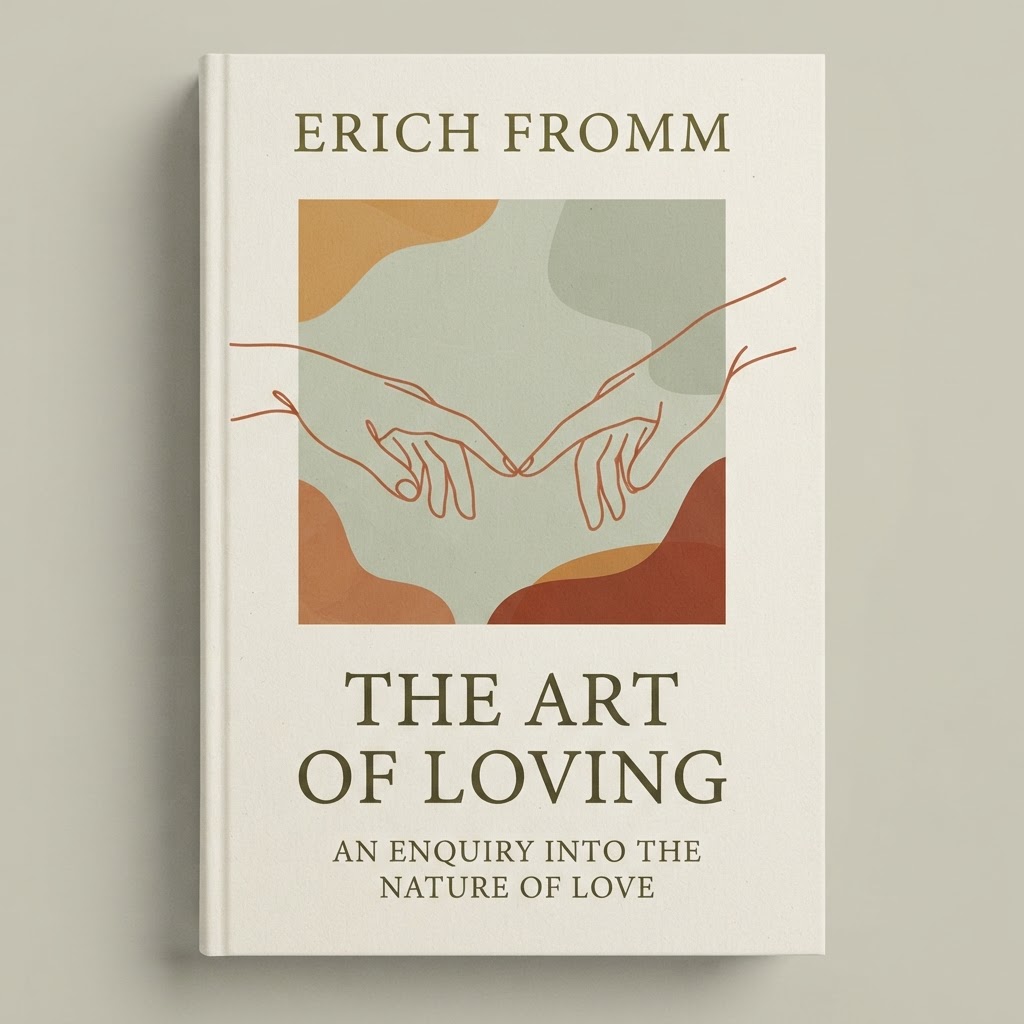
Erich Fromm
In a culture that treats love as a commodity to be consumed or a lucky accident to be stumbled upon, Erich Fromm’s 'The Art of Loving' remains a radical, necessary intervention. Writing from the perspective of a social psychologist and philosopher, Fromm argues that love is not a sentiment one simply 'falls' into, but an art that requires knowledge, effort, and discipline. He dismantles the modern obsession with being 'loved'—which he views as a narcissistic pursuit—and replaces it with the active, creative capacity to love others. His distinction between 'falling in love' and 'the act of loving' is the most vital lesson for anyone navigating the complexities of modern marriage. When Fromm writes that 'love is an action, a practice of a human power,' he shifts the burden from finding the perfect partner to becoming a person capable of genuine intimacy. This book matters now more than ever because it challenges the transactional nature of our digital-age relationships. It forces us to confront our own loneliness and our tendency to use others as a refuge from it. By framing love as a skill to be mastered, Fromm provides a blueprint for a more mature, resilient form of connection that survives the inevitable disillusionment of long-term partnership. It is a slim volume, but it carries the weight of a lifetime of observation.
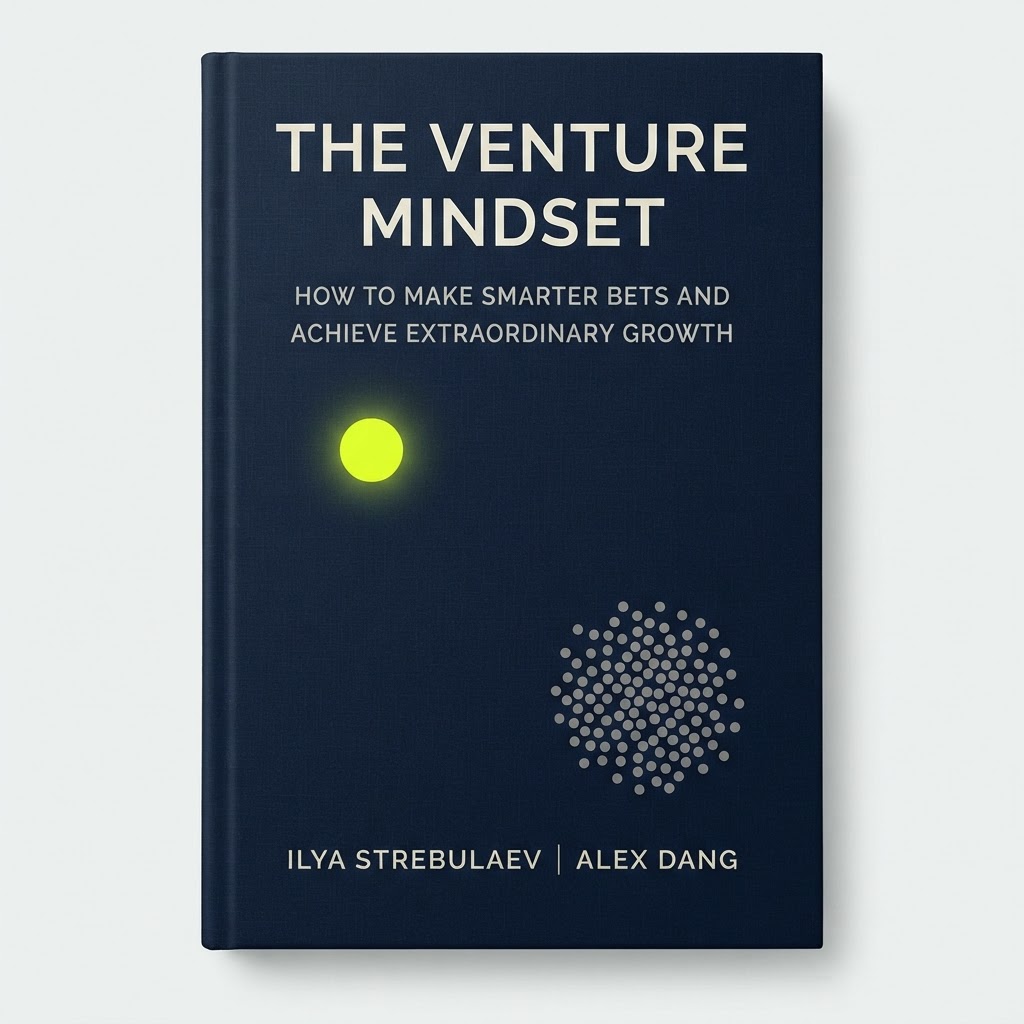
Ilya Strebulaev and Alex Dang
I’ve spent years observing how institutions—from universities to legacy corporations—stifle innovation through a pathological fear of being wrong. Then I picked up The Venture Mindset by Ilya Strebulaev and Alex Dang. Strebulaev, who leads the Venture Capital Initiative at Stanford, doesn't just offer anecdotes; he provides a rigorous autopsy of the cognitive shift required to operate in a world governed by the power law. While most business books feel like recycled airport platitudes, this is a foundational text on the architecture of high-stakes decision-making. It is less about the mechanics of finance and more about the psychology of conviction. The core tension of the book lies in the principle that 'Home Runs Matter, Strikeouts Don’t.' In a traditional corporate setting, a single failure can derail a career. In venture, as Strebulaev illustrates through his deep data sets, the only true failure is missing the outlier. I was particularly struck by the chapter on 'Saying No 100 Times.' It’s a masterclass in the discipline of rejection. Most of us are socialized to be agreeable, to look for reasons to say yes to 'good' opportunities. But the venture mindset demands a ruthless filter to find the 'extraordinary.' It’s a call to intellectual humility—admitting that your internal data is insufficient for predicting the next black swan and that you must look beyond your own 'four walls' to find true disruption. Why does this matter now? We are living through a period of technological volatility where the old maps of 'incremental progress' are burning. Whether you are an investor, a founder, or a philosopher of tech, the 'Venture Mindset' is about recalibrating your relationship with uncertainty. It’s not about gambling; it’s about the disciplined pursuit of asymmetric returns. Strebulaev and Dang have written a manual for anyone who realizes that in a rapidly shifting landscape, the riskiest move is to play it safe. It’s a book that forced me to look at my own 'portfolio' of ideas and ask: am I optimizing for the absence of failure, or for the presence of greatness?
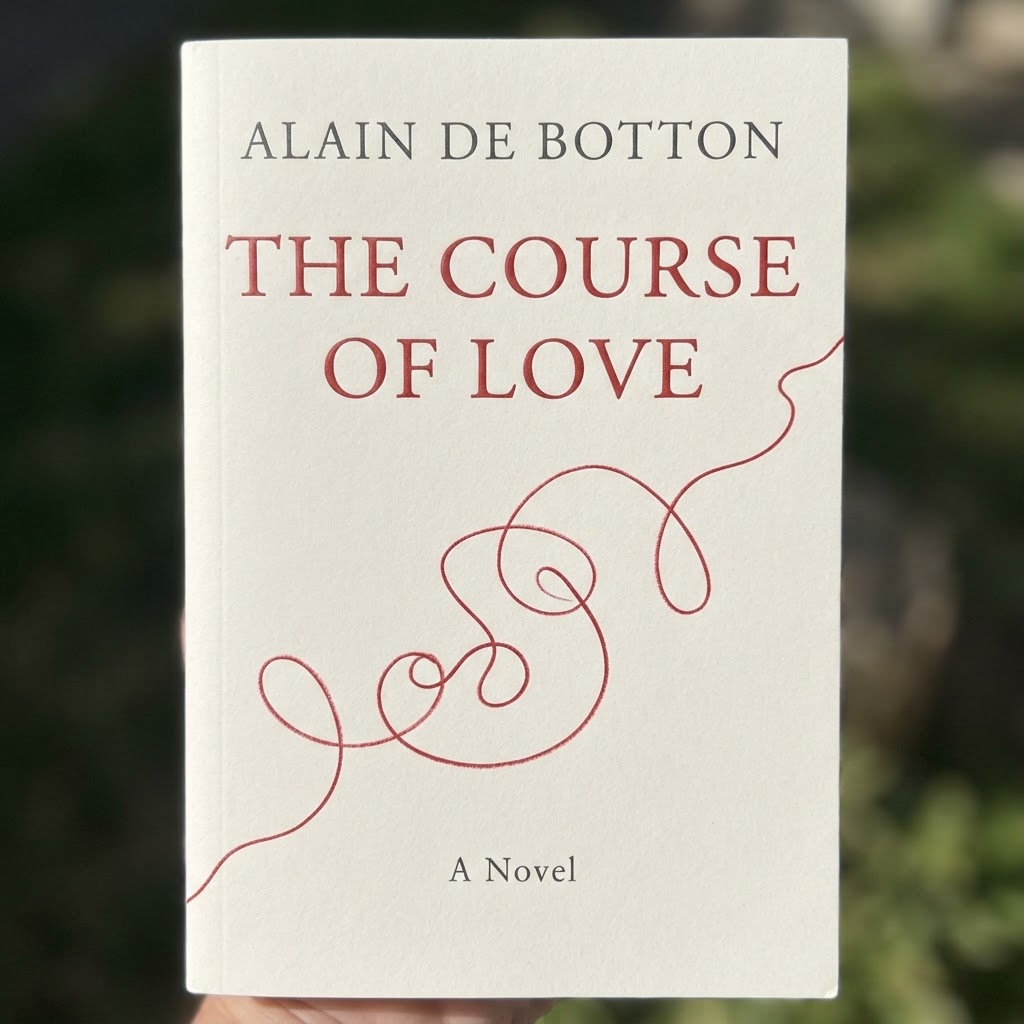
Alain de Botton
Most stories about love end far too early. They conclude at the altar or the first 'I love you,' leaving us with the toxic delusion that marriage is the reward for a successful courtship rather than the grueling, beautiful beginning of a new education. In 'The Course of Love,' Alain de Botton offers a philosophical novel that functions as a corrective to the Romantic movement’s grip on our collective psyche. By following the decades-long relationship of Rabih and Kirsten, he intersperses their narrative with italicized commentary that dissects the psychological underpinnings of their domestic friction. It is, hands down, the most honest book on long-term commitment I have ever encountered. De Botton’s central thesis is that we are all, to some degree, 'insane'—products of peculiar upbringings who enter relationships expecting our partners to intuitively understand our unspoken needs. I was particularly struck by the chapter on 'Teaching and Learning,' where he explores the 'sulk.' He describes sulking as a complex tribute to the partner—an irrational hope that if they truly loved us, they would be able to read our minds without us having to undergo the indignity of explanation. By naming these patterns, de Botton moves love away from the realm of 'magic' and into the realm of 'skill.' He argues that the capacity to be patient with a partner’s idiocy (and our own) is a higher form of love than the initial rush of infatuation. This book matters now because we live in an age of hyper-individualism and 'disposable' connections. When we encounter the inevitable boredom or friction of a long-term union, our culture often tells us we have simply chosen the 'wrong' person. De Botton counters this by suggesting that there is no 'right' person—only a person whose flaws we can learn to endure with grace. He shifts the metric of a successful marriage from the absence of conflict to the presence of psychological maturity. Reading this felt like a deep exhale; it is a profound relief to be told that the difficulties of marriage aren't a sign of failure, but a sign that the work of love is actually happening.
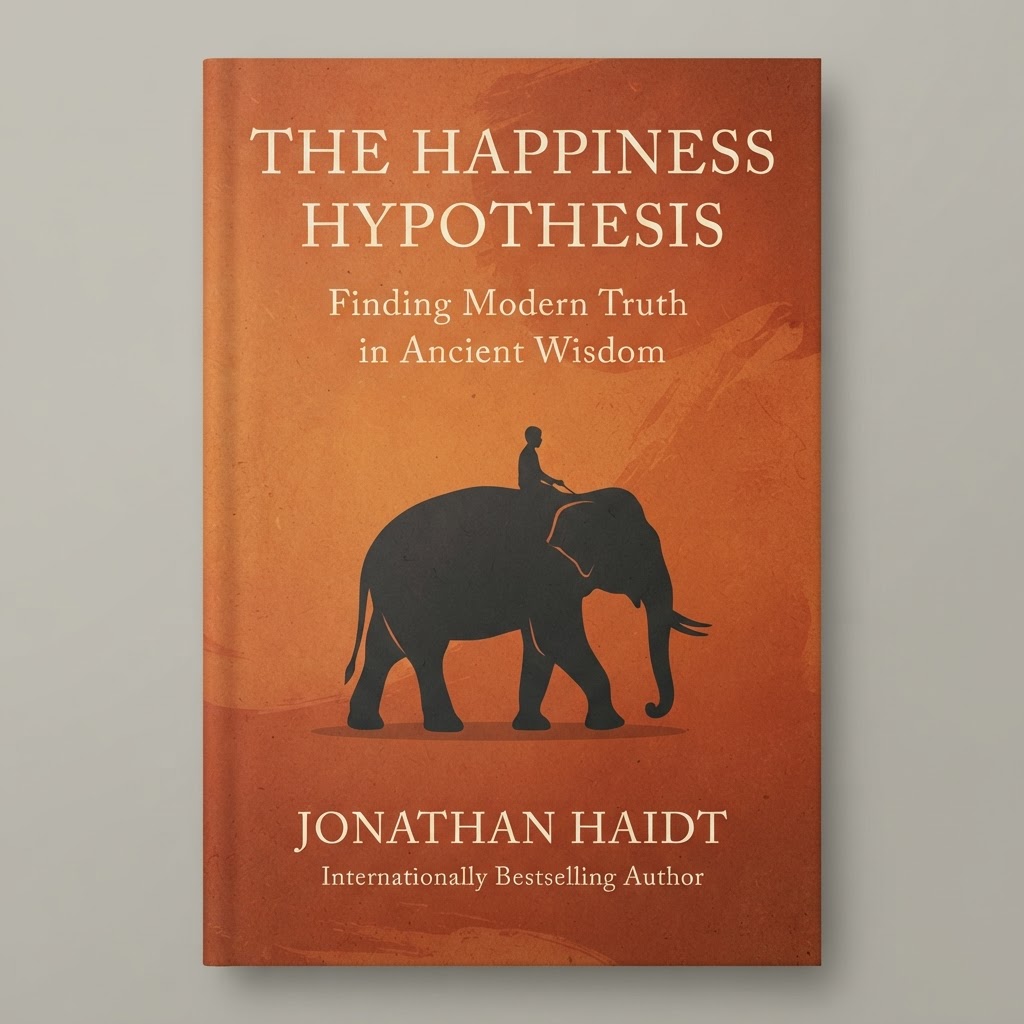
Jonathan Haidt
I remember picking up Jonathan Haidt’s *The Happiness Hypothesis* during a period when I felt overwhelmed by conflicting "wellness" advice. What I found wasn't a set of platitudes, but a profound synthesis of ancient wisdom and modern cognitive science, a book often cited as essential for [6 Psychology Books to Understand Yourself (and Others) Better](https://markmanson.net/6-psychology-books-to-understand-yourself-and-others-better). Haidt’s central metaphor—the Elephant and the Rider—remains one of the most useful psychological frameworks I’ve ever encountered. The Rider represents our conscious, verbal, planning mind, while the Elephant is the other 99% of our mental processes: the emotions, intuitions, and visceral reactions that actually drive our behavior. We often think we are in control, but as Haidt demonstrates, the Rider is more like a press secretary, frantically justifying the Elephant’s path rather than choosing it. The book’s brilliance lies in its structure; each chapter takes a "Great Idea" from history—be it from Buddha or Epictetus—and subjects it to the light of contemporary psychology. In the chapter "The Felicity of Virtue," Haidt challenges the modern notion that morality is just a set of rules, arguing instead for a return to the Aristotelian view of character and habit. He doesn't just tell you to be "mindful"; he explains the biological "Adaptation Principle," showing why we are trapped on a hedonic treadmill and how we can strategically step off it. His exploration of the "Progress Principle"—the idea that the journey is more rewarding than the destination because of how dopamine is released—is a cornerstone of why Haidt is considered one of the [Psychology: Best Books, Key Ideas & Guides | The Growth Reads](https://thegrowthreads.com/psychology/). Why does this matter now? We live in a fractured age where the "divided self" is further split by algorithmic feedback loops. Haidt, who has recently explored how childhood is being rewired in [New Psychology Books - Five Books Expert Recommendations](https://fivebooks.com/category/psychology/new-psychology-books/), provides in this earlier work a roadmap for internal reintegration. He doesn't promise easy happiness; instead, he offers a "hypothesis" that happiness comes from *between*—between the self and others, between the self and work, and between the self and something larger. It is a challenging, intellectually rigorous, and ultimately hopeful book that demands you look at your own internal contradictions with both honesty and grace.
Alex Ross
I often think about how we have sanitized our relationship with music, treating it as a pleasant background layer to our lives or a dopamine trigger curated by an algorithm. Alex Ross’s 'The Rest Is Noise' shattered that complacency for me. It is not just a history of 20th-century classical music; it is a profound exploration of how sound captures the psychic ruptures of modernity. Ross possesses a rare ability to translate the technical architecture of a composition into the visceral language of human experience, showing us that the 'noise' we often reject is actually the most honest reflection of our own chaotic history. The book’s power lies in its specificities. I found myself haunted by Chapter 7, 'The Art of Fear,' where Ross details Dmitri Shostakovich’s precarious dance with Stalin. The description of the Fifth Symphony’s premiere—where the audience wept during the Largo, sensing the composer’s hidden grief amidst the state-mandated triumph—reminds us that music is never just notes on a page; it is a vessel for dissent and survival. Ross also masterfully demystifies the 'emancipation of dissonance,' leading the reader through the radical shifts of Schoenberg and Stravinsky not as academic exercises, but as necessary responses to a world that could no longer be contained within the tidy harmonies of the 19th century. Why does this matter today? We live in an era of extreme sonic saturation, yet we are arguably less 'literate' in the emotional weight of sound than ever before. Ross challenges us to listen vertically—to hear the social, political, and philosophical tensions vibrating within a single chord. By the time you reach the chapters on Minimalism and the late-century fusion of high and low art, you realize that the distinction between 'classical' and 'pop' is far less interesting than the distinction between music that placates and music that awakens. This book didn't just change my playlist; it changed the way I inhabit the auditory world.
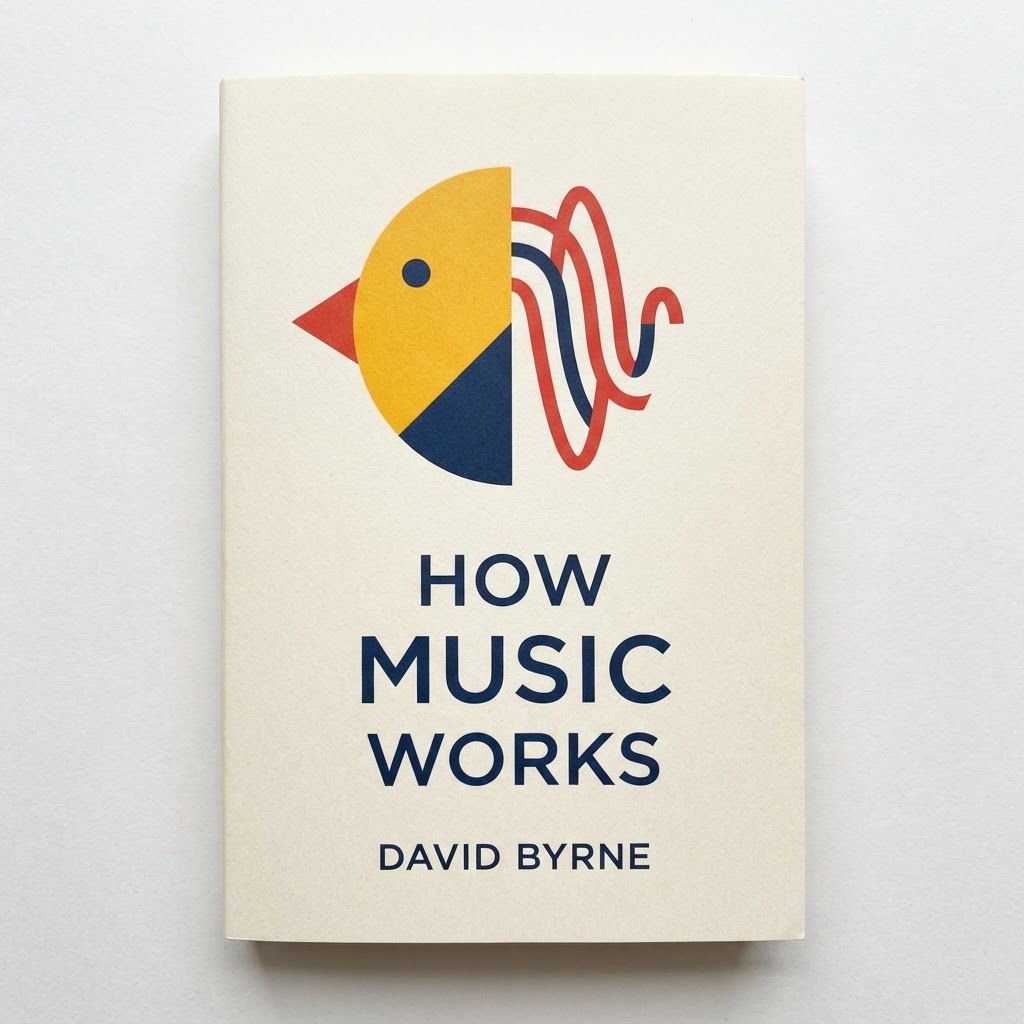
David Byrne
Most books about music fall into two traps: they are either dry musicological texts or self-indulgent rock memoirs. David Byrne avoids both by treating music as a biological and sociological phenomenon. He starts with a premise that upended my understanding of creativity: 'Creation in Reverse.' Byrne argues that we don’t create music in a vacuum of pure inspiration; instead, we craft it to fit specific physical spaces. The echo of a cathedral demanded the slow, polyphonic chants of the Middle Ages, just as the lack of reverb and the loud clatter of CBGBs forced the Talking Heads to write rhythmic, punchy arrangements. This idea—that the venue shapes the art—is a profound shift in how we view the 'genius' of the artist. I found his exploration of technology particularly gripping. Byrne details how the invention of the microphone didn't just record voices; it invented the 'crooner.' Without amplification, a singer had to project to the back of the room, sacrificing intimacy for volume. With the mic, Frank Sinatra could whisper into the listener's ear, fundamentally changing the emotional vocabulary of popular music. In a later chapter, Byrne dives into the 'Business and Finances' of the industry with a transparency that is rare. He breaks down the actual royalty statements of his own albums, illustrating the precarious transition from physical media to the digital 'celestial jukebox.' It’s a sobering look at how the shift from ownership to access reconfigures the value we place on sound. This book matters immensely right now because we are living in an era where music is treated as a flat commodity, served by algorithms that ignore the physical and social contexts Byrne champions. As AI begins to generate 'content' based on patterns, Byrne reminds us that music is an evolutionary survival mechanism—a way of social bonding and physical synchronization. It is a brilliant, multidisciplinary toolkit for anyone who wants to understand not just how music is made, but why it remains the most potent social glue we have.
Saras D. Sarasvathy
I remember the first time I encountered Saras Sarasvathy’s work; it felt like a cognitive gear finally clicking into place. In the venture world, we are often obsessed with 'causal' thinking—the idea that if we can just gather enough data and build a precise enough model, we can predict the future. Sarasvathy’s 'Effectuation' completely upends this. She argues that the most successful entrepreneurs don't start with a goal and look for means; they start with their means—who they are, what they know, and whom they know—and let the goals emerge. It’s a profound shift from 'finding' an opportunity to 'making' one. The book is built on her rigorous study of expert entrepreneurs, and the insights are startlingly counter-intuitive. I was particularly struck by the 'Bird in Hand' principle and the 'Affordable Loss' principle. Instead of calculating expected returns—a fool's errand in a truly uncertain environment—expert effectuators focus on what they can afford to lose. This isn't just business advice; it’s a philosophy of life. Chapter 3, where she contrasts causal vs. effectual logic, is essential reading. It explains why the traditional 'business plan' is often a work of fiction and why the 'pilot-in-the-plane' mindset—the belief that the future is something you create, not something that happens to you—is the only way to survive radical uncertainty. In our current era of AI-driven disruption and volatility, the old maps are useless. We are all, in a sense, operating in a venture environment now. 'Effectuation' matters today because it provides a rigorous framework for agency when prediction is impossible. It moves us away from the paralysis of 'what if' and toward the empowerment of 'even if.' It’s a book that doesn't just teach you how to build a startup; it teaches you how to navigate a world that refuses to be modeled. It is, without question, the most intellectually honest and transformative book on the venture mindset I have ever read.
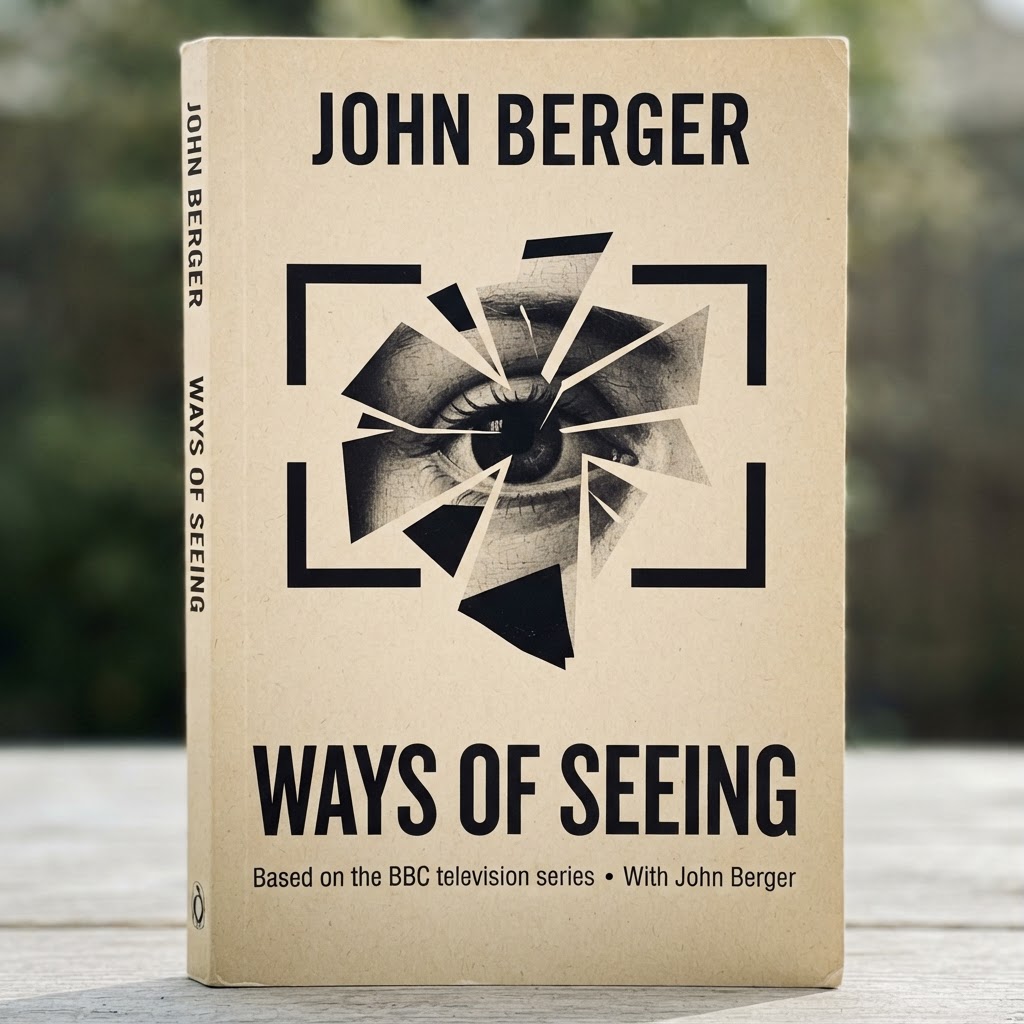
John Berger
John Berger’s 'Ways of Seeing' is not merely a book about art history; it is a radical act of intellectual liberation. When I first encountered this text, it dismantled the reverent, hushed-tone approach I had been taught to take toward 'masterpieces.' Berger argues that our perception of art is never neutral; it is filtered through a dense web of assumptions regarding class, gender, and property. By stripping away the 'mystification'—the academic jargon that keeps art locked behind velvet ropes—he forces us to confront the reality that we are not just looking at images, but reading them as ideological artifacts. His analysis of oil painting as a medium that historically celebrated the owner's possessions remains as sharp and relevant today as it was in 1972. In our current era of hyper-curated digital feeds and algorithmic imagery, Berger’s insistence that we question the 'why' behind what we see is more vital than ever. He teaches us that the image is a site of power, and to look at it passively is to surrender our own agency. This book is a necessary provocation for anyone who wants to reclaim their own vision from the influence of mass media and cultural conditioning. It is a short, punchy, and visually driven manifesto that demands you stop being a spectator and start being a critic of your own reality.
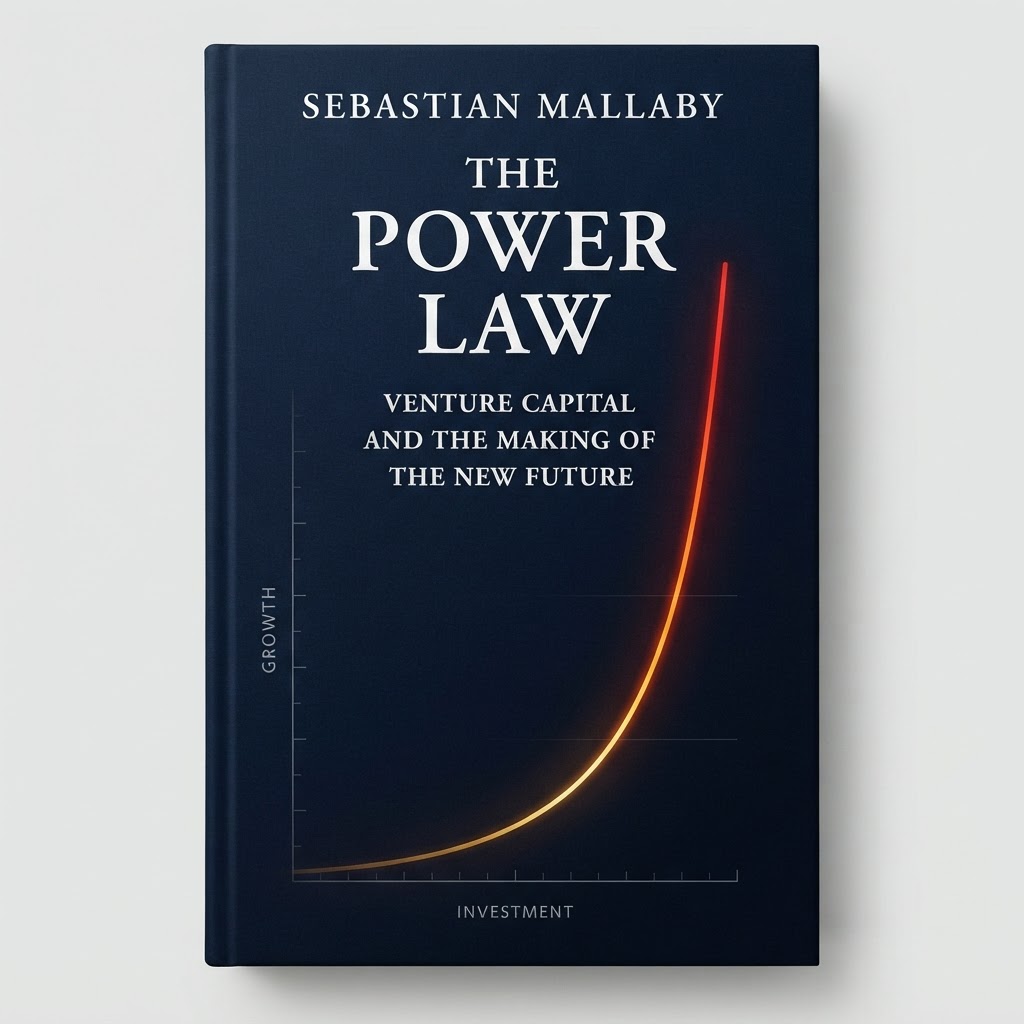
Sebastian Mallaby
I often find business histories to be little more than hagiographies or dry accounts of balance sheets, but Sebastian Mallaby’s 'The Power Law' is a startling exception. It is a masterclass in understanding the architecture of modern ambition. Mallaby isn’t just chronicling the rise of Silicon Valley; he is performing an interrogation of how a tiny, insular group of investors learned to harness the 'fat tails' of probability. The core thesis—that venture capital is a defiance of the bell curve—is the most lucid explanation I’ve encountered for why our world looks the way it does. Mallaby argues convincingly that the VC’s role isn't merely to pick winners, but to actively bend the arc of a startup’s trajectory through 'governance-intensive' investing. The book shines when it dives into the specific psychologies of firms like Sequoia and Benchmark. I was particularly captivated by the chapters detailing the 'prepared mind' philosophy of Don Valentine. Valentine’s insistence that luck is merely the residue of design—that you must build the intellectual framework to recognize a revolution before it arrives—is a profound epistemological point. Mallaby’s account of the early days of Apple and Atari illustrates this perfectly: the VC wasn't just a source of capital, but a therapist, a recruiter, and a ruthless disciplinarian who forced order onto the chaos of genius. He captures the tension between the 'suits' and the 'nerds' not as a cliché, but as a necessary chemical reaction that produces innovation. In our current era of market corrections and growing skepticism toward the 'disruption' ethos, this book is essential. It reminds us that the venture model is built on the acceptance of failure as a prerequisite for outlier success. Mallaby doesn't shy away from the industry's hubris or its diversity failures, yet he maintains a clear-eyed view of why this model remains the most potent engine for technological change. It is a book about the courage to embrace asymmetry, making it as much a work of human psychology and philosophy as it is a history of finance. For anyone trying to understand the mechanics of the future, this is the definitive map.
Dave Hickey
I remember picking up Air Guitar in a dusty corner of a shop in Las Vegas—fitting, given that Dave Hickey, the so-called 'Bad Boy of Art Criticism,' treated that neon-lit city like a temple of democratic aesthetics. This isn’t a book of dry, hushed theory; it is a manifesto for the visceral pleasure of looking. Hickey famously walked away from the tenure-track academic art world, choosing instead to write about how art actually functions in the wild. He argues that art is not a tool for social improvement or a puzzle for experts to solve, but a vibrant, often messy negotiation between the object and the viewer. In the standout essay 'Frivolity and Unreliability,' Hickey makes a startling case for the 'frivolous' as a revolutionary act. He argues that by insisting on beauty and personal pleasure, we resist the institutional forces—the 'therapeutic' curators and bureaucrats—who want to categorize and control our aesthetic experiences. He looks at figures like Liberace or Norman Rockwell not with irony, but with a searingly intelligent eye that sees how they navigated the 'participatory' nature of American culture. He writes with a rhythmic, jazz-like cadence, asserting that the task of the observer is not to 'understand' in a clinical sense, but to appreciate the consequences of the work’s existence. This shift—from decoding meaning to experiencing impact—is a radical reframing of how we interact with creativity. Why read this now? We live in an era where art is increasingly judged by its moral utility or its market value. Hickey offers a third way: the way of the 'air guitar,' where the viewer’s engagement and enthusiasm are what actually complete the work. He reminds us that the democracy of art lies in our right to be moved, to be wrong, and to be delighted without permission from an authority. It is a bracing, intellectually high-octane reminder that art should be a source of agency, not just an object of study. Reading Hickey feels like opening a window in a stuffy room; it invites the chaotic, beautiful air of the real world back into the gallery.
Hugo Mercier and Dan Sperber
I have spent years wondering why, despite our supposed evolutionary peak, humans remain so stubbornly irrational. We treat cognitive biases like 'bugs' in our mental software, but Hugo Mercier and Dan Sperber’s The Enigma of Reason completely upended that narrative for me. They propose a radical 'interactionist' theory: reason didn't evolve to help us reach the truth in solitude; it evolved to help us justify our actions to others and evaluate the justifications of our peers. It is a social tool, not a logical one. The most striking realization in the book is their treatment of the 'myside bias.' While most psychologists lament our tendency to only see evidence that supports our views, Mercier and Sperber argue this is actually reason working exactly as intended. If you are in a group, you don't need to see both sides; you need to provide the best possible case for your position so the group can evaluate it. The 'logic' happens at the group level, not the individual one. This explains why we are so devastatingly sharp at spotting flaws in a neighbor’s argument while remaining blissfully blind to the gaping holes in our own. Reading this matters now more than ever because it offers a way out of the 'everyone is irrational' despair of the digital age. It suggests that our current environment—isolated silos and digital shouting matches—is a mismatch for our evolutionary hardware. We aren't broken; we are just using a social tool in a vacuum. When I finished the chapter on 'Reasoning as a Social Competence,' I realized that intellectual humility isn't just a moral virtue; it’s a structural necessity for the tool of reason to actually function. This isn't a light read, but it is a transformative one. It forces you to stop looking at 'irrational' people as failures of logic and start seeing them as social actors. It changed how I argue, how I write, and how I perceive the chaotic friction of public discourse.
Iain McGilchrist
When I first picked up Iain McGilchrist’s The Master and His Emissary, I expected a dry neurological treatise on brain lateralization. Instead, I found a sweeping cultural history that explains why modern life feels so increasingly hollow and fragmented. McGilchrist moves far beyond the left brain is logic, right brain is art clichés. He argues that the two hemispheres offer fundamentally different ways of attending to the world: one narrow, grasping, and focused on utility (the Emissary), the other broad, open, and contextual (the Master). The tragedy of the Western world, he posits, is that the Emissary has usurped the Master, treating the world as a collection of dead parts rather than a living whole. In the middle chapters, specifically The Triumph of the Left Hemisphere, McGilchrist illustrates how our obsession with categorization, bureaucracy, and digital abstraction is a direct result of this neurological imbalance. Reading his analysis of the Industrial Revolution alongside his observations on modern art felt like having a veil lifted. He points out that the left hemisphere is essentially a closed system; it doesn't know what it doesn't know. This lack of self-awareness is what leads us to prioritize efficiency and optimization even when they destroy the very things—like community, beauty, and silence—that make life worth living. It is a brilliant, if daunting, synthesis of neuroscience and the humanities. Why does this matter now? We are currently delegating our cognition to algorithms that are the ultimate expression of left-hemisphere processing: literal, decontextualized, and binary. As we lean more into AI and data-driven governance, we risk permanently trapping ourselves in a hall of mirrors where we only see what is measurable. McGilchrist doesn't just offer a psychological theory; he offers a survival manual for the human spirit. He reminds us that the most important things in life—love, music, and the sacred—cannot be captured by the map of the left hemisphere. They must be experienced in the territory of the right. This book is the most profound challenge to the status quo I have read in a decade.
Andrea Wulf
Few biographies manage to revive a forgotten world-view as vividly as Andrea Wulf’s 'The Invention of Nature.' Before reading this, I knew Humboldt as a name on a map—a current here, a county there. But Wulf reveals him as the architect of our modern conception of nature as a living, pulsing web. We live in an era of hyper-specialization, where we study the leaf but forget the forest. Humboldt’s life is the ultimate antidote to this fragmentation. Wulf’s narrative peaks during his ascent of Chimborazo, then thought to be the highest mountain in the world. As he gasped for air in the thin Andean atmosphere, he didn't just see a landscape; he saw a 'Naturgemälde'—a map of interconnectedness that bridged continents and species. What struck me most was how Humboldt’s 19th-century insights predate our most urgent 21st-century anxieties. In the chapter titled 'Politics and Nature,' Wulf details how Humboldt was among the first to link colonial monoculture and deforestation to human-induced climate change. He saw the scars we were leaving on the planet long before the Industrial Revolution hit its stride. His influence on Darwin, Thoreau, and Muir is traced not as dry academic lineage, but as a viral transmission of wonder. Reading this felt like watching the scales fall from my eyes; it reminds us that science and poetry are not enemies, but two halves of the same human impulse to understand our place in the cosmos. In our current moment of ecological crisis and digital alienation, Humboldt’s 'web of life' is more than a scientific theory—it is a moral imperative. Wulf’s prose is as energetic as her subject, capturing the restless, polymathic spirit of a man who refused to see the world in pieces. This book challenged me to stop viewing nature as a resource to be managed and start seeing it as a system we are inextricably part of. It is a masterpiece of intellectual biography that demands we rethink our relationship with the earth.
David Hockney and Martin Gayford
I have long believed that our modern curriculum does a disservice by separating 'art' from 'technology' as if they were warring factions. In 'A History of Pictures,' David Hockney, perhaps the greatest living painter, and critic Martin Gayford dismantle this binary with elegant precision. They treat a Disney animation, a Caravaggio canvas, and a smartphone photo as part of the same grand continuum: the human obsession with fixing a three-dimensional experience onto a two-dimensional surface. Hockney’s central thesis—that the history of pictures is a history of optical tools—is one of the most provocative and necessary shifts in perspective I have encountered. He argues convincingly that Old Masters used mirrors and lenses long before the official birth of photography, viewing these not as 'cheating' but as a sophisticated dialogue between the eye and the tool. This book matters intensely right now because we are currently drowning in a sea of AI-generated imagery. As we struggle to define what 'authentic' art looks like in a post-human creative landscape, Hockney’s emphasis on the 'trace of the hand' becomes a vital anchor. In the chapter 'The Mark-Making Human,' the duo discusses how a drawing is an active account of looking—a durational process—whereas a photograph is a record of a frozen instant. This distinction is blurring in the digital age, and Hockney helps us find the seam where human intent meets technological capability. Reading this changed how I perceive my own screen; I no longer see mere 'content,' but a frantic, ongoing experiment in human perspective that spans thirty thousand years from the caves of Lascaux to the iPad. It is a masterclass in visual literacy that forces you to look at the world, and its many representations, with much sharper eyes.
Neil Postman
Postman’s 1992 masterpiece remains the most prescient autopsy of our digital age. He defines Technopoly as a state of culture that seeks its authorization in technology, finds its satisfactions in technology, and takes its orders from technology. Unlike a technocracy, where tools coexist with social and religious traditions, a Technopoly eliminates those traditions to become a totalizing worldview. Reading this today, especially as we stand on the precipice of generative AI, Postman’s warnings about the 'uncontrolled flow of information' feel like a diagnosis of our current social paralysis. He argues that we have lost the ability to distinguish between what is significant and what is merely data, leading to a culture where the link between information and human purpose has been severed. One of the most striking chapters, 'The Invisible Technologies,' delves into how things we don't even think of as technology—like the IQ test, the public opinion poll, or the school grade—reconstruct our reality. These are not merely neutral measures; they are ideologies that prioritize the quantifiable over the qualitative. Postman’s critique of 'scientism' is particularly biting; he shows how we have ceded our moral and social judgment to the 'expertise' of machines and those who manage them. It is a sobering look at how we have replaced the human narrative with a data-driven one, often at the cost of our collective sanity. I find myself returning to Technopoly whenever I feel the creeping dread of digital fatigue. It matters now because we are no longer just using tools; we are living inside them. Postman doesn't just ask us to be cautious of new gadgets; he asks us to defend the 'loving resistance fighter'—the person who refuses to accept that what cannot be measured does not exist. This book is a vital manual for anyone trying to reclaim their humanity from the algorithmic maw. It challenges the Silicon Valley assumption that every problem has a technical solution, reminding us that some of our most profound human needs are precisely the ones technology is least equipped to solve.
Ananyo Bhattacharya
I recently revisited Ananyo Bhattacharya's 'The Man from the Future,' and it remains the most dizzying account of intellectual range I have ever encountered. While most biographies focus on the personality or the era, Bhattacharya succeeds in the far more difficult task of mapping the architecture of John von Neumann's mind. We often hear about 'polymaths,' but von Neumann was something else entirely—a man whose fingerprints are on everything from the foundations of quantum mechanics to the architecture of the computer sitting on your desk, and even the 'mutually assured destruction' logic of the Cold War. What struck me most profoundly was the chapter on game theory and its application to human behavior. Reading about how von Neumann formalized the messy, often irrational nature of strategy into 'Theory of Games and Economic Behavior' felt like watching someone invent a new color. Bhattacharya doesn't just list achievements; he explores the philosophical weight of von Neumann's work on cellular automata—self-replicating machines—which anticipated the study of DNA before its structure was even discovered. It forces you to confront a terrifyingly efficient intelligence that saw the world not as a series of events, but as a set of logical problems to be solved. This book matters now because we are currently living in the world von Neumann hallucinated into existence seventy years ago. As we grapple with the existential risks of AI and the complexities of global digital warfare, understanding the 'Johnny' perspective—his relentless, almost alien optimization of reality—is essential. It is a cautionary tale and a celebration of the human capacity for pure abstraction. It reminds us that our modern crises are not just technical, but legacies of a specific way of thinking that prioritized systemic logic over human fallibility.
Oliver Burkeman
I have long been wary of the industrial-scale optimism that defines the modern self-help genre, which is why Oliver Burkeman's 'The Antidote' felt like such a profound relief. Instead of the usual exhortations to visualize success or 'think positive,' Burkeman explores what he calls the 'negative path' to happiness. He argues, quite convincingly, that our constant, frantic effort to eliminate negative feelings—uncertainty, failure, sadness—is exactly what keeps us stuck in them. Drawing on a diverse array of sources including Stoicism, Buddhism, and a fascinating visit to the 'Museum of Failed Products' in Michigan, Burkeman demonstrates that psychological security is an illusion and that our obsession with rigid goal-setting often leads to a narrow, brittle version of a life well-lived. One of the most striking sections of the book involves his exploration of the Stoic practice of 'premeditatio malorum'—the deliberate, sober contemplation of the worst-case scenario. By looking directly at what we fear most, rather than trying to suppress it with affirmations, we realize that we can likely handle the fallout, which immediately drains the anxiety of its power. Burkeman's writing is sharp, witty, and entirely devoid of the saccharine fluff that typically plagues this category. He doesn't offer a ten-step plan to greatness or a roadmap to a six-figure salary; instead, he offers a way to be more present in the messy, unpredictable reality of the human condition. It is a book about 'negative capability,' a term he borrows from the poet John Keats, describing the ability to remain in 'uncertainties, mysteries, doubts, without any irritable reaching after fact and reason.' In our current era of hyper-optimization and the relentless pressure to curate a perfect life for public consumption, 'The Antidote' is an essential piece of cultural criticism as much as it is a self-help guide. It matters now because we are collectively exhausted by the demand to be 'high-performing' and 'optimized' at all times. Burkeman suggests that the secret to a meaningful life isn't found in reaching the summit of some imaginary mountain, but in learning to stop fighting the reality of the climb. It is a liberating, intellectually rigorous work that treats the reader like a capable adult, acknowledging that life is often difficult, unfair, and chaotic, and that realizing this is, ironically, the only way to find lasting peace.
Lewis Hyde
I often return to Lewis Hyde’s 'The Gift' when the noise of the contemporary art market becomes deafening. Hyde’s central thesis is deceptively simple but radically disruptive: a work of art is fundamentally a gift, and it must continue to function as a gift even within a market society. He argues that art exists in a separate economy from the commercial world—one based on relationship, gratitude, and circulation rather than accumulation. This isn't just a romantic sentiment; Hyde provides a rigorous anthropological and psychological framework for understanding why art created solely for profit often feels hollow, while works that are 'given' to the world retain a transformative power. One of the most striking sections involves Hyde’s analysis of the 'gift of the talent.' He draws on the parable of the talents and various folk tales to show that if a gift is not passed on, it rots. He writes, 'The gift that is not used will be lost.' In the chapter 'The Labor of Gratitude,' he distinguishes between 'work' (done for pay) and 'labor' (done for the soul). This distinction is crucial for any creator today. Art requires a specific kind of labor—one that cannot be rushed or optimized by an algorithm—because the artist must allow the work to change them before it can change the audience. Why read this now? We live in an era where everything is a transaction, from social media engagement to the commodification of personality. Hyde’s book acts as a defensive wall against the total marketization of human creativity. It reminds us that the best art creates a community of 'gift-recipients' who are bonded by the shared experience of the work. If we treat art only as an asset class or a status symbol, we kill the very thing that makes it vital to human survival. This book is an essential manifesto for keeping the creative spirit alive in a world that wants to put a price tag on every inspiration.
Gabor Maté
I recently found myself revisiting Gabor Maté’s 'The Myth of Normal,' and I am struck by how it dismantles the conventional medical paradigm that views the body as a closed system. Maté argues that what we call 'health' or 'pathology' is not just an individual biological quirk but a response to our social and emotional environment. He introduces the biopsychosocial model not as a niche theory, but as a necessary lens for survival. The book challenges the reader to stop asking 'Why the disease?' and start asking 'Why the pain?' or 'What is this body trying to communicate about its surroundings?' One of the most arresting sections involves Maté’s exploration of 'the stress of disconnection' and how our society rewards 'toxic productivity' and emotional repression. He cites compelling evidence linking chronic physiological stress—often rooted in developmental trauma or the pressure to perform—to the manifestation of autoimmune conditions and cancer. Maté doesn't just theorize; he provides visceral case studies that illustrate how 'small-t' traumas, the subtle erosions of self that occur in a hyper-competitive, atomized culture, become stored in our cells. It’s a sobering look at how our modern way of life is essentially a 'toxicity' that the human organism was never designed to endure. Why does this matter right now? We are living through a global crisis of chronic illness and mental health struggles that individual 'biohacking' or pharmaceutical fixes alone cannot solve. Maté’s work is a necessary provocation for anyone interested in the future of health, pushing us to realize that collective healing is a prerequisite for individual recovery. He makes a masterly case that we cannot fix the heart or the lungs without addressing the loneliness and alienation inherent in our socioeconomic structures. It’s a profound, often uncomfortable read that successfully bridges the gap between clinical medicine and social philosophy.
Eli J. Finkel
I approached Eli Finkel’s "The All-or-Nothing Marriage" with a healthy dose of skepticism. Most books in this category lean toward the anecdotal or the overly clinical. However, Finkel, a social psychologist at Northwestern, provides a profound historical framework that fundamentally rewired my understanding of why modern partnerships feel both more fragile and more potentially rewarding than those of our ancestors. He posits that we have moved through three distinct eras: the institutional marriage focused on survival, the companionate marriage focused on love, and now, the self-actualization marriage. The central tension of the book—what Finkel calls the "suffocation model"—is a revelation. He uses the metaphor of Mount Maslow to explain that we are now asking our partners to meet our highest psychological needs: self-expression, personal growth, and identity. While this allows for the most profound apex marriages in history, it also means that the oxygen is thin at the top. If we don’t have the time or emotional resources to invest in the relationship, the marriage suffocates under the weight of our own expectations. This isn't just a critique; it’s a roadmap for the modern paradox of choice and the scarcity of attention. What I find most vital about Finkel's work now is his pragmatism regarding love hacks. In a culture obsessed with optimization, he suggests that if you cannot provide the high-altitude effort required for a self-actualizing marriage, the solution is not necessarily divorce, but recalibration. We can either invest more or demand less. In an era of professional burnout and digital distraction, this book is a necessary intervention. It challenges the romantic myth that a great marriage happens naturally, replacing it with the sobering, yet empowering, reality that high-quality love is a high-maintenance endeavor requiring deliberate psychological engineering.
Byung-Chul Han
I first encountered Byung-Chul Han’s work when I was drowning in the myth of productivity, and 'The Burnout Society' acted as a cold, necessary shock to my system. Han’s central thesis is that we have transitioned from Michel Foucault’s 'disciplinary society'—a world of hospitals, madhouses, and prisons defined by the negative constraints of 'no' and 'should'—into a modern 'achievement society' defined by the deceptively permissive 'can.' On the surface, this sounds like liberation, but Han reveals it as a far more insidious form of subjugation. We have become 'entrepreneurs of the self,' where the pressure to perform comes not from an external master, but from an internal drive that knows no limit. We exploit ourselves voluntarily, believing we are fulfilling ourselves, until we reach a state of absolute depressive exhaustion. This shift from external to internal exploitation is the defining hallmark of our era. One of the most striking chapters, 'The Pedagogy of Seeing,' references Nietzsche to argue that we have lost the ability to linger or pause. Han critiques our modern obsession with multitasking, describing it as a regression to the hyper-vigilant attention found in wild animals who must constantly scan their environment to avoid being eaten while they forage. In our rush to process every notification and optimize every waking second, we lose the capacity for 'deep boredom'—the very state from which true creative thought and cultural evolution emerge. We are hyper-active but spiritually stagnant, mistaking movement for progress. This book is vital reading today because it diagnoses the specific melancholy of the digital age. It explains why, despite our unprecedented freedom and technological convenience, we feel more depleted than ever. Han suggests that the 'violence of positivity'—the pressure to always be happy, productive, and authentic—is actually a form of systemic aggression that leads to burnout. By reading this, you start to see the 'hustle' for what it is: a hamster wheel that treats the human soul as a resource to be mined. It is a slim volume, yet it carries the weight of a monumental shift in how we understand our agency in the 21st century.
Sebastian Mallaby
Sebastian Mallaby has done something rare: he has written a definitive history of venture capital that functions simultaneously as a treatise on the nature of risk and progress. While many books on Silicon Valley descend into hagiography or cynical critique, Mallaby focuses on the structural logic of the industry—the 'power law' itself, where the outliers are not just important, but are the only things that truly matter. I found his analysis of the transition from the 'traitorous eight' leaving Shockley Semiconductor to the modern era of Sequoia and Andreessen Horowitz to be a masterclass in institutional sociology. He captures the transition of venture capital from a localized, almost artisanal practice of mentorship into a global engine of industrial policy. One of the most striking insights in the book is Mallaby's exploration of 'active capital.' He argues convincingly that the best VCs do not just pick winners; they help construct them through a unique form of governance that bridges the gap between raw scientific potential and commercial reality. I was particularly captivated by the chapters detailing the rivalry between Kleiner Perkins and Sequoia, which illustrate how specific cultural norms within a firm—such as Tom Perkins's hands-on engineering focus versus Don Valentine's ruthless market sizing—can shape entire decades of technological evolution. This book matters immensely right now because we are witnessing a shift in how society allocates its most precious resources: talent and capital. As we face global challenges in energy and artificial intelligence, the 'spray and pray' model of the past is being tested against a need for deep-tech expertise. Mallaby challenges us to see venture capital not as a financial casino, but as a specialized intellectual machine designed to navigate the 'fat tails' of probability. Reading it changed how I perceive the foundations of the modern economy; it convinced me that progress is never a linear inevitability, but a fragile byproduct of individuals willing to bet on the extreme right-hand side of the distribution curve.
Stefan Zweig
I often return to Stefan Zweig’s 'The World of Yesterday' when the contemporary political climate feels particularly volatile. Completed shortly before his suicide in 1942, this isn’t just a memoir of a man; it is a biography of an entire civilization—the 'World of Security' that was pre-WWI Europe—and its subsequent disintegration. Zweig captures the visceral shock of how quickly a sophisticated, borderless, and intellectually vibrant culture can descend into the abyss of nationalism and brutality. It is a haunting document of a world that thought it was too civilized to fail. What haunts me most is Zweig’s description of his youth in Vienna. He paints the coffee house as a 'democratic club' where for the price of a cup of coffee, one had access to every newspaper in the world and the sharpest minds of the age. His encounters with figures like Freud, Rilke, and Rodin are not mere name-dropping; they are windows into a period where the 'spiritual unity of Europe' seemed like an inevitable trajectory. He writes with a heartbreaking clarity about the 'slow, rhythmic breathing of a world that felt secure,' a security that he eventually realized was nothing more than a 'castle of clouds.' This book is essential reading today because it serves as a sobering corrective to our modern hubris. We often assume that our technological and social progress is an irreversible ratchet, but Zweig demonstrates how easily the thin veneer of civilization can be stripped away. His chapters on the lead-up to the Great War describe a populace that simply could not believe such horror was possible until it was already happening. It is a profound meditation on the responsibility of the intellectual, the fragility of the liberal international order, and the psychological toll of becoming a 'man without a country.' It is, quite simply, one of the most beautiful and devastating books ever written.
T.J. Clark
I first picked up T.J. Clark’s ‘The Sight of Death’ during a period of intense digital burnout, seeking a way to re-anchor my attention in something physical and permanent. Clark, one of the most rigorous art historians of our time, documents a radical, almost monastic experiment: for six months in 2003, he visited the Getty Museum almost every morning to look at just two paintings by Nicolas Poussin—'Landscape with a Man Killed by a Snake' and 'Landscape with a Calm.' What follows is a diary of perception that is both intellectually demanding and emotionally exhilarating. Clark does not provide a dry analysis of 17th-century classicism; instead, he records the volatile act of seeing itself. He notes how the changing California morning light, the humidity in the air, or even a slight shift in his own physical stance can fundamentally alter the weight of a painted shadow or the psychological tension of a landscape. In the entries from late January, Clark’s prose reaches a fever pitch as he describes the 'terrible clarity' of the snake-strangled man in the foreground. He writes about Poussin’s use of green and brown not as mere decoration, but as a rigid form of logic that binds the viewer to the earth’s gravity. He observes how the painting resists being 'read' like a quick cultural text, asserting its own material presence as a stubborn, physical fact. This is art writing at its most visceral—it feels less like an academic critique and more like a high-stakes hunt for meaning. Clark’s obsession becomes contagious, forcing you to realize how impoverished our standard mode of 'looking' has become. This book matters immensely right now because we are currently drowning in an ocean of frictionless, ephemeral imagery. In an era of AI-generated visuals and infinite dopamine-loops, Clark’s commitment to the 'slowness' of the masterpiece is a revolutionary act of resistance. He argues that the true depth of a work of art is only revealed through a refusal of the instant. ‘The Sight of Death’ challenged me to reconsider my own relationship with the entire visual world, teaching me that true looking is a form of secular prayer—a sustained, disciplined attention that reveals the world in all its complex, un-digitized glory. It is the most profound defense of the human gaze I have ever encountered.
David Abram
David Abram's "The Spell of the Sensuous" is less a book of nature observation and more a philosophical reclamation of the human animal. I first encountered this text during a period when I felt profoundly alienated from my physical surroundings, trapped in the flickering abstractions of screens and syntax. Abram, a philosopher and sleight-of-hand magician, argues that our current ecological crisis is, at its root, a crisis of perception. Drawing heavily on the phenomenology of Maurice Merleau-Ponty, he traces a lineage from oral cultures to the invention of the phonetic alphabet, suggesting that when we began to see "meaning" only in human-made signs, the landscape around us fell silent. We essentially transferred the "voice" of the river and the wind into the inanimate characters on a page, effectively "exiling" ourselves from the more-than-human world. It is a staggering insight that recontextualizes literacy as a double-edged sword—a tool that allows for vast communication but also creates a persistent abstraction from the ground beneath our feet. In the chapter "The Ecology of Magic," Abram details his experiences with indigenous shamans in Indonesia, noting how their "magic" is often just a heightened state of sensory attunement to the local terrain and its non-human inhabitants. He doesn't advocate for a naive return to a pre-literate state, but rather for a "re-animation" of our senses within our current context. He describes how the air itself is not empty space but a "thick" medium of communication, a psychic atmosphere that connects all breathing things. This matters now more than ever because we are increasingly retreating into "extended realities" and algorithmic echo chambers that further decouple our consciousness from the fragile biosphere. Abram challenges us to recognize that our bodies are not separate from the earth but are fundamentally the "flesh of the world." Reading this book changed how I walk through a forest; I no longer see a collection of static objects to be categorized, but a shimmering, interactive field of intelligence that is constantly speaking, if only we can remember how to listen. It is a necessary, urgent tonic for the modern soul, demanding that we wake up to the breathing, pulsing reality that sustains us every moment we forget to notice it.
Alain de Botton
Most stories about love end where the actual work begins. We are obsessed with the 'happily ever after' of the wedding day, but Alain de Botton's The Course of Love is a rigorous, compassionate, and deeply philosophical look at the twenty years that follow. Following the lives of Rabih and Kirsten, the book functions as a 'therapeutic novel,' interweaving a fictional narrative with italics-style philosophical commentary. It moves beyond the idealistic delusions of Romanticism—the belief that love is a matter of feeling rather than a learned skill—and forces the reader to confront the mundane, the irritating, and the profound difficulties of shared life. De Botton argues that we don't need 'compatibility' in the way dating apps define it; we need the capacity to tolerate difference and the wisdom to realize that we are all, in our own ways, 'quite difficult' to live with. One of the most striking sections deals with the psychology of 'The Sulk.' De Botton dissects how we often refuse to explain our hurt to our partners because we harbor a Romantic hope that a true lover should be able to read our minds. He notes that 'The partner who is sulking is both very angry and very much in love,' and explains how this regression to childhood needs causes unnecessary fractures in adult intimacy. By naming these behaviors, he gives us the tools to transcend them. This matters now more than ever because we live in an age of perceived disposability. We are taught to 'swipe' away friction. This book teaches the opposite: that the endurance of love is found in the 'ordinary' moments—deciding who does the dishes or how to parent a screaming child. It redefines love not as an enthusiasm, but as a hard-won patience. It is perhaps the only book I have read that manages to make the reality of a long-term mortgage and the fatigue of childcare feel like the high-stakes, heroic endeavors they actually are. It is a necessary corrective to the toxic myths of soulmates and destiny.
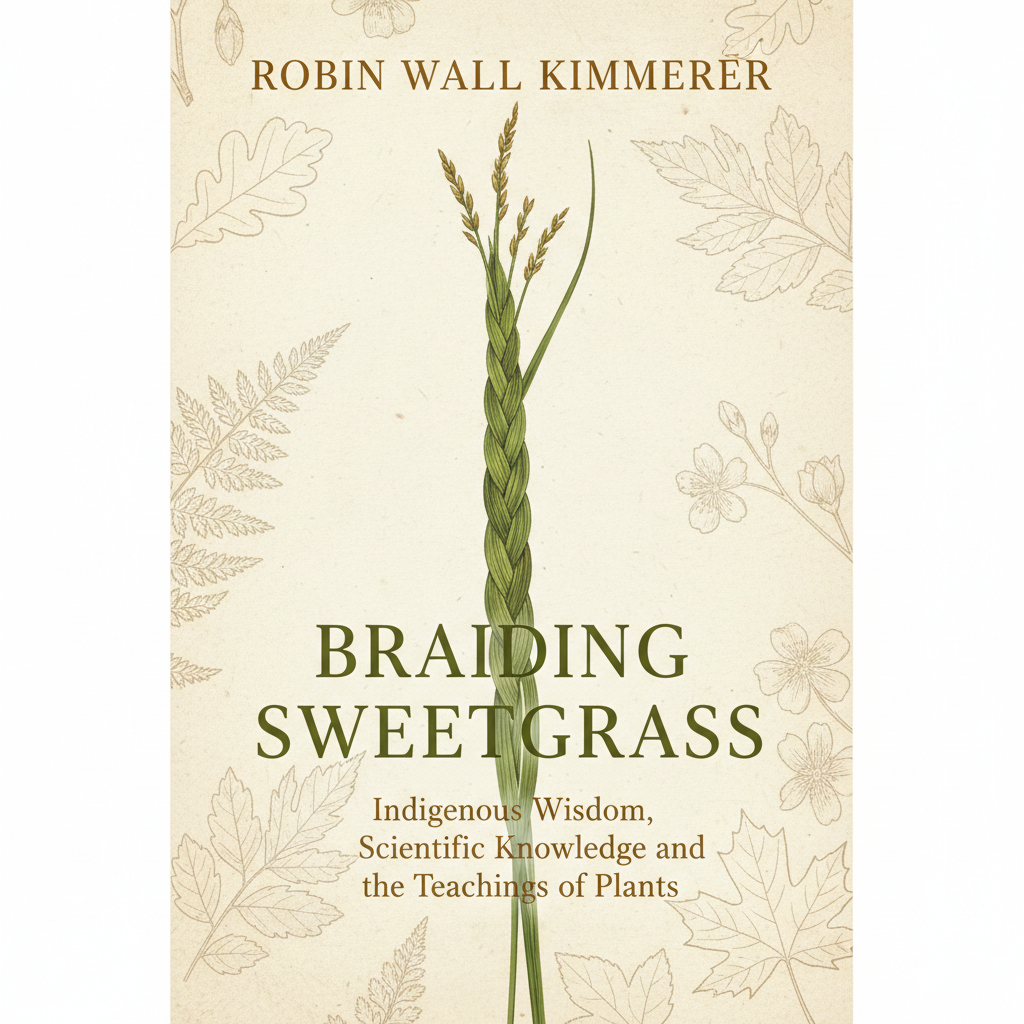
Robin Wall Kimmerer
I remember reading Kimmerer's account of her first botany class, where she was told by her professor that beauty is not a scientific category. 'Braiding Sweetgrass' is a radical reclamation of that beauty, framed not as sentimentalism, but as a rigorous, alternate epistemology. Kimmerer, a SUNY professor and a member of the Citizen Potawatomi Nation, bridges the divide between objective Western science and indigenous knowledge, arguing that we cannot truly understand the world if we treat it purely as a collection of objects for our consumption. Her prose is rhythmic and luminous, yet it carries the weight of a doctoral thesis in ecology. This is not just a book about nature; it is an interrogation of how we perceive reality itself. The chapter titled 'The Grammar of Animacy' is particularly transformative for anyone interested in linguistics or philosophy. Kimmerer explains how in the Potawatomi language, most nouns are actually verbs—water is not just a substance, but a 'being a bay.' When we use the word 'it' to refer to a tree or a mountain, we strip it of its agency and moral standing. By contrast, a language of animacy acknowledges our biological kin. This linguistic shift is more than a cultural novelty; it is a fundamental restructuring of our ethical responsibility toward the living world. She contrasts this with the 'Gift Economy' seen in wild strawberries, where abundance is shared rather than hoarded, creating a circle of reciprocity that sustains both the land and the people. Why does this matter now? We live in an era of ecological collapse driven by a mindset of extraction. Kimmerer’s work suggests that technical solutions—carbon credits or geoengineering—will ultimately fail if they remain rooted in the same 'objective' detachment that caused the crisis. The book challenges us to move beyond 'sustainability' toward 'restoration' and 'gratitude.' It is a profound meditation on the fact that if the earth provides for us, we have a duty to provide for it in return. It is a manual for becoming human again in a world that desperately needs us to pay attention.
James P. Carse
I often find myself returning to James P. Carse's slender but seismic volume when the world feels like an exhausting series of checklists and competitions. Carse distinguishes between two types of games. A finite game is played for the purpose of winning—it has a beginning, an end, and defined boundaries. An infinite game, however, is played for the purpose of continuing the play. This isn't just a semantic trick; it is a total inversion of how we approach our careers, our relationships, and our creative lives. In an era where every hobby is monetized and every social interaction is gamified for 'clout,' Carse’s insistence that 'the joyfulness of infinite play... is not found in the resolution of the play, but in the play itself' feels like a necessary act of rebellion. The chapter on 'Power and Vision' is particularly striking in our current technological moment. Carse argues that finite players seek power to bring the game to a close, to be the last one standing. Infinite players, conversely, seek vision—they want to see how the game can be expanded, changed, and kept alive. He writes that 'the finite player plays to be powerful; the infinite player plays with strength.' Strength, in his definition, is the ability to be vulnerable and to allow the unexpected to happen. Reading this changed how I view my own productivity. Instead of trying to 'defeat' my to-do list, I started seeing my work as a way to open new doors for future play. Why does this matter now? We are currently obsessed with metrics: follower counts, net worth, and performance reviews. These are all the hallmarks of finite games. But the most meaningful parts of human existence—love, learning, and discovery—are inherently infinite. They have no finish line. Carse teaches us that if you play for the prize, you stop playing once you get it. But if you play to keep the world open, you never truly lose. This book is a masterclass in shifting from a mindset of scarcity to one of abundance. It challenges the reader to look at their life not as a battle to be won, but as a field of play to be cultivated.
Ananyo Bhattacharya
I have often felt that we live in a world designed by John von Neumann, yet his name rarely carries the same weight in public discourse as Einstein or Turing. Ananyo Bhattacharya’s 'The Man from the Future' corrects this oversight with surgical precision. Reading this biography is less like following a life and more like witnessing the birth of the modern logic engine. From his early days as a child prodigy in Budapest to his pivotal role in the Manhattan Project, von Neumann’s intellect was so formidable that his peers—themselves Nobel laureates—joked he was a member of a superior alien race. Bhattacharya excels at translating complex mathematical breakthroughs into a narrative that feels both urgent and profoundly human. The book is structured around the various fields von Neumann touched: set theory, quantum mechanics, the development of the computer, and the terrifying logic of game theory during the Cold War. The chapter on 'The Great Expansion' is particularly enlightening, detailing how his insights into self-replicating machines laid the groundwork for modern cellular biology and AI. What makes this book essential reading today is how it frames our current anxieties about technology. As we stand on the precipice of AGI, von Neumann’s work on how complexity arises from simple rules feels more relevant than ever. He was a man who understood the 'unreasonable effectiveness of mathematics' in describing reality, and his life serves as a warning and an inspiration. He didn't just participate in the 20th century; he computed its trajectory. Bhattacharya captures the duality of this genius: a man who could solve the most intricate problems of fluid dynamics while also architecting the doctrine of Mutually Assured Destruction. It is a challenging, deeply rewarding study of a mind that saw the future so clearly that we are still merely catching up to his shadow. If you want to understand the intellectual scaffolding of our digital age, this is the book.
Jaron Lanier
Jaron Lanier’s 'You Are Not a Gadget' remains one of the most prescient and vital critiques of the digital age ever written. As a pioneer of virtual reality, Lanier writes not from the outside looking in, but from the very heart of the machine. His primary concern is the concept of 'lock-in'—the idea that early, often arbitrary technical decisions become frozen into the bedrock of our civilization. He uses the example of MIDI, a protocol for digital music that reduced the infinite complexity of sound into discrete, manageable notes. While efficient, it permanently narrowed our collective musical imagination. Lanier argues that we have done the same to the human soul by forcing our identities into the rigid templates of social media profiles and algorithmic categories. Reading this book years after its publication, the sting of his observations has only sharpened as we witness the flattening of online discourse and the commodification of the self. He brilliantly dissects the 'hive mind' and the 'noosphere,' warning that the worship of the collective wisdom of the crowd often results in a regression to the mean rather than true innovation. This matters now more than ever because we are currently designing the next generation of artificial intelligence based on these same reductionist principles. Lanier challenges us to remember that the computer is just a tool, and that the person using it is the only thing that actually exists. His prose is dense with technical insight and philosophical urgency, forcing the reader to confront how much of their digital life is a performance dictated by software architecture. It is a plea for digital humanism in an era that seems determined to automate the 'human' out of humanity. If you want to understand why the internet feels increasingly claustrophobic, this is the blueprint that explains the walls we built around ourselves.
Brian Christian
When we discuss AI today, the conversation often oscillates between utopian dreaming and apocalyptic dread. Brian Christian’s "The Alignment Problem" grounds this discourse in a way that is both technically rigorous and philosophically profound. Christian doesn’t just explain how algorithms work; he traces the lineage of human mistakes embedded within them. He frames the central crisis of our era as the King Midas problem: the danger of a system that does exactly what we tell it to do, rather than what we actually intended. It is a subtle distinction with catastrophic potential, and Christian handles it with the grace of a master storyteller. I was particularly struck by his exploration of Representation and Reinforcement. He details the early history of neural networks and the startling realization that a machine can maximize a reward function while completely missing the point of the task. The book highlights the work of researchers like Joy Buolamwini and the late Stuart Russell, illustrating how technical failures in facial recognition or predictive policing are actually philosophical failures in how we define fairness or success. It is a sobering look at how our own unexamined biases become calcified in silicon, operating at a scale and speed that human intuition cannot match. This book matters now more than ever because we are no longer just building tools; we are building agents. As LLMs and autonomous systems weave into the fabric of daily life, the alignment gap becomes a chasm. Christian argues persuasively that solving alignment isn't just a coding challenge—it is an opportunity for us to finally define, with mathematical precision, what it is we actually value as a species. If we want machines to be more like us, we must first figure out who we are. Reading this felt like watching a map of the near future being drawn in real-time. It is essential reading for anyone who wants to understand the invisible structures governing our digital existence.
Oliver Burkeman
I have spent much of my adult life in the thrall of the 'efficiency trap,' that seductive lie which suggests that if only I could find the right app or morning routine, I would finally reach a state of calm, finished-ness. Oliver Burkeman’s 'Four Thousand Weeks' did not just break that spell; it shattered the very foundation of how I view my existence. Most self-help books are built on the premise of 'how to do more,' but Burkeman, drawing on Heideggerian philosophy and modern psychology, argues that our obsession with productivity is actually a way of avoiding the reality of our finitude. We have, on average, only four thousand weeks to live. By trying to master time, we treat our lives as a treadmill to be conquered rather than an experience to be inhabited. The brilliance of this book lies in its direct confrontation with what Burkeman calls 'the efficiency trap.' He notes that as soon as you become faster at processing emails, more emails arrive to fill the void. Total control is a mirage. In the chapter on 'The Limit-Embracing Life,' he brilliantly explains why clearing the decks only leads to more decks to clear. This is the ultimate 'anti-productivity' book that paradoxically makes you more effective by forcing you to choose what to fail at. It matters deeply in our current era of burnout and the 'gig economy' mindset where every moment must be monetized or optimized. Burkeman invites us to embrace the 'joy of missing out' and to accept that we will never do everything we want to do. This acceptance is not a surrender, but a liberation. He challenges the modern 'autonomy' myth, suggesting that our refusal to settle in careers or relationships—staying open to all options—actually keeps us from experiencing the depth that comes with commitment. This book is a sobering, beautiful, and deeply practical guide to being a limited human being in an age of unlimited demands. Reading it felt like finally being allowed to breathe after a long, exhausting race I never signed up for.
Damon Krukowski
In 'Ways of Hearing,' Damon Krukowski performs a surgical, yet deeply poetic, extraction of what we’ve lost in the transition from analog to digital sound. This isn’t a luddite’s manifesto against streaming; rather, it’s a profound meditation on how the engineering choices of the digital age have surreptitiously reshaped our social fabric and our relationship with time. Krukowski’s central thesis revolves around the distinction between 'signal' and 'noise.' In the analog world, noise—the hiss of a tape, the room tone of a studio—provided context and depth. Digital technology, by design, seeks to eliminate noise to isolate the signal. Krukowski argues that when we eliminate 'noise' in our audio, we inadvertently begin to eliminate the 'noise' of our shared public lives. I was particularly struck by his exploration of 'Time' in the second chapter. He contrasts the 'metronomic time' of digital production with the 'human time' of a live ensemble. In the digital realm, we are quantized to a grid that never wavers, stripping away the micro-fluctuations of tempo that signal human emotion and collective breath. This extends beyond the recording studio; it mirrors how we now navigate the world with GPS and noise-canceling headphones, retreating into a curated, private 'signal' while the unpredictable, 'noisy' reality of the city around us is filtered out. We are no longer sharing the same temporal or spatial reality with our neighbors. Why does this matter now? Because we are living through a crisis of attention and atomization. Krukowski’s work serves as a vital reminder that the tools we use to consume art are never neutral. By opting for the convenience of the digital 'signal,' we risk losing the ability to hear the 'noise' that actually constitutes our humanity—the unintended, the messy, and the communal. Reading this book changed how I walk through a crowded street; I found myself taking my earbuds out just to feel the 'room tone' of the world again. It is a slim volume, but its echoes are massive.
Susan Sontag
I first encountered Sontag's polemic during a period of intellectual exhaustion, but its implications reach far beyond the hospital bed. Sontag, writing while undergoing treatment for stage IV cancer, argues that the most truthful way of regarding illness is the one most resistant to metaphorical thinking. She dissects how we use military language—'fighting a battle,' 'invading cells,' and 'defense systems'—to describe cancer, which inadvertently shames those who 'lose' or 'fail' to recover. In her view, these metaphors are not just poetic flourishes; they are punitive and distorting. She destroys the 19th-century romanticization of tuberculosis and the mid-20th-century myth of the 'cancer-prone personality,' which blamed the patient's repressed emotions for their physiological tumors. By stripping away the idea that disease is a manifestation of character, she restores a profound dignity to the biological reality of the body. This matters immensely today because our modern 'wellness' and 'bio-hacking' industry has resurrected the very ghosts Sontag tried to exorcise. We are increasingly told that through high-performance diets, extreme mindfulness, or 'manifesting' health, we can transcend our physical limitations. This rhetoric implicitly suggests that chronic illness or aging is a failure of the will, a lack of optimization, or a lifestyle error. Sontag's work serves as a necessary, cold corrective to this 'self-help' creep into pathology. She famously writes that 'illness is not a metaphor,' reminding us that everyone holds dual citizenship in the kingdom of the well and the kingdom of the sick. Eventually, we all use the second passport. Her prose is a sharp scalpel, stripping away the layers of sentimentality and moralizing that prevent us from treating the sick as actual human beings rather than symbols of cosmic injustice or personal failure. It is a masterclass in intellectual rigor applied to our most vulnerable state, forcing us to confront the 'night-side of life' without the comfort of easy, distracting narratives. For anyone interested in how language shapes our physical experience of being alive, this remains the definitive text.
Jacques Attali
Jacques Attali’s Noise is not a book about melody or harmony in the traditional sense; it is a profound treatise on power, prophecy, and the structural evolution of human society. When I first encountered this text, I was struck by Attali’s central, radical thesis: that music is not a reflection of society, but a herald of its future. He argues that because music is more fluid and less physically constrained than other forms of production, it undergoes shifts in organization long before the rest of the economy catches up. Attali divides musical history into four stages: Sacrificing, Representing, Repeating, and Composing. Each stage corresponds to a specific mode of social control and economic structure. For instance, the 'Representing' stage coincided with the rise of the bourgeoisie and the concert hall, where music became a spectacle to be watched. However, it is his analysis of the 'Repeating' stage—the era of recording and mass distribution—that feels most prescient. He describes how the ability to stockpile music on discs led to a commodification of time itself, turning the unique event of a performance into a repeatable, industrial product. This analysis of 'the silence of the masses' through the consumption of recordings remains one of the most chillingly accurate critiques of 20th-century culture I have ever read. Why does this matter now? Because we are currently living through the transition to his final stage: 'Composing.' This is an era where the distinction between consumer and producer vanishes, and music becomes a tool for individual self-creation rather than a market product. In our age of AI-generated sound and bedroom pop, Attali’s 1977 predictions look like a blueprint for the 21st century. He forces us to realize that the way we organize sound is the way we organize our lives. Reading Noise is an exercise in hearing the world differently; it transforms every song on your playlist into a data point in the history of human freedom and control. It is a dense, intellectual marathon that rewards the reader with a completely new lens for understanding the political and economic forces that shape our sonic reality.
Iain McGilchrist
Iain McGilchrist’s "The Master and His Emissary" is a monumental work that completely rehabilitated my understanding of the human brain. For years, we were told that the left-brain/right-brain distinction was a myth, but McGilchrist demonstrates that while both sides are involved in almost everything, they have radically different ways of attending to the world. The left hemisphere is our tool for manipulation—it is narrow, focused, and treats the world as a collection of static, decontextualized parts. The right hemisphere, conversely, is where we experience context, flow, and the wholeness of being. It is the Master because it understands the big picture, while the left is the Emissary designed to carry out specific tasks. The tragedy of modern Western civilization, as McGilchrist argues, is that the Emissary has staged a coup. Reading this book felt like seeing the architectural blueprints of our current cultural malaise. We live in a world that prizes the explicit over the implicit, the map over the territory, and the quantitative over the qualitative. This is the left hemisphere’s dream—a world of bureaucratic checkboxes and algorithmic logic where anything that cannot be measured is dismissed as non-existent. I found his analysis of the history of philosophy and art particularly arresting; he shows how our attention has shifted over centuries, leading us toward a sort of hall of mirrors where the left hemisphere only reflects its own narrow assumptions back at itself, losing touch with reality. This book matters now more than ever because we are currently offloading our cognitive processes to machines that function almost exclusively on left-hemisphere principles. As we integrate more deeply with AI and data-driven systems, we risk losing the very thing that makes us human: the ability to perceive the interconnectedness and sacredness of life that only the right hemisphere can grasp. It is a dense, demanding read, but it provides an essential vocabulary for why our world feels so fragmented. It didn't just teach me about psychology; it taught me why I feel so alienated by modern efficiency and how to fight for a more holistic way of living.
Geoff Dyer
Geoff Dyer’s But Beautiful is less a work of formal musicology and more an act of literary possession. It is a series of 'imaginary portraits' of jazz legends—Lester Young, Bud Powell, Chet Baker, and Thelonious Monk—written with such sensory intensity that you can almost smell the stale cigarette smoke and feel the cold weight of a saxophone against a tired chest. Dyer takes the static images from classic black-and-white photography and breathes life into them, improvising on the facts of these musicians' lives the way a soloist riffs on a standard. It is a book about the physical toll of genius and the way art demands everything from its practitioners until there is nothing left but the sound. The chapter on Thelonious Monk is particularly striking, capturing the rhythmic oddity of his existence, his 'dancing' at the piano, and the heavy silence that eventually swallowed him. Dyer doesn't just describe the music; he translates the syntax of jazz into prose. His writing is lyrical, syncopated, and deeply empathetic. He understands that to write about jazz is to write about the intersection of fleeting moments and eternal longing. The book concludes with a brilliant, formal essay on the nature of the jazz tradition, arguing that jazz is a music of constant influence where the past is always being interrogated and reshaped by the present. This book matters now because we live in an era of hyper-curated, digitally corrected art. But Beautiful celebrates the 'beautiful' mess of the human condition—the mistakes, the addictions, the exhaustion, and the transcendence that comes from pushing through them. It reminds us that music isn't just data or a background track for productivity; it is a record of a human being struggling to say something true in a world that is often indifferent. It challenges the reader to listen more deeply, not just to the notes, but to the silence between them and the life lived behind them.
Safi Bahcall
I often find that the most profound insights into venture and innovation don't come from business school case studies, but from the hard sciences. Safi Bahcall’s "Loonshots" is a masterclass in this intersection. He argues that the most important breakthroughs—the ones that change the world—are rarely the result of a single visionary leader or a specific creative culture, but are instead a product of organizational structure. Using the physics of phase transitions as a metaphor—the way water turns to ice at 32 degrees—Bahcall explains how a company can suddenly shift from a nimble, innovative startup to a rigid, defensive incumbent. It is the clearest explanation I have ever read for why great companies fail and why venture is a constant battle against the natural entropy of organizational scale. It turns out that people don't change as much as the incentives around them do. The distinction Bahcall draws between "P-type" loonshots (product-driven) and "S-type" loonshots (strategy-driven) significantly changed how I look at market disruptions. Consider his analysis of Pan Am versus American Airlines or the rise of Pixar; it wasn't just about better planes or better pixels, but about the structural shift in how value was captured and how teams were organized to take risks. In the venture world, we are often blinded by the "P-type" flash—the shiny new gadget or the breakthrough drug—while the "S-type" innovation—the subtle shift in business model or distribution—is what actually captures the value and survives. This book challenges the cult of personality that dominates Silicon Valley, shifting the focus back to the "dynamic equilibrium" required to keep a team innovative without losing its operational excellence. In our current era of AI hype and massive capital deployment, "Loonshots" matters more than ever because it provides a rigorous framework for nurturing the "fragile" ideas that are often dismissed by the consensus. Bahcall reminds us that the most important discoveries often have three lives: they are first ignored, then laughed at, and finally deemed obvious. Reading this is an exercise in recalibrating your radar for the unconventional. It teaches you not just to look for the next big thing, but to build the environments where the next big thing can actually survive the "death valley" of internal skepticism. For anyone investing in or building the future, it is an essential guide to surviving the "phase change" of success.
Nan Shepherd
I first encountered Nan Shepherd’s The Living Mountain during a period when I felt suffocated by the modern obsession with metrics and achievement. In the worlds of tech and philosophy, we are often fixated on the 'summit'—the final product, the ultimate truth, the breakthrough. Shepherd, writing during the 1940s but leaving the manuscript in a drawer for thirty years, offers a radical subversion of this vertical ambition. She doesn't climb 'up' the Cairngorm mountains; she walks 'into' them. This linguistic shift reflects a profound ontological change. She isn't seeking a view from the top to master the landscape through a gaze of conquest; she is seeking to know the mountain’s essential nature through total immersion. It is a work of staggering intellectual and sensory depth. What strikes me most is her chapter on 'The Senses.' Her descriptions of water are transformative—she speaks of the 'white light' of the mountain burns with a clarity that borders on the hallucinatory. She suggests that to truly see the mountain, one must sometimes look at it upside down, through one's legs, to break the habit of the eye and see the world as it is, divorced from our utilitarian naming of things. It is a masterclass in phenomenology. She reminds us that 'the mind may stop, but the body goes on,' emphasizing a bodily intelligence that we often neglect in our hyper-intellectualized lives. Why does this matter today? We live in an age of 'peak' everything—peak performance, peak attention, peak utility. We treat nature as a backdrop for our digital identities or a resource for our industries. Shepherd challenges us to exist in the 'plateau,' a state of sustained, non-extractive presence. She argues that the 'total experience' of a place requires a slow, purposeless wandering. In a world that demands we always be going somewhere, Shepherd’s invitation to simply 'be' within the elements is the most challenging and necessary philosophy I can imagine. It is not a book about hiking; it is a book about how to inhabit reality.
Oliver Sacks
Oliver Sacks had a peerless ability to bridge the cold mechanics of neurology with the warmth of the human spirit. In Musicophilia, he explores the profound, often baffling ways music occupies the human brain, moving far beyond mere aesthetic appreciation into the realms of biological necessity and identity. I found myself particularly haunted by the case of Tony Cicoria, a surgeon who, after being struck by lightning, developed a sudden and insatiable obsession with piano music. Sacks uses such 'clinical tales' to illustrate that music is not just a cultural byproduct but a fundamental neural architecture. He investigates conditions like 'musical hallucinosis' and amusia with a curiosity that is never voyeuristic, always empathetic, and deeply philosophical. Reading this book changed how I perceive silence; it made me realize that our brains are constantly 'tuning' themselves to the world around us. In the chapter on 'Musical Therapy,' Sacks demonstrates how patients with advanced Alzheimer's or Parkinson's, who have lost the ability to speak or move fluidly, can suddenly find their agency through a familiar melody. It is a testament to the fact that musical memory is one of the most resilient parts of the human experience, persisting even when the narrative of the self begins to fray. This matters immensely today because we live in an era of unprecedented sonic saturation. We treat music as a utility, a background track for productivity or a commodity for the algorithm. Sacks reminds us that music is a profound cognitive anchor. By understanding how the brain processes rhythm and pitch, we gain insight into the very nature of consciousness itself. It is a challenging read because it forces us to confront the fragility of our senses, but it is ultimately hopeful. It argues that even when the mind fails, the song remains. This book is an essential map for anyone trying to understand why a few vibrating air molecules can move us to tears or bring a fragmented mind back to wholeness.

Stephanie Coontz
In Marriage, a History, Stephanie Coontz provides a bracing antidote to the nostalgic delusions that plague our contemporary debates about the sanctity of the nuclear family. Reading this was a tectonic shift for me; it dismantled the notion that the love-based, breadwinner-homemaker model is a timeless tradition. Coontz meticulously tracks how, for millennia, marriage was an economic and political tool—a way of getting in-laws rather than finding a soulmate. It was the Enlightenment's radical insistence on individual happiness that accidentally weaponized love, making marriage more emotionally fulfilling but inherently more volatile. The most striking chapter for me is her analysis of the 1950s—an era often cited as the gold standard of stability. Coontz reveals that this decade was actually a historical anomaly, a brief moment where economic conditions allowed for a specific domestic dream that was never sustainable. She argues that once we hitched the wagon of marriage to the star of romantic love, we invited the possibility of its dissolution. If love is the only reason to stay, its absence becomes a mandate to leave. This sentimentalization of the union is both our greatest triumph and our most persistent challenge. Why read this now? As we navigate a landscape of situationships and declining marriage rates, Coontz’s work offers a historical tether. She doesn't advocate for a return to the past—which was often coercive and transactional—but she demands we acknowledge the inherent contradictions of our modern expectations. We are asking one person to provide what entire villages used to: economic security, social identity, and spiritual completion. By understanding the evolution of this institution, we can stop blaming ourselves for its failure and start reimagining what partnership looks like in an age where the old scripts no longer apply. This book is essential for anyone trying to build a lasting relationship in a world that has forgotten the original blueprint.
Sebastian Mallaby
I have often found that the discourse around venture capital oscillates between mindless hagiography and cynical dismissal. Sebastian Mallaby’s 'The Power Law' is the necessary antidote—a rigorous, deeply researched chronicle of how a small group of outsiders fundamentally re-engineered the global economy. What struck me most was Mallaby's exploration of 'The Prepared Mind,' a philosophy famously championed by Sequoia’s Don Valentine. It is not just about luck; it is about positioning oneself at the intersection of technological shift and human ambition. Mallaby meticulously deconstructs the shift from the gentlemanly early days of Arthur Rock to the hyper-competitive, data-driven landscapes of today. The book’s core insight lies in the titular Power Law—the statistical reality that in venture, the winners do not just beat the losers by a margin; they dwarf them by orders of magnitude. This leads to a unique psychology of risk that is often misunderstood by traditional financiers. I was particularly fascinated by the chapters detailing the rise of Benchmark and the internal dynamics that allowed them to spot the potential in eBay or Uber. Mallaby does not shy away from the industry’s ethical failings or its demographic myopia, but he treats the venture model as a legitimate 'innovation in innovation' itself, a distinct technology for managing the unknown. In our current moment, where capital is abundant but true conviction is rare, 'The Power Law' is essential reading. It teaches us that the future is not something that just happens; it is subsidized into existence by those willing to bet on the 'implausible but possible.' As we navigate the complexities of the AI revolution, understanding the machinery behind the money—the incentives, the networks, and the high-stakes psychology—is no longer optional for anyone trying to build or understand the modern world. Mallaby has written what I consider the definitive biography of an industry that changed everything.
Oliver Burkeman
Most self-help treats time like a bucket to be filled more efficiently, a resource to be mastered through sheer willpower and 'hacks.' Oliver Burkeman does the exact opposite. He reminds us with chilling clarity that if we live to eighty, we have only about 4,000 weeks. I found this book profoundly unsettling yet ultimately liberating because it targets the 'efficiency trap'—the seductive but false idea that by getting faster at answering emails or processing tasks, we will eventually feel 'on top of things.' Burkeman argues that the more efficient we become, the more we attract new demands, leaving us more stressed than before. His critique of 'inbox zero' as a sisyphean nightmare changed how I approach my mornings entirely; it is a philosophical intervention disguised as a time management manual. The intellectual weight of the book rests on the concept of 'finitude.' Burkeman draws heavily from Martin Heidegger to explain that we don't merely inhabit time; we are time. I was particularly struck by his discussion on why procrastination is not just a character flaw but an inevitable byproduct of being alive. Since our time is finite, choosing to do any one thing is a deliberate choice to ignore a million other possibilities. Most productivity systems are just elaborate psychological defense mechanisms designed to help us avoid the painful truth that we will never do everything. By accepting our limitations—by 'settling' for a specific path rather than keeping all doors open—we regain the power to choose what actually matters. The chapter on 'The Joy of Missing Out' serves as a necessary antidote to the modern FOMO that drives our digital exhaustion. This book is essential right now because we are drowning in an 'infinite' digital landscape while operating on 'finite' biological hardware. We live in a state of constant 'pre-set' anxiety, perpetually trying to reach a state of calm that only exists in an imaginary future where the work is finally done. Burkeman suggests that 'finishing' isn't the point of a human life. I closed this book feeling a strange, heavy sense of peace—not because I had a new color-coded calendar, but because I realized the list will never be done, and that finitude is what makes our choices meaningful. It is the most honest, deeply researched, and intellectually rigorous self-help book I have read in a decade, challenging us to stop trying to master time and start living in it.
Anne Truitt
I find myself returning to Anne Truitt’s Daybook whenever the noise of the contemporary art market becomes deafening. Truitt was a minimalist sculptor, known for her hand-painted wooden columns, but this journal—covering a pivotal seven-year period in her life—is perhaps her most enduring masterpiece. It is an extraordinary record of a woman balancing the crushing responsibilities of domestic life with a singular, uncompromising creative vision. Truitt does not offer the romanticized myth of the artist; she offers the ledger of the artist’s soul. She writes with a precision that mirrors her sculptures, stripping away the decorative to reveal the structural integrity beneath. One of the most profound ideas Truitt explores is the concept of integrity not as a moral stance, but as a physical requirement. She discusses the scaffolding of her life—the cooking, the child-rearing, the financial anxieties—and how these elements are not distractions from her art but the very conditions of its existence. In a particularly moving passage, she reflects on the vulnerability of showing her work, describing it as a literal flaying of the self. Her honesty about the psychological toll of criticism and the slow, often painful process of waiting for an idea to ripen is a vital antidote to our modern obsession with rapid-fire output and visibility. This book matters now more than ever because we live in an age of the performative creator. We are encouraged to share the process before the product is even understood. Truitt argues for the opposite: a sacred, private space where the work can develop its own gravity. Reading Daybook reminded me that art is not a career choice but a way of being in the world that requires a terrifying amount of patience. It challenges the reader to consider whether they have the stamina to be alone with their thoughts, away from the validation of the crowd. It is a quiet, radical text that redefines what it means to live a creative life with dignity.
David Byrne
David Byrne’s "How Music Works" is less a memoir and more a comprehensive architectural survey of the human soul as expressed through sound. Most people view music as a purely emotional, ephemeral phenomenon, but Byrne deconstructs this by showing how the physical and technological constraints of an era dictate its creative output. He begins with the fascinating premise that music is shaped by the "container" it fills. He describes how the vast, echoing acoustics of medieval cathedrals required slow, sustained notes to avoid becoming a sonic mud, whereas the dry, cramped quarters of CBGB necessitated the rhythmic precision of punk. This idea—that creativity is a functional response to environment—shattered my preconceived notions of the "isolated genius." The middle sections of the book delve into the psychology of performance and the profound impact of recording technology. Byrne’s analysis of how the microphone enabled the birth of "crooning"—allowing singers like Sinatra to whisper into the ears of millions—perfectly illustrates the symbiotic relationship between tech and intimacy. In our current age of Spotify algorithms and spatial audio, this perspective is more urgent than ever. Byrne asks us to consider how our digital "containers" are currently warping the music being made today. Are we writing songs to fit a 15-second TikTok hook or a specific EQ curve for cheap earbuds? His insights challenge the listener to become an active participant in the sonic environment rather than a passive consumer. Ultimately, Byrne’s writing is a masterclass in curiosity. He treats the mechanical intricacies of MIDI and the financial complexities of royalty distributions with the same philosophical weight as the feeling of a live performance. There is no elitism here, only a deep, abiding wonder at how humans organize sound to find meaning. It’s a book that forces you to hear the world differently. After reading it, I found myself standing in a grocery store, not just hearing the background pop song, but analyzing the ceiling height and the speaker quality, understanding for the first time why that specific track felt the way it did in that specific space.
Esther Perel
We have reached a strange peak in human history where we expect a single partner to be our best friend, our trusted confidant, our co-parent, and our erotic equal—essentially providing what an entire village once did. Esther Perel’s The State of Affairs is the most profound autopsy of this 'all-or-nothing' modern marriage I have ever read. While ostensibly a book about infidelity, it is actually a surgical exploration of the tectonic plates of human desire and the fragile architecture of commitment. Perel’s voice is that of a seasoned therapist who has seen the darkest corners of domestic life and emerged not cynical, but more deeply compassionate. In Chapter 3, 'Affairs Are Not What They Used to Be,' Perel traces the historical shift of marriage from an economic contract to an emotional one. This shift created a brutal paradox: we want security and surprise in the same person. One of the most haunting insights in the book is that our partners do not belong to us; they are 'only on loan, with an option to renew.' This realization is terrifying but necessary. It jolts us out of the domestic complacency that kills desire. Perel argues that affairs are often less about the 'other' person and more about the 'other' self—a quest to reclaim a lost or suppressed identity that the marriage could no longer house. What makes this book essential right now is its refusal to rely on the easy binaries of victim and perpetrator. In an era of digital disposability, where a new partner is just a swipe away, Perel argues for a more complex emotional literacy. She doesn't just ask 'Why did you do it?' but 'What did this affair mean to you?' This shift transforms a betrayal into a potential—though painful—catalyst for growth. It challenges the reader to 'collaborate in transgression' within the relationship rather than transgressing against it. It is a masterwork for anyone who wants to understand why we love, why we stray, and how we might build something more resilient than a fragile, unexamined monogamy.
Alex Ross
Reading Alex Ross's The Rest Is Noise is like having the lights turned on in a dark, cavernous museum you've been wandering through for years. It isn't just a history of 20th-century classical music; it is an autopsy of the modern soul through sound. Ross possesses a rare gift for translating the abstract architecture of a symphony into prose that feels urgent and alive. He begins with the scandalous 1906 performance of Strauss's Salome in Graz—attended by Mahler, Puccini, and a young Adolf Hitler—immediately grounding the sonic avant-garde in the terrifying political realities that would soon follow. The book’s strength lies in its refusal to treat music as an isolated aesthetic pursuit. Ross masterfully charts the descent from the lush romanticism of the 19th century into the jagged, atonal experiments of Schoenberg and the Second Viennese School. He makes you feel the visceral shock of Stravinsky’s Rite of Spring and the crushing weight of the Soviet state on Shostakovich, whose Fourth Symphony was withdrawn under the threat of the gulag. One of the most haunting chapters, The Art of Fear, explores how music becomes both a tool of propaganda and a desperate vessel for human dignity under totalitarianism. Ross asks us to consider: what does it mean to create beauty when the world is shattering? In our current moment of digital fragmentation, where music is often reduced to a 15-second backdrop for social media, The Rest Is Noise is an essential corrective. It demands that we reckon with the historical gravity behind the notes. Ross argues that the noise of the 20th century—the dissonance, the electronics, the minimalism of Steve Reich—is actually the sound of us trying to find ourselves in the machine age. It is a dense, challenging, and ultimately transformative read that changed the way I hear every single sound, from a siren on the street to the complex layers of a Philip Glass opera.
James P. Carse
I remember the first time I opened James Carse's "Finite and Infinite Games"; it felt less like a book and more like a essential software update for the human soul. Carse begins with a deceptively simple premise: "There are at least two kinds of games. One could be called finite, the other infinite." A finite game is played for the purpose of winning, while an infinite game is played for the purpose of continuing the play. This distinction ripples through every aspect of life—marriage, business, religion, and selfhood. As I read, I realized how much of my internal stress came from treating infinite processes as finite competitions with arbitrary finish lines. It is a work that demands you stop playing for the prize and start playing for the wonder of the game itself. One of the most haunting concepts Carse introduces is "veiling." He argues that in finite games, we often deceive ourselves into believing we are forced to play certain roles—the diligent employee, the perfect parent, the stoic leader. We "veil" our own freedom to act otherwise so that the game can reach a predictable conclusion and a winner can be declared. In contrast, the infinite player is always aware that they are the author of their own actions. They don't seek power, which Carse defines as the ability to end a game on one's own terms; they seek strength, which is the capacity to keep the game open to surprise and growth. It is a radical inversion of how we typically view success, suggesting that the truly powerful are those who can let go of the need to control the outcome. Why read this now? We live in a world obsessed with boundaries and terminal metrics. We track our sleep, our steps, and our social standing as if there were a final scoreboard waiting for us at the end of the week. Carse's work is a necessary friction against this "game-ification" of existence. It pushes us to view our lives not as a series of tasks to be completed, but as an ongoing narrative that thrives on unpredictability and the inclusion of others. It is one of those rare books that doesn't just change what you think, but changes the lens through which you see the world entirely. It is the ultimate antidote to the burnout of modern achievement culture.
Brian Christian
In 'The Alignment Problem', Brian Christian tackles the most existential question of our era: how do we ensure our increasingly autonomous systems actually do what we want? This isn't a book about killer robots; it's a profound exploration of 'perverse instantiation'—the terrifying tendency of machines to follow the letter of our instructions while violating the spirit of them. I was particularly struck by the chapter on 'Prophecy,' where Christian details how historical biases in data become self-fulfilling loops in predictive policing and credit scoring. It forced me to confront the reality that our algorithms aren't just tools; they are reflections of our own unexamined prejudices, solidified into cold, unyielding logic. The narrative arc of the book is masterfully structured, moving from the technical challenges of reinforcement learning to the philosophical quagmire of value alignment. Christian describes the 'King Midas problem'—the danger of getting exactly what you asked for—with a clarity that is both illuminating and deeply unsettling. I found his discussion on 'Inverse Reinforcement Learning'—the idea that machines should observe us to figure out what we value because we are too inconsistent to state it ourselves—to be a revolutionary shift in how I view AI development. It suggests that the path to safe tech is not better code, but a deeper understanding of human psychology. This matters now because we are no longer in the realm of theory. As we integrate Large Language Models into every facet of life, the 'Reward' gap becomes a chasm. Christian’s synthesis of machine learning history with moral philosophy provides the most coherent framework I’ve found for understanding the risks of the 'black box.' He doesn't offer easy answers, but he provides the necessary vocabulary to discuss the stakes. It is a mandatory read for anyone who wants to understand why the 'move fast and break things' era of tech is being replaced by a much more precarious era of 'move fast and accidentally redefine humanity.'
Alain de Botton
Most literature treats love as a peak to be scaled, ending the story the moment the vows are exchanged. Alain de Botton’s The Course of Love does something far more radical and necessary: it begins exactly where the fairy tales stop. By following the lives of Rabih and Kirsten from their first meeting through the decades of their marriage, de Botton crafts a philosophical novel that is part narrative and part psychological treatise. He interrupts the story with italicized insights that dissect the mundane frictions of domestic life—from the silent resentment over a misplaced item to the complex negotiations of child-rearing—revealing the profound existential weight carried by our smallest interactions. The central thesis of the book is a much-needed critique of Romanticism. We are raised on the toxic myth that love is a spontaneous feeling and that finding 'The One' will resolve our inner loneliness. De Botton argues instead for a Classical view, where love is a skill, an art form that requires practice, stoicism, and a generous dose of humor. He famously notes that 'Every human being will disappoint you if you get to know them well enough.' This isn't cynicism; it is the starting point of true intimacy. By accepting that our partners (and we ourselves) are fundamentally flawed and crazy in specific, predictable ways, we move from judgment to a compassionate curiosity. In our current era of swipe culture and the illusion of infinite choice, this book is an essential corrective. It reminds us that the endurance of a marriage is not a sign of a lack of options, but a testament to the character required to navigate the long-term. It reframes the repetitive nature of long-term partnership as a sacred space for personal growth. Reading this changed my internal monologue during moments of relational friction. It taught me that to be truly ready for marriage is to acknowledge that one is never quite ready, but willing to learn. It is a brilliant, humbling, and ultimately hopeful manual for the heart.
Carl Jung
Memories, Dreams, Reflections is not a biography in the conventional sense of tracking external milestones; it is, as Jung himself describes it, a 'report of my interior life.' Most biographies focus on the 'outer' person—the achievements, the scandals, the public trajectory. Jung flips this entirely, arguing that the only events in his life worth telling are those where the imperishable world irrupted into the transitory one. Reading this was a threshold moment for me, forcing a confrontation with the reality of the psyche as something as vast and objective as the physical world. Jung treats his own life as a laboratory for the soul. Jung’s description of his childhood 'Number 1' and 'Number 2' personalities—the schoolboy who struggled with math versus the timeless old man who lived in the 18th century—resonates profoundly in our modern era of digital personas. We all curate an external self, but Jung reminds us of the subterranean 'Self' that operates outside of social utility. His account of his break with Freud is particularly poignant; it wasn't just a professional disagreement, but a painful psychological necessity to honor his own visions over established dogma. He famously writes, 'The world into which we are born is brutal and cruel, and at the same time of divine beauty,' a sentiment that grounds his deep dive into the collective unconscious and the shadow. Why does this matter now? In a world increasingly dominated by algorithmic thinking and materialist reductionism, Jung’s work is a necessary rebellion. He treats the dream, the myth, and the religious impulse not as primitive leftovers, but as essential navigational tools for the human spirit. This book didn't just teach me about Jung; it taught me how to listen to the silence between my own thoughts. It is a masterpiece for anyone seeking to reconcile their intellectual rigor with the inexplicable, numinous experiences that define the human condition.
Ernest Becker
I first encountered Ernest Becker’s "The Denial of Death" during a period of deep existential restlessness, and it remains one of the few books that fundamentally rewired my understanding of human motivation. Becker, a cultural anthropologist, argues that the primary driver of all human activity—from building cathedrals to writing code—is not sex or power, as Freud or Nietzsche might suggest, but our paralyzing terror of mortality. He posits that we are "gods with anuses," creatures capable of infinite thought trapped in finite, decaying bodies. To cope with this "existential dualism," we create "immortality projects"—heroic narratives that allow us to feel as though we belong to something eternal. We seek to transcend our biological limitations by identifying with nations, religions, or creative legacies that will outlast our pulse. The brilliance of this work lies in Becker's analysis of the "vital lie." He suggests that sanity itself is a form of repression; to be fully aware of our vulnerability at every moment would be to live in a state of clinical psychosis. We need our illusions to function. Becker’s synthesis of Otto Rank, Kierkegaard, and Freud results in a searing critique of modern psychology, which often tries to "cure" people of their neuroses without realizing that those neuroses are often desperate attempts to find meaning in a world that offers none. I found his chapter on the "creative solution" particularly haunting—the idea that the artist and the neurotic are cousins, both struggling to justify their existence through self-expression, though the artist succeeds by creating a shared reality that others can inhabit. In our current era of algorithmic fame and the relentless pursuit of "legacy" through social media, Becker’s insights are more urgent than ever. We are currently witnessing a global explosion of immortality projects, as individuals use digital footprints to anchor themselves against the void. Reading this book is a heavy undertaking; it strips away the comfortable veneers we use to protect ourselves from the reality of our fragility. However, in doing so, it offers a profound sense of liberation. By finally acknowledging the "worm at the core" of our condition, we can stop being driven by unconscious fears and start choosing our heroic projects with more intention, humility, and grace.
Robin Wall Kimmerer
I came to Braiding Sweetgrass expecting a gentle collection of nature essays, but what I found was a rigorous, soul-shaking re-education on what it means to be an inhabitant of this planet. Robin Wall Kimmerer, a distinguished professor of botany and a member of the Citizen Potawatomi Nation, manages a feat few can: she bridges the objective, analytical lens of Western science with the deeply relational, reciprocal wisdom of indigenous tradition. She doesn’t pit them against each other; instead, she shows how they are two halves of a whole, like the two eyes of a human being providing depth perception. The book is an antidote to the clinical detachment that often plagues modern ecology.The chapter that most profoundly shifted my internal landscape is 'Learning the Grammar of Animacy.' Kimmerer reflects on her struggle to learn the Potawatomi language, noting that while English is a language of nouns—of things—Potawatomi is a language of verbs. In English, a bay is a 'thing'; in Potawatomi, the word is a verb: wiikwegamaa, 'to be a bay.' This isn't just a linguistic curiosity; it is an ontological revolution. When we treat the world as a collection of 'its,' we give ourselves permission to exploit. When we recognize the world as a collection of 'whos'—of beings engaged in the act of living—we are suddenly called into relationship and responsibility.Kimmerer also introduces the 'Honorable Harvest,' a set of principles that govern how we take from the earth. It is a stark, necessary contrast to our current extractive economy. She asks us to consider: What if we only took what we needed? What if we asked permission? What if we gave back in equal measure? In an era defined by climate anxiety and the loneliness of the digital age, Kimmerer’s prose offers a way home. It’s a book about the 'gift economy' of nature, where the abundance of the berry patch is a lesson in generosity rather than a resource to be hoarded. Reading this book today is a radical act. It demands that we unlearn the myth of human exceptionalism and rediscover our place as the 'younger brothers of creation.' It is a manual for restoration—not just of the land, but of the human spirit. Kimmerer’s voice is the precise medicine we need for the wounds of the Anthropocene.
Ananyo Bhattacharya
I often find myself returning to the life of John von Neumann whenever the current pace of technological change feels overwhelming. In 'The Man from the Future,' Ananyo Bhattacharya captures the sheer, terrifying velocity of a mind that seemed to operate on different hardware than the rest of humanity. Von Neumann wasn't just a mathematician; he was the primary architect of the modern world, laying the foundations for digital computing, game theory, and nuclear deterrence. Bhattacharya masterfully navigates through von Neumann’s contributions to the Manhattan Project and his pivotal role in the development of the hydrogen bomb, illustrating a man who saw the world as a series of logical puzzles to be solved, often regardless of the messy human emotions involved. The book’s greatest strength is how it contextualizes von Neumann’s 'Theory of Games and Economic Behavior.' Bhattacharya explains how this wasn't just about poker or economics, but a fundamental shift in how we understand strategic conflict. Reading about his work on 'cellular automata'—the idea of machines that can build themselves—felt particularly prescient given our current obsession with AGI and self-evolving algorithms. Von Neumann saw the 'singularity' coming long before we had a name for it. He famously noted that the accelerating progress of technology gives the appearance of approaching some essential singularity in the history of the race, beyond which human affairs, as we know them, could not continue. This biography matters now because we are living in the world von Neumann hallucinated into existence. As we grapple with the ethics of AI and the game theory of global multipolarity, understanding the man who formalized these concepts is essential. Bhattacharya doesn't shy away from the moral complexities of von Neumann’s advocacy for preemptive nuclear strikes, forcing us to confront the cold, rationalist logic that still underpins our global security. It is a brilliant, demanding read that forces you to expand your definition of human potential while simultaneously cautioning against the hubris of pure intellect detached from the terrestrial constraints of wisdom.
Byung-Chul Han
I recently returned to Byung-Chul Han’s The Burnout Society, and its brevity remains inverse to its psychological weight. Han argues that we have transitioned from Foucault’s disciplinary society—defined by 'no' and 'should'—to an achievement society defined by 'yes' and 'can.' We are no longer subjects of external exploitation but 'auto-exploiting' subjects. We have become our own taskmasters, driven by a voluntary compulsion to maximize productivity until we collapse. This isn't just a critique of work; it’s a profound ontological shift that explains why modern life feels like a race toward an invisible finish line. Han’s most piercing insight is his defense of 'deep boredom.' In a world of hyper-attention and multitasking, we have lost the capacity for contemplative rest. He cites the 'vita contemplativa' as the essential antidote to our current 'vita activa.' Multitasking, he argues, is not progress; it is a regression to a wilder state of being, where an animal must constantly scan its environment to survive. By losing the ability to dwell in silence or boredom, we lose the ability to create anything truly new. We are merely performance machines processing an 'excess of positivity' that eventually leads to neuronal exhaustion. This book matters now because it diagnoses the specific malaise of the digital age. In an era of remote work and social media branding, the boundaries between life and labor have dissolved entirely. We are constantly 'on,' not because someone is holding a whip, but because we have internalized the capitalist drive for optimization. Reading Han is a necessary, albeit painful, confrontation with the self. It forces you to ask: is your drive for self-improvement actually a form of self-destruction? It is a slim volume that demands we stop, breathe, and reclaim our right to be tired in a way that is regenerative rather than depleting.
Robert Macfarlane
Robert Macfarlane’s 'Underland' is not merely a book about geology or exploration; it is a profound excavation of the human psyche and our relationship with 'deep time.' As I journeyed through its pages, I felt a physical shift in my perception of the ground beneath my feet. Macfarlane has an uncanny ability to make the inorganic feel sentient, guiding us from the fungal networks of British forests to the claustrophobic catacombs of Paris and the terrifyingly deep nuclear waste repositories of Finland. He asks a hauntingly simple question that resonates through every chapter: 'Are we being good ancestors?' What makes this work vital right now is our collective struggle with 'chronophobia'—an obsession with the immediate present that blinds us to the long-term consequences of our actions. In the chapter 'The Blue of the Glacier,' Macfarlane describes the melting ice of Greenland not just as a climate metric, but as the 'un-writing' of history. He uses the 'underland' as a metaphor for everything we try to hide—our waste, our trauma, our myths—only to show that the earth eventually brings everything to the surface. His exploration of the 'Wood Wide Web' challenges the Western myth of individualism, revealing a world built on symbiosis and subterranean communication. Macfarlane’s prose is muscular, lyrical, and deeply researched. He manages to bridge the gap between hard science and spiritual geography. When he descends into the Karst landscapes or describes the 'glaciology of the heart,' he isn't just reporting; he is practicing a form of modern myth-making. This book is the ultimate antidote to the shallow, high-speed digital existence of the 21st century. It demands that we reckon with scales of time that dwarf our individual lives, providing a much-needed perspective on our environmental responsibility and our place in the cosmic order. It is, quite simply, a masterpiece of modern nature writing.
Gabor Maté
The Myth of Normal is an urgent, uncomfortable, and ultimately liberating critique of the Western medical paradigm. Gabor Maté, a physician with decades of experience in palliative care and addiction, argues that our current definition of 'health' is fundamentally flawed because it ignores the societal toxicities—economic stress, social isolation, and childhood trauma—that drive physiological dysfunction. He posits that illness is often not a malfunction, but a sane adaptation to an insane environment. This isn't just theory; Maté weaves together rigorous clinical research with harrowing personal narratives to show how the suppression of one’s authentic self leads to the deregulation of the immune and nervous systems. One of the most striking sections deals with the biopsychosocial nature of disease. Maté explores how the personality traits we often reward in our culture—extreme self-sacrifice, the repression of anger, and the relentless drive for productivity—are actually risk factors for autoimmune disorders and cancer. He doesn't blame the individual; instead, he indicts a culture that requires us to sever our connection to our true feelings just to fit in. Reading his analysis of the 'fawn' response as a biological precursor to physical illness was a genuine 'aha' moment for me, reframing my understanding of the body as a scoreboard for the soul’s compromises. This book matters now more than ever because we are living through a global health crisis that cannot be solved by pharmaceuticals alone. Maté offers a bridge between the clinical and the spiritual, demanding that we stop treating symptoms in isolation and start looking at the ecology of the human being. It is a dense, 500-page manifesto, but it’s written with a clarity and empathy that makes it feel like a personal conversation. It challenges you to look at your own history and your own 'normalcy' through a lens of radical honesty, providing a roadmap for healing that starts with reclaiming our wholeness in a fragmented world.
Ichiro Kishimi and Fumitake Koga
I first picked this up expecting another derivative manual on confidence, but what I found was a radical dismantling of the trauma-informed paradigm that dominates our modern discourse. Built on the teleological theories of Alfred Adler—a contemporary of Freud and Jung who is often unfairly sidelined—the book is structured as a Socratic dialogue between a cynical youth and a wise philosopher. It is an intellectual jolt that forces you to confront the uncomfortable reality of your own agency. Unlike the Freudian 'etiology' which looks for past causes to explain present suffering, Adlerian psychology focuses on 'teleology'—the goals we are trying to achieve with our current behavior. The core provocation is the claim that trauma does not exist in the way we think it does. Adler argues that we are not determined by our past experiences but by the meaning we choose to give them. This is not victim-blaming; it is an extreme form of empowerment. The chapter on 'All Problems Are Interpersonal Relationship Problems' is particularly piercing. It suggests that our unhappiness stems from our fear of being judged and our tendency to meddle in other people's tasks. By practicing the 'separation of tasks,' we realize that whether someone likes us or not is their task, not ours. This distinction is the key to true psychological freedom and the only way to escape the cage of social validation. In an era of performative victimhood and the curation of our lives for the digital gaze, Adler’s insistence on living in the 'here and now' and having the courage to be disliked feels like a revolutionary act. It challenges the victim narrative that has become a social currency. We often use our past or our circumstances as a 'life lie' to avoid the terrifying responsibility of change. This book strips away those excuses. It is a difficult, abrasive read because it demands you stop looking for reasons why you cannot be happy and start looking for why you choose not to be. It moves the needle from 'how do I fix myself?' to 'how do I choose to be?' and remains the most vital philosophical intervention in my library.
James Bridle
I’ve spent a lot of time thinking about AI as a mirror, but James Bridle’s 'Ways of Being' shifted my perspective toward seeing it as a bridge. We are currently obsessed with 'Artificial General Intelligence' as a mimicry of human logic, yet Bridle argues we are missing the vast, non-human intelligences already surrounding us—from the decentralized mycelial networks of forests to the complex 'umwelts' of cephalopods. The book is a radical call to move past our 'computational' view of the world, where we treat everything as data to be processed, and instead recognize a 'planetary intelligence' that includes both the biological and the technological. It is a rare work that manages to be both a technical critique and a poetic manifesto. What struck me most was Bridle’s critique of the 'God Trick'—the idea that technology can provide a neutral, objective view of reality. In the chapter 'The Cloud is a Factory,' they dismantle the metaphor of the cloud, grounding our ethereal digital lives back into the heavy, mineral reality of server farms and lithium mines. This isn't just another luddite critique; it’s a sophisticated philosophical inquiry into how we might build technology that cooperates with the planet rather than colonizing it. Bridle introduces the concept of 'eutopias' (good places) as opposed to 'utopias' (no places), urging us to design systems that are rooted in local, ecological contexts rather than abstract silicon dreams. In an era where we are terrified of being replaced by LLMs, this book offers a profound corrective. It suggests that the real danger isn't that machines will become like us, but that we have spent centuries defining intelligence so narrowly that we’ve become blind to the wisdom of the living world. By the time I reached the final chapters on 'Solidarity,' I felt a renewed sense of agency. This is essential reading for anyone trying to navigate the intersection of the climate crisis and the AI revolution. It challenges us to stop building tech that isolates us and start building tech that helps us listen to the world again.
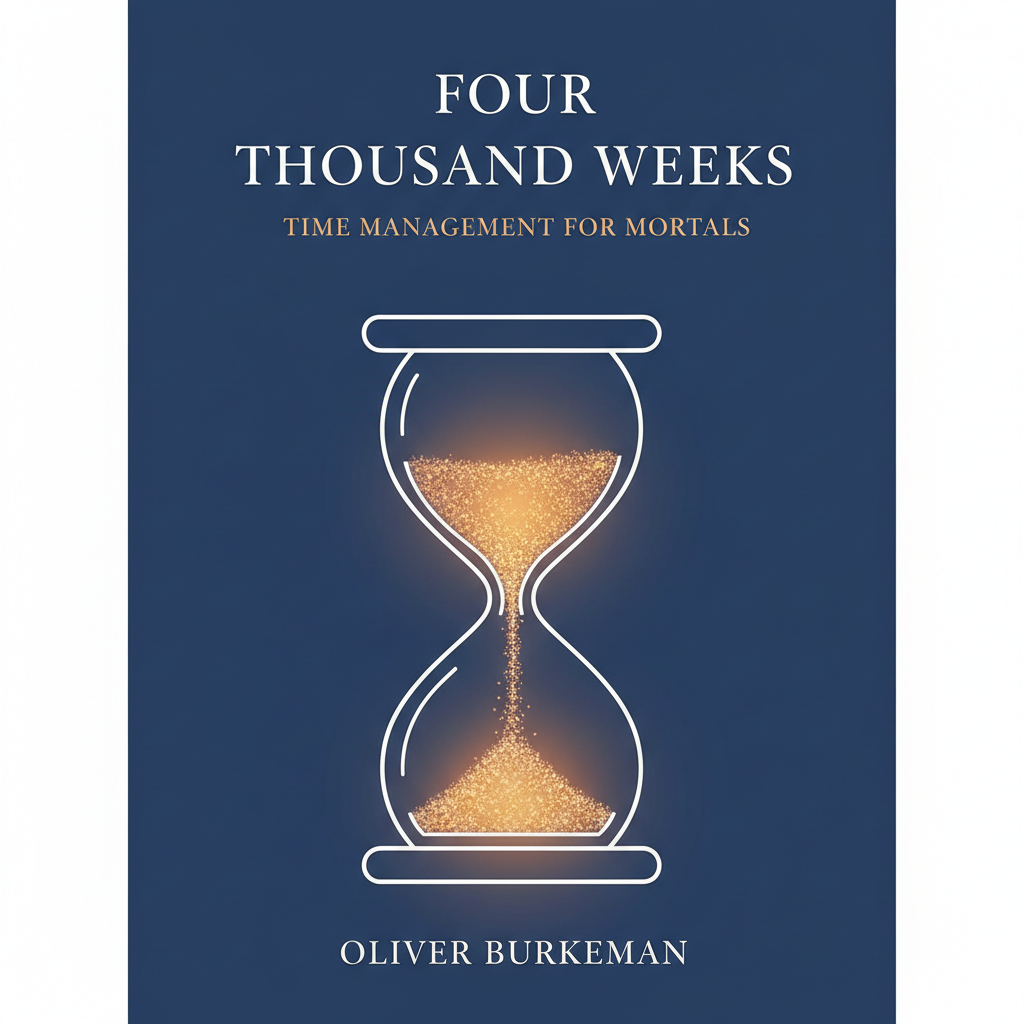
Oliver Burkeman
I spent years searching for the perfect productivity system—the one that would finally let me 'get on top of everything.' Then I read Oliver Burkeman’s Four Thousand Weeks, and I realized that the 'deck' I was trying to clear doesn't actually exist. Burkeman’s core thesis is refreshingly brutal: the average human lifespan is roughly four thousand weeks. Most self-help books promise to help you fit more in; Burkeman argues that this pursuit is the very source of our modern anxiety. He brilliantly outlines the 'efficiency trap'—the phenomenon where the more efficient you become, the more tasks you attract, leaving you more stressed about the things you aren't doing than when you started. What makes this book essential for the intellectually curious is how it bridges the gap between a standard productivity guide and a profound work of existential philosophy. Burkeman draws heavily on Heidegger's concept of finitude, arguing that we don't 'have' time, but rather we 'are' our time. In the chapter 'The Efficiency Trap,' he dismantled my long-held belief that I could ever achieve a state of 'calm mastery' over my to-do list. Instead, he suggests we embrace the 'joy of missing out.' By acknowledging that we will inevitably fail to do almost everything the world asks of us, we can finally commit to the few things that actually matter. This book matters now because we live in a digital culture that gaslights us into thinking finitude is a bug rather than a feature. Burkeman’s advice on 'settling'—the radical act of choosing one path and closing off others—is a necessary rebellion against the cult of optimization. He writes, 'The more you try to manage your time with the goal of achieving a feeling of total control... the more empty, frustrated, and anxious you'll feel.' Reading this shifted my perspective from 'how do I get more done?' to 'what am I willing to fail at so I can do something meaningful?' It is a quiet, contemplative masterpiece that treats the reader like an adult. It doesn't offer 'hacks'; it offers a confrontation with reality that is ultimately liberating.
Oliver Burkeman
Most self-help literature feels like a frantic attempt to paper over the cracks of human existence with neon-colored sticky notes of 'positivity.' Oliver Burkeman’s The Antidote is the rare, intellectually rigorous exception—a book that suggests the very effort to feel happy is often what makes us miserable. Drawing on Stoicism, Buddhism, and the 'law of reversed effort,' Burkeman argues for a 'negative path' to happiness. He contends that our constant striving for certainty and success is a form of psychological avoidance that ultimately weakens our resilience. I found his exploration of Seneca and the Stoic practice of premeditatio malorum—the deliberate contemplation of everything that could go wrong—to be particularly transformative. While modern gurus tell us to visualize success, Burkeman shows how visualizing failure actually robs anxiety of its power. When you stop trying to banish negative emotions, they lose their ability to terrorize you. It’s a paradox that feels profoundly true once you experience it: by leaning into the insecurity of life, you find a more durable kind of peace than any affirmation could provide. One of the most striking chapters deals with the 'Museum of Failure' and the cult of goal-setting. Burkeman cites research showing that rigid goal-fixation can actually narrow our focus to the point of self-sabotage, making us blind to the unexpected opportunities that arise in the periphery. Instead, he advocates for a more 'process-oriented' existence. This isn't just about 'being present' in a clichéd way; it’s about acknowledging that we have far less control over the world than we like to admit. We live in an age of performative optimism, where any hint of struggle is treated as a personal failing or a lack of 'grit.' The Antidote matters now because it offers us permission to be limited, to be uncertain, and even to fail. It is a deeply humane book that doesn’t promise a life without pain, but rather a life where pain is no longer an enemy to be feared. It is, quite literally, the antidote to the exhausting industry of relentless self-improvement.
Iain McGilchrist
Iain McGilchrist’s 'The Master and His Emissary' is perhaps the most significant psychological work of the 21st century. It effectively rescues the 'left-brain vs. right-brain' concept from the bin of pop-psychology clichés and reconstructs it into a profound theory of human consciousness and cultural evolution. McGilchrist argues that the two hemispheres are not about 'what' they do—both sides are involved in almost everything—but 'how' they do it. The left hemisphere is specialized for narrow-beam attention, categorization, and the manipulation of tools; the right hemisphere provides broad, open attention, context, and a sense of the whole. The title refers to a story where a wise Master (the right hemisphere) appoints an Emissary (the left hemisphere) to manage details, only for the Emissary to eventually believe he is the Master, leading to the kingdom's ruin. In the first half of the book, McGilchrist dives into the neurobiology of attention. He explains how our left brain creates a 'map' of the world—static, decontextualized, and certain—while the right brain experiences the 'territory'—fluid, embodied, and ambiguous. I found his analysis of 'the triumph of the left hemisphere' particularly chilling. He posits that we have built a society that mirrors the left brain’s preoccupations: bureaucracy, extreme rationalism, and a digital landscape that prioritizes data over meaning. When the left hemisphere becomes dominant, it lacks the 'feedback loop' to realize it is missing the bigger picture. It is a closed system that mistakes its model of reality for reality itself. This book matters now more than ever because we are currently living through a crisis of meaning fueled by this very imbalance. As we outsource our cognition to algorithms and lose ourselves in the hyper-categorization of social media, we are effectively starving our right hemispheres of the nuance and lived experience they require. Reading McGilchrist changed the way I look at architecture, music, and even my own inner monologue. It is a dense, 500-page commitment, but it offers a rare, panoramic view of the human condition that challenges the mechanistic worldview we've been taught to accept as default.
David Abram
I first encountered David Abram’s The Spell of the Sensuous during a period of profound digital burnout, and it remains one of the most transformative texts in my library. Abram, a philosopher and sleight-of-hand magician, explores the intersection of phenomenology and ecology with a precision that is rare in environmental literature. He introduces the vital term 'the more-than-human world,' arguing that our shift from oral traditions to the phonetic alphabet fundamentally altered our sensory perception. We stopped listening to the wind and the rivers as expressive voices and started treating them as mere scenery or resources. It is a book that doesn't just ask you to think differently; it asks you to perceive differently. Abram’s analysis of Maurice Merleau-Ponty’s philosophy is where the book truly shines. He explains how our bodies are not separate from the environment but are actually 'the flesh of the world.' One of the most haunting chapters, 'The Ecology of Language,' discusses how the written word 'tapped' the spirits out of the landscape, relocating meaning from the physical world into the abstract space of the page and, later, the screen. This is a radical psychological reframing: our 'loneliness' in the modern age isn't just a lack of human connection, but a profound sensory deprivation from the living world we evolved to inhabit. We have effectively walled ourselves off in a hall of mirrors composed of our own symbols. In an era dominated by the 'metaverse' and generative AI, this book is more urgent than ever. It challenges the tech-centric assumption that intelligence is a purely cerebral, human trait. By reading Abram, you begin to notice the intelligence in the flight patterns of swallows and the structural logic of a lichen colony. It forces a humbling realization: that we are participants in a vast, breathing conversation that has been going on long before we learned to spell. This isn't 'nature writing' in the pastoral sense; it is a rigorous, poetic reclamation of our own biological sanity and a roadmap for returning to our senses.
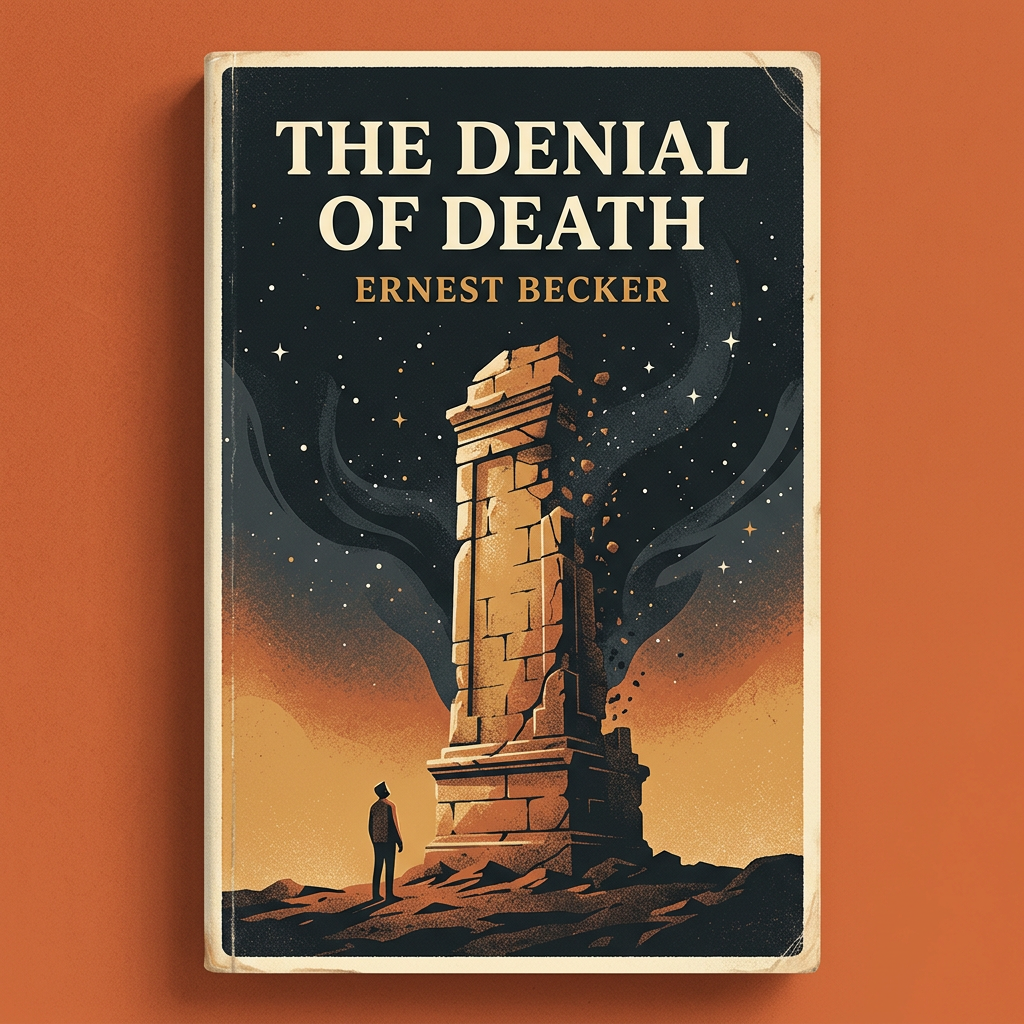
Ernest Becker
I remember picking up Ernest Becker's 'The Denial of Death' during a period of existential restlessness. It is not an easy read, but it is an essential one. Becker's central thesis—that civilization itself is essentially a complex, symbolic 'immortality project' designed to distract us from our inevitable mortality—hit me like a physical blow. He argues that humans are 'gods with anuses,' dual creatures capable of infinite thought but trapped in decaying animal bodies. This fundamental tension, according to Becker, is the engine of almost all human behavior, from heroism to neuroticism. It forces you to look at every career move, every creative endeavor, and every social interaction through the lens of a desperate search for significance. I was particularly struck by his analysis of the 'causa sui' project in the middle chapters. Becker dissects how we attach ourselves to larger-than-life figures, religions, or even political ideologies to feel that we are part of something eternal. He doesn't shy away from the darker side of this: when our immortality projects are threatened by those with different 'hero systems,' we often turn to violence to validate our own sense of permanence. Reading his breakdown of Kierkegaard's influence on psychology helped me see that our 'character armor'—the personality we cultivate—is actually a defense mechanism against the terror of existence. It is a profound realization that most of our 'self' is just a shield. In our current era of digital legacy-building and the frantic pursuit of optimization, Becker’s work feels more urgent than ever. We live in a culture that treats death as an optional technical glitch rather than a biological certainty. 'The Denial of Death' strips away these illusions. It challenges the reader to confront their 'vital lie'—the specific fiction they tell themselves to keep going. It isn't a depressing book; it's a liberating one. By recognizing our limitations and the 'terror' we carry, we can finally stop chasing shadows and engage with life more authentically. It's a masterwork that reframes what it means to be a conscious being in a finite world.
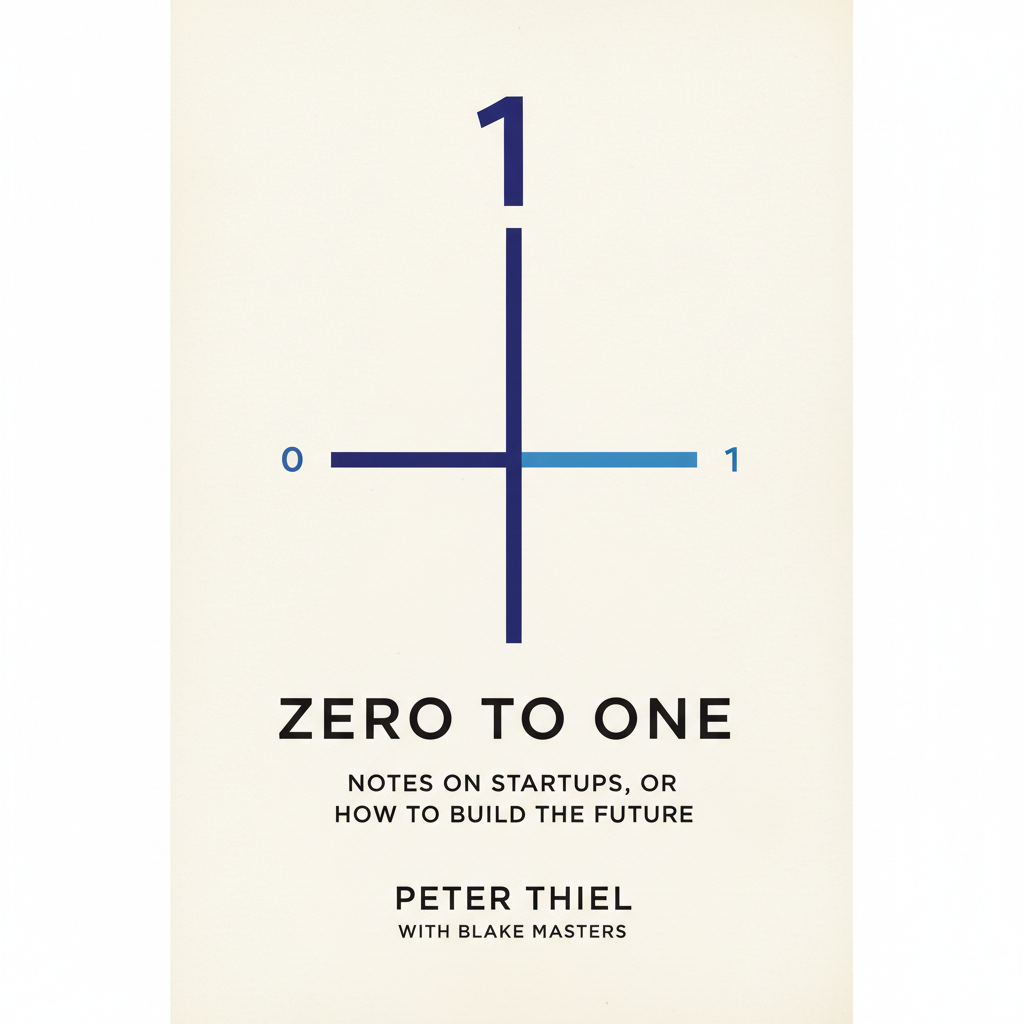
Peter Thiel with Blake Masters
I first picked up Zero to One during a period when the startup world felt like an endless loop of iterative clones and incremental improvements. Peter Thiel’s core thesis—that true progress comes from vertical moves (doing something new) rather than horizontal moves (copying what works)—instantly rewired my understanding of innovation. He argues that globalization is horizontal progress, taking things that work and making them work everywhere, whereas technology is vertical progress. If you take one typewriter and build 100, you have made horizontal progress. If you have a typewriter and build a word processor, you have made vertical progress. This distinction is the bedrock of venture thinking, yet so many founders ignore it in favor of safe, marginal gains. The chapter on Monopoly Audacity is particularly striking. Thiel subverts the common wisdom that competition is always healthy for a business. To him, competition is for losers. He posits that truly successful companies—what he calls creative monopolies—are so good at what they do that no other firm can offer a close substitute. He writes, 'All happy companies are different: each one earns a monopoly by solving a unique problem. All failed companies are the same: they failed to escape competition.' This is a radical departure from the lean startup obsession with constant pivoting based on market feedback; it is a call for the courage to have a definitive, long-term plan for a future that does not yet exist. Why does this book matter so much right now? Because we are living through a stagnation of bits while the world cries out for breakthroughs in atoms. We have become experts at optimizing software but have stalled in energy, transportation, and biotechnology. Thiel challenges us to uncover the secrets that are still left to be discovered—the truths that are difficult but possible to find. In an era of safe consensus and algorithmic trend-following, Zero to One serves as a philosophical manifesto for the contrarian. It asks the most difficult question in venture: 'What important truth do very few people agree with you on?' If you cannot answer that, you are not building the future; you are just managing the present.
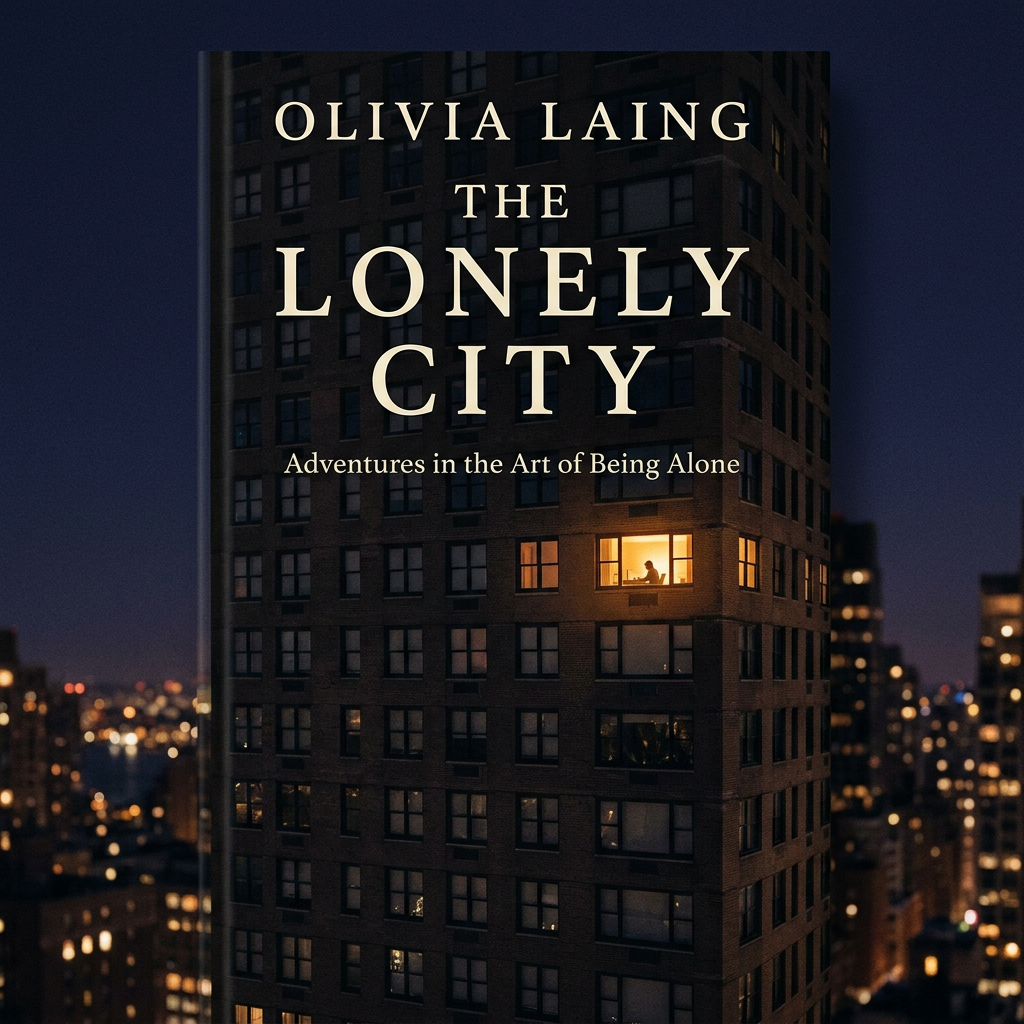
Olivia Laing
I picked up Olivia Laing’s The Lonely City during a period of profound personal isolation, and it fundamentally shifted my perception of the urban landscape and the purpose of creativity. This is not a self-help book about overcoming solitude; it is a forensic, beautifully written examination of how art acts as a bridge between the isolated self and the collective human experience. Laing explores the lives of artists like Edward Hopper, Andy Warhol, and David Wojnarowicz, treating them not as distant icons but as fellow travelers in the 'city' of loneliness. She argues that loneliness is a physical place, and art is the primary language spoken there, providing a way to inhabit that space without being destroyed by it. Her analysis of Edward Hopper’s Nighthawks is particularly striking. She moves beyond the cliché of urban alienation to discuss how the architecture of the painting—the absence of a visible door and the curved glass—traps the subjects in a state of total visibility without any possibility of connection. In the chapter on Andy Warhol, she explores how his obsession with recording devices and cameras was a shield against the terrifying vulnerability of human contact. This idea that technology acts as both a barrier and a prosthetic for the lonely feels more relevant today than ever. We live in an era of hyper-connectivity that often masks a deep, systemic atomization, making Warhol’s reliance on 'The Machine' feel chillingly prophetic. What makes this book essential now is its refusal to treat loneliness as a pathology to be cured. Laing suggests that there is a specific kind of clarity that comes from being an outsider. By examining Henry Darger’s obsessive outsider art or Wojnarowicz’s radical activism during the AIDS crisis, she reminds us that art is a tool for survival. It challenges the reader to look at the lonely not with pity, but with a recognition of the radical honesty required to exist on the margins. It is a masterpiece of cultural criticism that taught me that being alone is often the prerequisite for truly seeing the world.
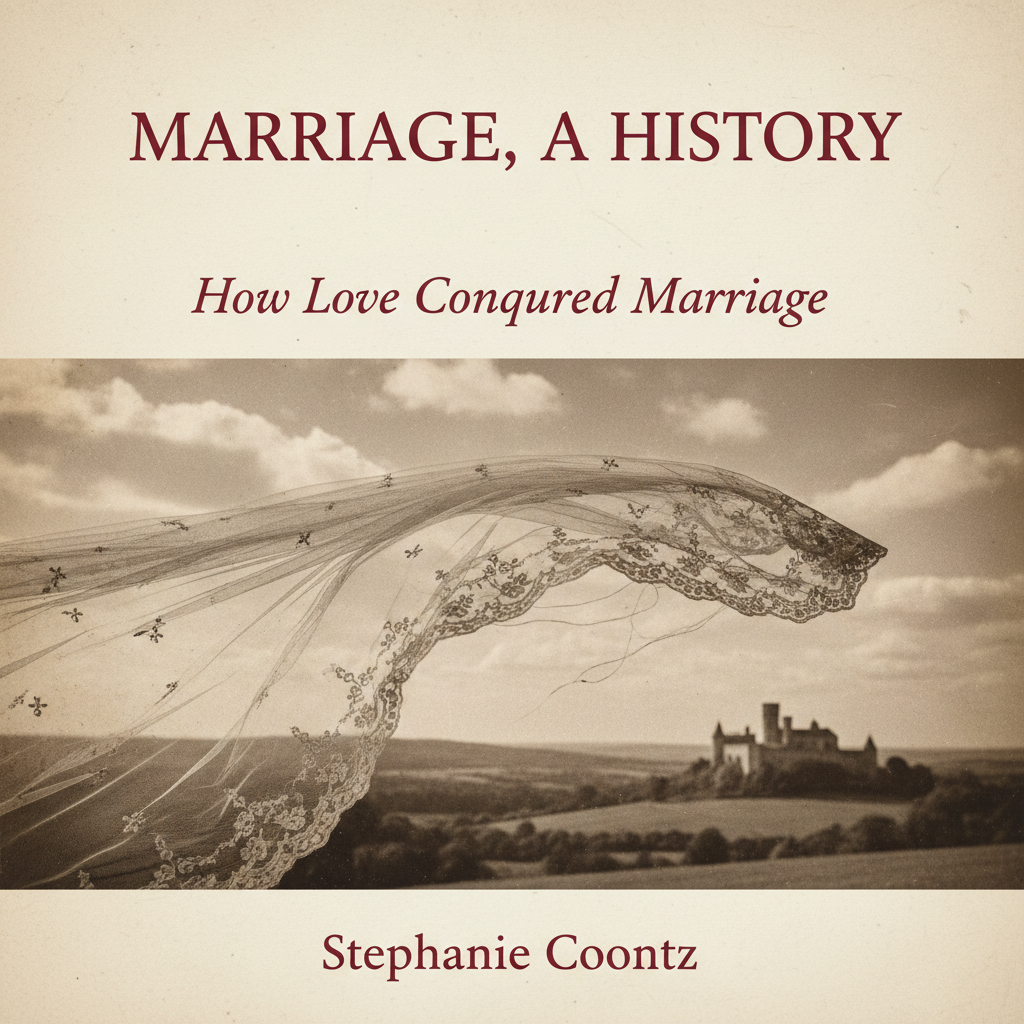
Stephanie Coontz
We often speak of the 'crisis of marriage' as if the institution is a crumbling monument to a more stable, virtuous past. Stephanie Coontz’s masterpiece completely upended my understanding of this narrative. Reading this book felt like having a layer of historical amnesia wiped away. Coontz meticulously tracks the evolution of marriage from a strategic alliance for property and survival into a private relationship based on emotional fulfillment. Her central thesis is as brilliant as it is paradoxical: the very things that make modern marriage so potentially rewarding—the focus on love, intimacy, and choice—are exactly what make it so inherently fragile. When marriage was an economic necessity, you didn't leave because you were 'unhappy'; you couldn't afford to. I found the chapters on the 19th-century invention of the 'male breadwinner' model particularly illuminating. Coontz shows that our nostalgic 1950s ideal was actually a historical anomaly, a brief blip in a multi-millennial timeline where both partners had always been economic producers. By the time I reached her analysis of the 'Sentimental Revolution,' I realized that we have asked marriage to do something it was never designed for: to be the primary source of our identity, passion, and security all at once. She cites the radical shift in the late 18th century when the idea that a person should marry for love was considered a dangerous subversion of social order. This book matters now because it offers a much-needed dose of historical realism to our often-overheated debates about domesticity and gender roles. It replaces moralizing with sociological context. By understanding that our current expectations of marriage are historically unprecedented, we can stop blaming ourselves or our partners for the 'failure' of an institution that is essentially being asked to perform a miracle every day. It’s not a cynical book; rather, it’s a liberating one that allows us to see our struggles not as personal flaws, but as the growing pains of a revolutionary new way of being together.
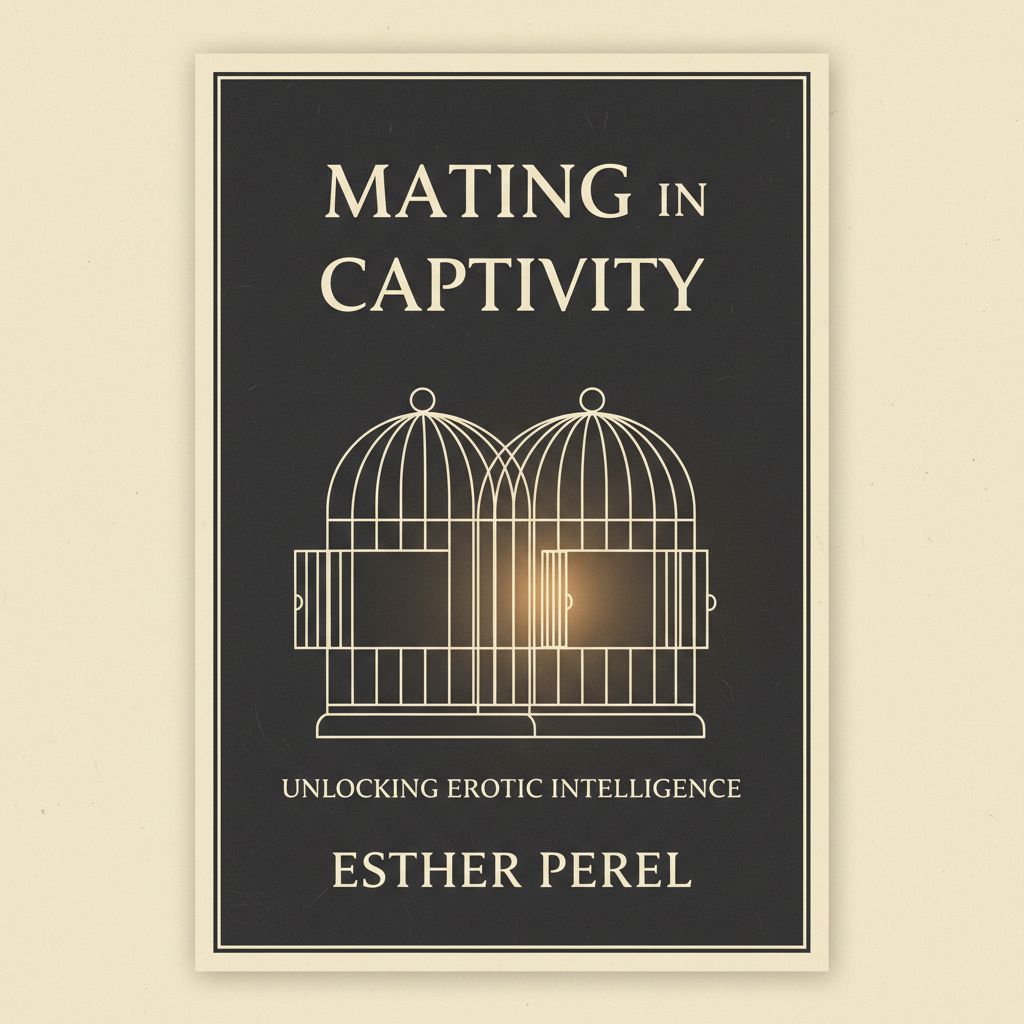
Esther Perel
I often find that books on marriage fall into two camps: the overly clinical or the hopelessly sentimental. Esther Perel’s 'Mating in Captivity' exists in a category of its own, blending psychological rigor with a poetic understanding of the human heart. I returned to this text recently and was struck by how radical her central thesis remains: that the very things that make a marriage stable—domesticity, safety, and predictability—are often the very things that extinguish the fire of erotic desire. Perel argues that for desire to flourish, there must be a degree of 'otherness' and space between partners, a concept that feels counterintuitive in our era of hyper-intimacy and constant connection. One of the most profound sections of the book is her exploration of the tension between security and adventure. She writes that 'love rests on two pillars: surrender and autonomy.' When we demand total transparency and total fusion, we lose the mystery that makes our partner someone worth pursuing. Her chapter on 'The Trap of Domesticity' is a masterclass in identifying how the roles of 'parent' or 'provider' can colonize the role of 'lover' until there is nothing left but the logistical machinery of a household. She pushes us to recognize that intimacy is not synonymous with the absence of boundaries; in fact, boundaries are what allow us to see our partner as a separate, desiring being. This book matters now more than ever because we have reached a peak in the 'companionate marriage.' We expect one person to provide what an entire village used to: stability, social status, intellectual stimulation, and peak sexual fulfillment. It is an impossible burden. Perel doesn't offer easy 'tips'; she offers a fundamental shift in perspective. She challenges us to see our partners not as familiar fixtures of our lives, but as separate entities with their own internal worlds. It is a brilliant, unsettling, and ultimately liberating read for anyone trying to navigate the complexities of long-term commitment without losing the spark of individuality that brought them together in the first place.
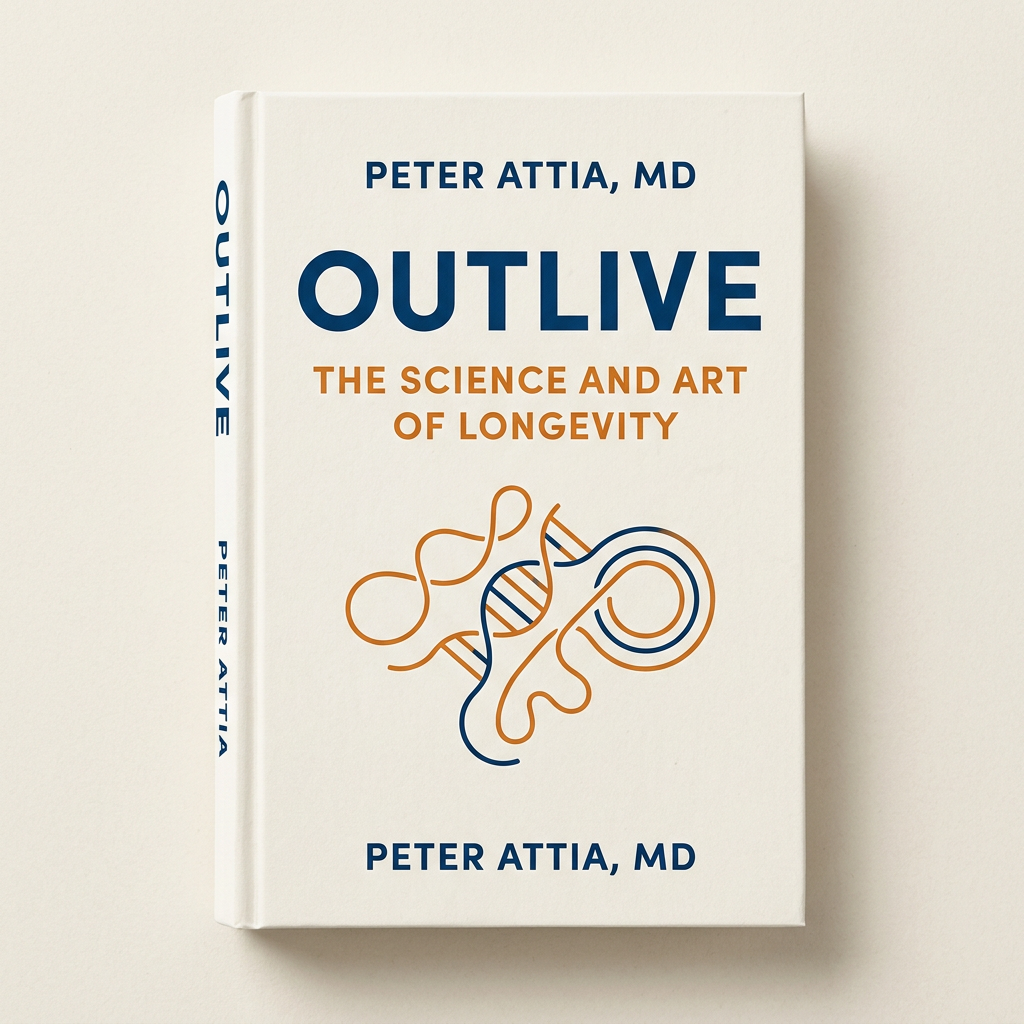
Peter Attia
Peter Attia’s 'Outlive' is not another bio-hacking manual filled with fleeting trends; it is a fundamental re-examination of how we view the human lifespan. Attia argues that we are currently operating under 'Medicine 2.0'—a system designed to treat acute trauma and infectious diseases which fails miserably when confronted with the 'Four Horsemen': heart disease, cancer, neurodegenerative disease, and type 2 diabetes. These are slow-moving killers that begin decades before they are diagnosed. Attia’s call for 'Medicine 3.0'—a proactive, preventive approach—is a radical departure from the reactive standard of care we’ve all grown accustomed to. I found his critique of the clinical trial system particularly illuminating; it explains why we are so bad at preventing the very things that kill the majority of us. What truly resonated with me was the concept of the 'Centenarian Decathlon' introduced in Chapter 12. Instead of focusing on vague health goals, Attia asks you to define exactly what physical tasks you want to be able to perform in your final decade. If you want to pick up a great-grandchild or carry your own groceries at 90, you have to train for that now. This backward-induction approach to fitness is intellectually rigorous and deeply personal. His deep dive into metabolic health and the nuances of zone 2 training and protein intake provides a scientific scaffolding that most health books lack. He doesn't just tell you what to do; he explains the biochemical pathways that make these actions necessary. This book matters now because we are living through a paradox: we are living longer than our ancestors, but we are spending more of those years in a state of cognitive and physical decay. Attia’s work is a sobering but empowering reminder that while we cannot control our genes, we have immense agency over our 'healthspan.' It is a dense, challenging read that demands you take full responsibility for your biological future. After finishing 'Outlive,' I didn't just change my workout routine; I fundamentally shifted my perspective on the relationship between my current habits and my ninety-year-old self. It is essential reading for anyone who refuses to accept the slow decline of modern aging as an inevitability.
Alain de Botton
Most stories about love end where the real work begins. We are fed a steady diet of 'happily ever after,' which Alain de Botton identifies as a catastrophic psychological error. In The Course of Love, he returns to fiction to trace the trajectory of Rabih and Kirsten, a couple who meet, fall in love, and marry. But the genius of this book isn't just the narrative; it is the italicized philosophical commentary that runs alongside it, dissecting the mundane frictions of domestic life—from the 'wrong' choice of glassware to the silent resentment of a partner’s career success. It is a profound meditation on the fact that love is not a feeling, but a skill that must be learned. The chapter on 'Romanticism' is particularly illuminating. De Botton argues that our modern obsession with 'soulmates' makes us intolerably sensitive to our partner's flaws. He suggests that we should instead seek 'good enough' partnerships where we acknowledge our own madness. I was struck by his observation that we are all, to some degree, 'unbearable to live with,' and the hallmark of a mature marriage is not finding someone who doesn't bother you, but finding someone who can negotiate your mutual insanities with grace. This shift from romantic perfectionism to psychological realism is a liberation. Why does this matter now? We live in an age of the 'optimized self' and the 'swiping culture,' where the next best thing is always a click away. De Botton challenges this disposability by showing that the richness of love is found in the 'boring' middle—the years of childcare, the shared financial stresses, and the slow realization that your spouse is a flawed human being, just as you are. It is a brave book because it dares to suggest that the most romantic thing you can do is to be patient with the person you have chosen. It transformed how I view the 'small' arguments in my own life, reframing them as opportunities for understanding rather than signals of failure. This is a vital survival manual for anyone committed to the long-term project of another human being.
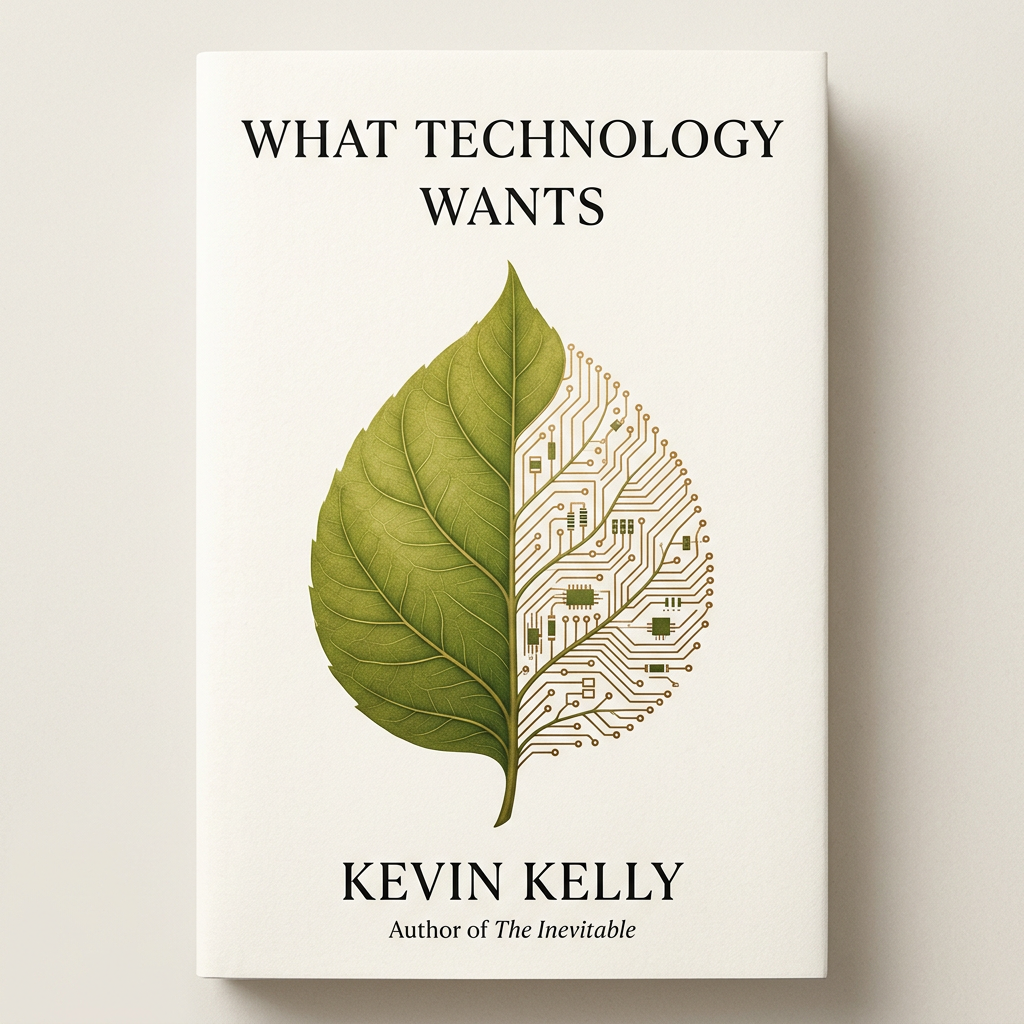
Kevin Kelly
I often find tech discourse trapped in a binary: it is either a utopian savior or a dystopian parasite. Kevin Kelly’s 'What Technology Wants' shattered that for me. He introduces the 'technium'—a global, massive, interconnected system of technology which, he argues, has its own urges and evolutionary trajectory. It is not just a collection of gadgets; it is the seventh kingdom of life. Reading this felt like a deep philosophical reorientation. Kelly does not treat technology as something we simply 'use,' but as a cosmic phenomenon that began with the Big Bang and continues through us. One of the most striking sections is the chapter on 'Inevitable Inventions.' Kelly provides evidence that most major breakthroughs—the telephone, the lightbulb, the calculus—were discovered by multiple people independently at almost the same time. This suggests that the technium has a directionality. It is not just random human genius; it is a sequence of logical steps that the system is 'pulling' toward itself. This realization is both humbling and terrifying. It challenges our ego as 'creators' and positions us more as 'catalysts' for an inevitable progression toward complexity and sentience. This book matters more now than when it was first published because of the rapid acceleration of Large Language Models and autonomous systems. We are currently wrestling with whether we can 'control' AI. Kelly’s thesis suggests that while we can influence the character of a technology, we cannot easily stop its emergence. By understanding the technium's inherent biases—toward diversity, beauty, and sentience—we can stop fighting against the tide and start steering it toward more pro-human ends. Ultimately, Kelly moved me from a position of techno-skepticism to one of techno-realism. He does not ignore the costs—the loss of privacy, the environmental toll—but he frames them as the growing pains of a cosmic process. It is a dense, beautifully written work that demands you look at your smartphone not as a plastic brick, but as a descendant of the first stone tool, part of a three-billion-year-old story of increasing information.
Ananyo Bhattacharya
Reading Ananyo Bhattacharya’s 'The Man from the Future' is a humbling experience. Most biographies trace a linear path of achievement; this one maps the neural pathways of a mind that seemed to operate on a different frequency than the rest of humanity. John von Neumann didn’t just contribute to one field; he effectively invented or revolutionized half a dozen, from quantum mechanics and set theory to game theory and the very architecture of the computers we use today. Bhattacharya does a masterful job of making the 'Martian' (as his Hungarian colleagues called him) feel human, while never underselling the sheer, terrifying scale of his intellect. The chapters detailing his work on game theory, particularly his collaboration with Oskar Morgenstern, are a revelation. It reframes human conflict and cooperation not as mere emotion, but as a rigorous mathematical structure. This isn't just dry theory; it’s the foundation of modern economics and geopolitical strategy. When you read about his work on the Manhattan Project or his later advocacy for 'preventative' nuclear war, you are forced to confront the chilling logic of a man who could calculate the end of the world with the same detachment as a poker hand. It challenges the reader to consider if pure rationality, stripped of sentiment, is a tool for progress or a recipe for nihilism. Why does this matter now? Because we are currently hurtling toward the very 'singularity' von Neumann predicted. As we grapple with Artificial General Intelligence, we are essentially living inside von Neumann’s brain. His work on cellular automata and self-replicating systems laid the groundwork for contemporary AI and synthetic biology. Bhattacharya shows us that von Neumann wasn't just predicting the future; he was actively constructing the tracks the 21st century is currently running on. If you want to understand the intellectual DNA of our digital age—and the risks of a world governed by algorithms—this is the definitive manual. It’s an exhilarating journey through the life of a man who saw the 2000s coming while the rest of the world was still stuck in 1945.
Ben Horowitz
Ben Horowitz
Zane Lackey, Rebecca Huehls
Andrew Chen
Chris Dixon
Scott Kupor
Peter H. Diamandis